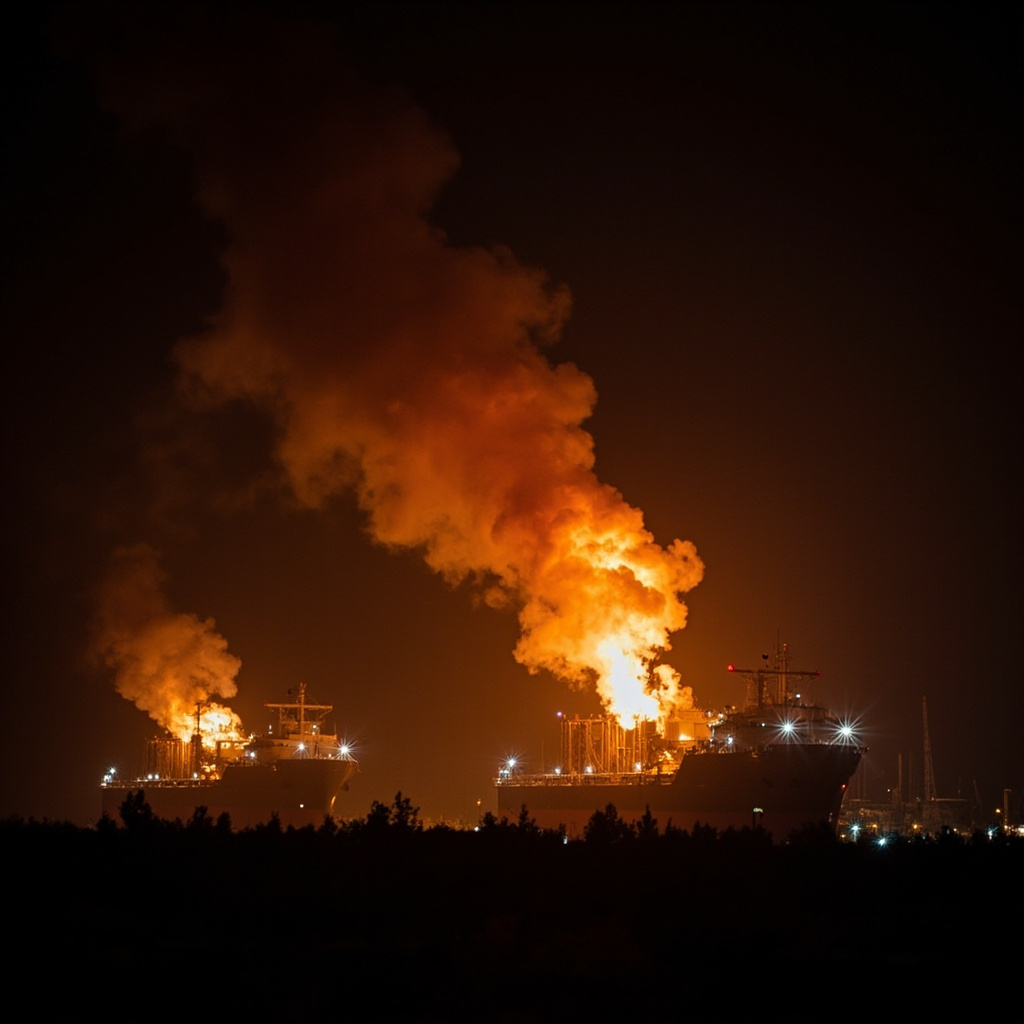
The IDF struck South Pars, the world's largest gas field Iran shares with Qatar, on March 18. Hours later, Iran made good on its threat.
Ras Laffan — where roughly one-fifth of the world's LNG ships from — sustained extensive damage. Iran's missiles hit Qatar's primary LNG hub, causing what QatarEnergy called "significant damage." Saudi Arabia's Yanbu port was struck. The Habshan facilities in Abu Dhabi took hits. The UAE called it "a direct threat to the security and stability of the region."
Before the strikes, the IRGC put out a statement: "These centres have become direct and legitimate targets and will be targeted in the coming hours." They were not bluffing.
Trump posted that neither the US nor Qatar was aware Israel would attack South Pars — and told Israel to stand down unless Iran keeps hitting Qatar's LNG. "NO MORE ATTACKS WILL BE MADE BY ISRAEL pertaining to this extremely important and valuable South Pars Field unless Iran unwisely decides to attack a very innocent, in this case, Qatar," he said.
Global oil climbed to $108.60 per barrel. The Strait of Hormuz — 20% of global oil flow — remains effectively closed.
Shipping companies are demanding war risk premiums that make commercial Gulf routes economically unviable. Insurance markets have started pulling coverage entirely.
Gulf states are caught between US-Israel and Iran. Qatar hosts the largest US military base in the Middle East. Its LNG infrastructure is now a battlefield.
— YOSEF STERN, Jerusalem