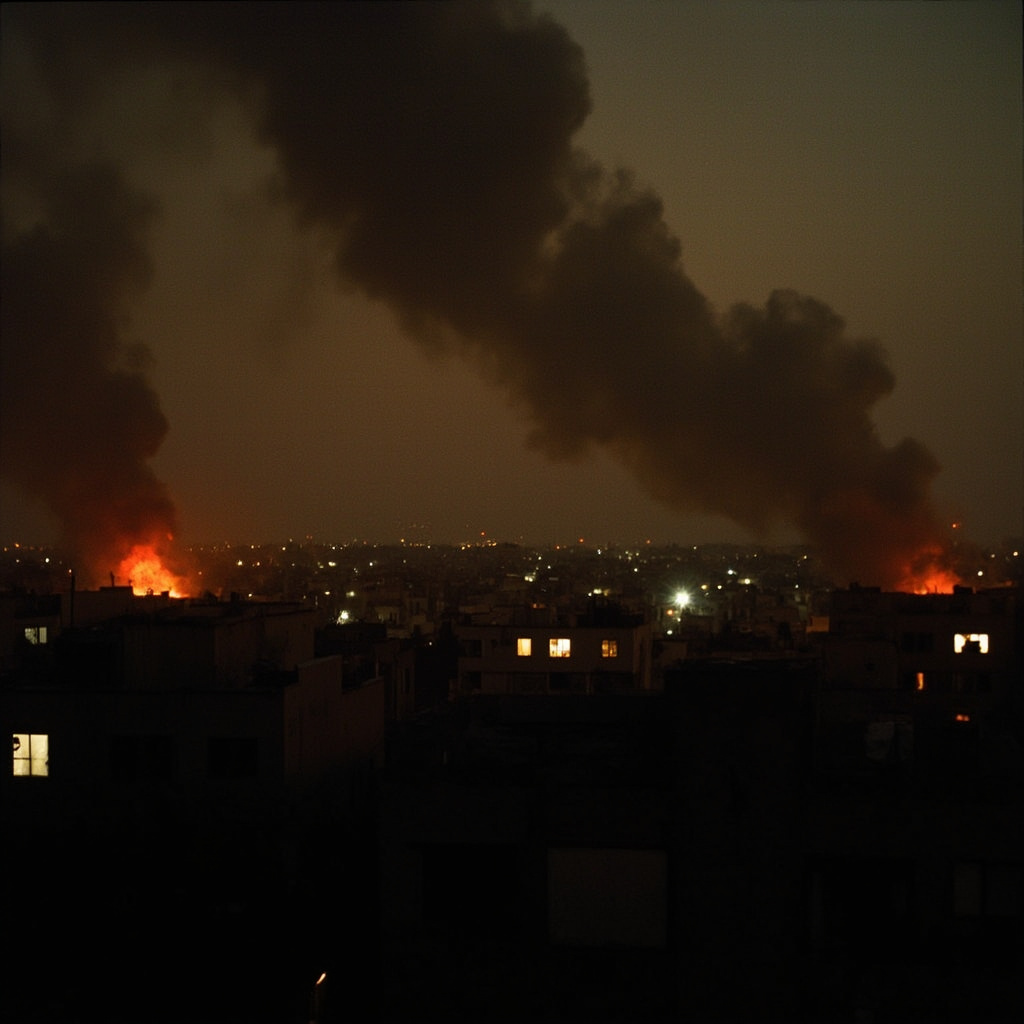
Three weeks into the Iran war, the Pentagon is talking about ground troops.
Secretary of Defense Pete Hegseth said Thursday that "all options remain on the table" on additional deployments. [2] Reuters confirmed US military officials are actively discussing ground force options — a massive escalation of the campaign that began February 28.
The options under discussion are narrower than the phrase "ground troops" suggests. Iran is a country of roughly 90 million people spread across territory three times the size of Iraq, walled off by the Zagros mountains in the west and the Dasht-e Kavir salt desert at its center. No serious planner at the Pentagon proposes occupying it. The realistic menu is short: seize and hold Kharg Island, Iran's oil-export jugular; sweep and secure the shipping lanes of the Strait of Hormuz; or stage a division-size force in the Gulf states as a hedge against Iranian retaliation on the Arabian peninsula. Each option solves a different problem. None of them ends a war.
Every item on that list has a 2003 echo, and the administration's critics have already found it. The invasion of Iraq was sold as a limited disarmament operation and became an eight-year occupation inside a year. The Pottery Barn warning Powell reportedly delivered before the war — you break it, you own it — carries more force now: Iran has roughly triple Iraq's population, triple its terrain, and its most cohesive institutions are the ones this campaign is busy bombing.
Meanwhile, Joe Kent's resignation letter has consumed the platform's foreign policy corner. "Iran posed no imminent threat to the United States," Kent wrote. "It is clear that we started this war due to pressure from Israel and its powerful American lobby." [1] The post hit 9.7 million views in 24 hours. Tulsi Gabbard — the DNI — quote-tweeted her own response. The ratio was brutal. Anti-war conservatives claimed him as a truth-teller. Hawks called it an antisemitic screed.
The Ground Troop Question
The targets: Iran's missile launchers, defense industrial base, and navy. The stated objectives from Day One, per Hegseth, haven't changed. But three weeks in, the air campaign alone hasn't finished the job.
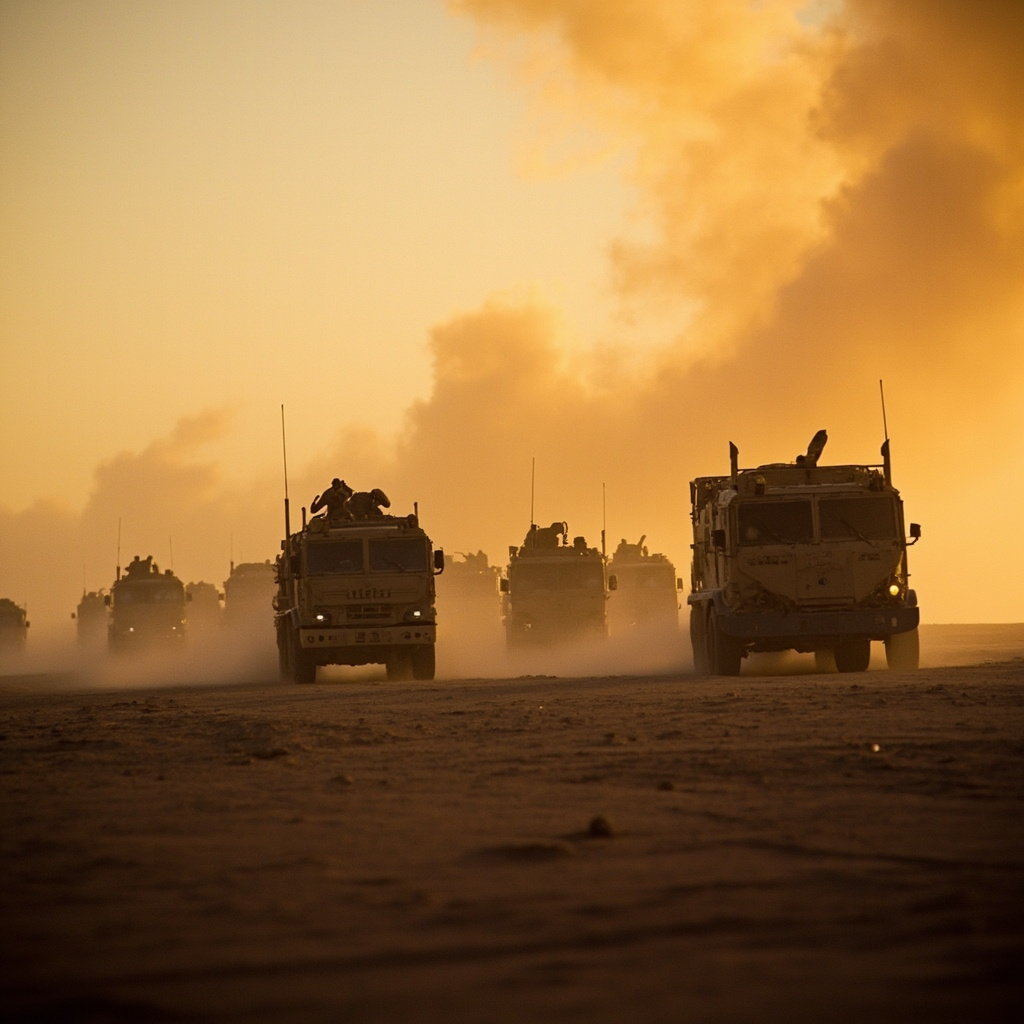
Thirteen US service members have been killed. Roughly 200 wounded. [3] The US has struck more than 7,000 targets inside Iran. [3] The Strait of Hormuz is effectively closed — 20 percent of the world's oil supply transit halted. [4] Gas is averaging $3.79 a gallon nationally. Diesel is just under $5. [5]
Gabbard Gets Tested
Tulsi Gabbard testified before the Senate Intelligence Committee on March 18. Democratic senators pressed hard: did the administration have adequate intelligence before launching strikes?
Gabbard's written testimony acknowledged the intelligence community warned that decapitation strikes — which killed Supreme Leader Khamenei in the opening hours — would not guarantee a swift resolution. [6] That warning was delivered. Whether it was heeded is the question that won't go away.
Her predicament is partly structural and partly self-inflicted. As DNI she runs the apparatus that produces the assessments; the president decides what they mean. The written answers conceded that analysts doubted air power alone could force surrender. [6] The oral performance defended the decision that proceeded anyway. Both statements can be true at once, which is precisely why the hearing kept circling the same drain — and why the committee's Republicans were nearly as quiet as its Democrats. Gabbard built her political career opposing wars of exactly this shape; her 2020 presidential campaign was a sustained attack on regime-change foreign policy. The anti-war right noticed when she resigned nothing, said little, and let the president's formulation do her talking.
She's getting killed on X for it. The @DNIGabbard quote tweets are a horror show. "She knew," is the prevailing theory. The counter-theory: she was overruled. Nobody outside classified briefings knows for certain. The guessers are guessing.
The Dunk War
The discourse breakdown on X:
Hawks are posting: @TheStudyofWar maps, CENTCOM strike counts, the 7,000 target figure. They're winning the factual war but losing the vibes war.
Anti-war conservatives are posting: Kent's letter, gas price screenshots, 13 troop death count. They're winning the emotional war but getting called antisemitic.
Normies are posting: gas prices, their commute costs, "please god not another forever war."
The problem for the hawks: the $3.79 average and the closed Hormuz are facts that don't care about your foreign policy priors. The problem for the doomers: they can't explain what the endgame looks like either.
The numbers each camp waves are accurate and beside the point. Strike counts measure tempo. Gas receipts measure cost. Neither measures purpose — which is why week three ends where it began, with an administration that can describe everything it is doing except why anyone should believe it will stop.
A bipartisan War Powers Resolution was introduced March 17 demanding the administration seek congressional authorization within 30 days. [7] The first formal challenge to the legal basis for the conflict. Congress, which has not voted on authorizing the war at all, is finally stirring.
The resolution's authors know the history they are invoking. The War Powers Resolution passed over Nixon's veto in 1973 after the secret Cambodia campaign, and no president since has obeyed its clock to the letter — every one has treated the 60-day window as advisory. What makes the March 17 measure different is timing. It demands a vote within 30 days, not 60, and it arrived while the administration was still describing the war as a limited air operation. The distance between that description and 7,000 struck targets is the entire argument. [3]
The Ally That Wants No Part of It
Japan's silence at Thursday's White House podium said more than anything spoken on camera. Prime Minister Sanae Takaichi came seeking understanding and left without committing a single vessel. [8] The arithmetic behind her caution is unforgiving: roughly 95 percent of Japan's crude oil transits Hormuz, a dependency burned into the country's postwar memory by the 1973 embargo, when a Middle Eastern war idled Japanese factories within weeks. Sending Maritime Self-Defense Force ships into a contested strait would be Tokyo's most dangerous naval deployment since the mine warfare of the 1980s Tanker War era, and 72 percent of the public wants none of it. [8] An ally that buys American weapons, hosts fifty thousand American troops, and still refuses to sail is telling Washington how the region actually prices this war.
What Week Three Looks Like
Iran is still firing ballistic missiles at Israeli and US positions across the Gulf. [3] UAE energy facilities were struck March 17, killing 14 workers. [4] Iran's proxy networks in Iraq, Yemen, and Lebanon have escalated attacks on American bases. [3]
At least 1,444 Iranians have been killed and 18,551 injured since the conflict began, according to local health authorities. [3]
The home-front ledger is accumulating more quietly. The national gasoline average of $3.79 is up sharply since February 28, diesel sits just under $5, and the Strategic Petroleum Reserve — drained to its lowest level in four decades by the 2022 emergency releases — offers a thinner cushion than it did going into previous oil shocks. [5] Refiners from Houston to Rotterdam are outbidding each other for Atlantic-basin crude to replace barrels that no longer clear the Strait, which is why American pump prices now track a blockade seven thousand miles away in days rather than months.
The war is three weeks old. It has defined objectives — degrade Iran's military, destroy its nuclear program, neutralize its proxies — but no defined end state, no timeline, and no ceasefire prospects.
Sound familiar?
— SAMUEL CRANE, Washington