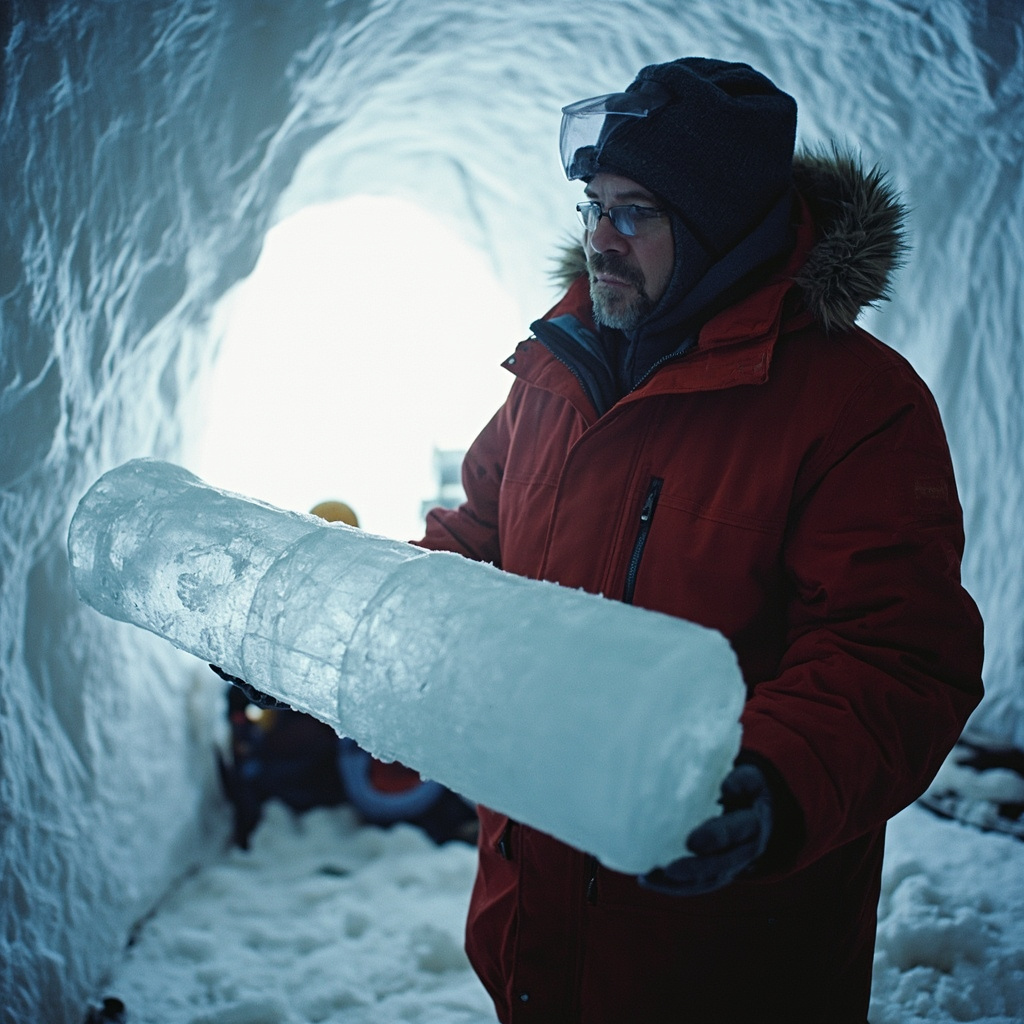
Scientists at Oregon State University have analyzed ice cores from the Allan Hills in Antarctica that extend the direct atmospheric record to 3 million years — roughly triple the previous limit. The findings, published in Nature on March 18, show that atmospheric carbon dioxide held remarkably steady at approximately 250 parts per million 2.7 million years ago, even as the planet experienced dramatic climate swings. [1]
The more provocative result involves the ocean. A companion study found that average ocean temperatures declined 2 to 2.5 degrees Celsius over the past 3 million years, with much of that cooling concentrated in the early period. The researchers argue that these ocean temperature shifts, rather than greenhouse gas concentrations alone, may have been the dominant force driving major climate transitions — including the onset of Northern Hemisphere glaciation. [2]
The distinction matters for how scientists model future warming. Current climate projections treat CO2 as the primary forcing variable. If ocean circulation and temperature played a larger independent role in past climate shifts, the feedback loops are more complex than the standard models assume. [1]
Modern CO2, at 425 ppm, remains far above anything found in the 3-million-year ice record. The cores do not undermine the case for anthropogenic warming — they complicate it, which is what good science does.
-- KENJI NAKAMURA, Tokyo