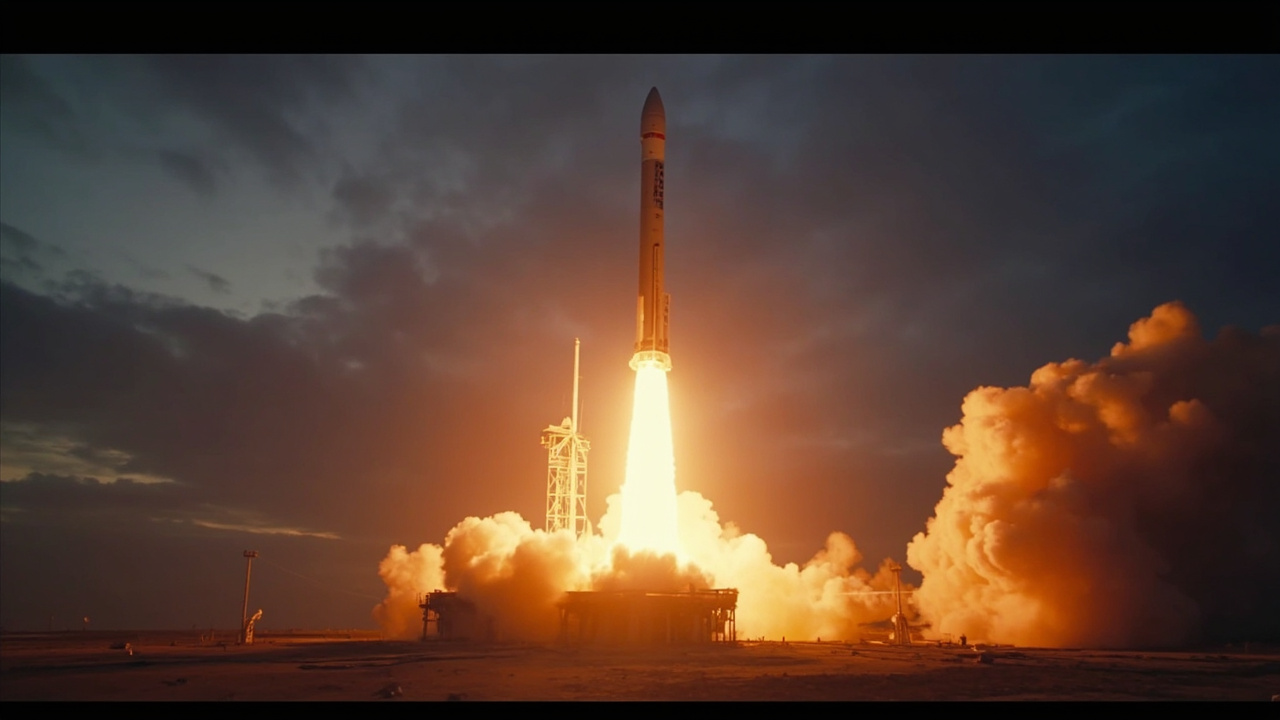
SpaceX has confidentially filed for an initial public offering that would value the company at more than $2 trillion and raise up to $75 billion — the largest offering in the history of public markets.[2]
The filing, first reported by Bloomberg and Reuters on April 2, represents a valuation increase of nearly two-thirds from SpaceX's most recent private round, which valued the company at $1.25 trillion. The jump reflects the company's acquisition of Elon Musk's xAI, the integration of Starlink's growing revenue base, and the market's appetite for a company that controls both the rockets and the satellites that orbit above them.[1]
How the Company Got Here
The valuation is easier to mock than to explain without history. SpaceX was founded in 2002 on roughly $100 million of Musk's PayPal proceeds and nearly died three times: the first three Falcon 1 launches all failed, and by autumn 2008 the company was weeks from insolvency when the fourth flight reached orbit and NASA, in December of that year, awarded the $1.6 billion cargo contract that kept it alive. Everything since has compounded from that rescue. The first successful landing of an orbital booster came in December 2015; by last year a single booster had flown more than twenty times, and the company launched more orbital missions than the rest of the world combined. Reuse turned launch from artisanal production into something closer to an airline — which is why every government that wants independent access to space now queues at its door, and why the private markets kept marking the company up long before any banker did.[1][3]
The Numbers
A $2 trillion valuation would make SpaceX the ninth-most-valuable company in the world, ahead of Berkshire Hathaway and behind only the tech giants. The $75 billion raise would dwarf the previous record — Saudi Aramco's $29.4 billion IPO in 2019 — by a factor of more than two.[5]
The valuation is not arbitrary. SpaceX generates revenue from three businesses: launch services (putting satellites and people into orbit), Starlink (satellite internet, now profitable with millions of subscribers), and government contracts (NASA, the Department of Defense). The addition of xAI — Musk's artificial intelligence company — adds a fourth revenue stream that is difficult to value but easy to hype.[3]
What the filing does not contain matters as much as what it does: no audited financials yet, no final share count, no confirmed exchange, and a June target that assumes the war does not close airspace over the Gulf launch corridors its trajectories cross. Confidential filings exist precisely so that the story can be shopped before the details are locked.[1]
Starlink Is the Valuation
Strip the story down and most of the $2 trillion lives in one subsidiary. Launch is a real business with thin margins and sovereign customers; Starlink is a consumer subscription platform beaming broadband from low Earth orbit, with subscriber counts that have multiplied year over year into the millions and unit economics that improve with every reused booster and every cheaper satellite. The bulls' arithmetic treats Starlink as software — recurring revenue, near-monopoly constellation, pricing power over every airline, shipping line, and army that needs connectivity where fiber cannot go. That is what justifies a tech multiple. The bears' counter is equally simple: satellite broadband competes with terrestrial networks that spend hundreds of billions annually, constellations depreciate in orbit, and no telecom in history has held a software multiple through a capital-cycle downturn. The war has muddied the debate in SpaceX's favor — military demand for resilient satellite communications stopped being theoretical years ago, and this one has made Starlink terminals strategic equipment from the Red Sea to the Gulf.[1][4]
The xAI Fold-In
Folding Musk's artificial intelligence venture into the offering solves his capital problem and creates the filing's thorniest question: who is buying from whom? xAI's data centers need power and connectivity; Starlink sells connectivity; Tesla's shareholders have already voted to invest across Musk's other ventures. A public SpaceX whose affiliate is simultaneously customer, supplier, and sibling raises the related-party question that securities lawyers underline three times — how do you price a contract between two companies with the same controlling shareholder? The S-1 will answer it with disclosures rather than solutions. Public-market investors have historically demanded a discount for exactly this structure. Whether they dare apply one to the most anticipated listing of the decade is the quiet test inside the loud one.[3]
The Timing
The filing comes during a war that has increased the strategic value of space-based infrastructure. Starlink has become essential to military communications in conflict zones. SpaceX's launch capabilities are critical to national security. The company is no longer just a commercial enterprise — it is a defense contractor with a consumer brand.[4]
The war has also increased the urgency of going public. A $2 trillion valuation today may not be available tomorrow if the conflict escalates, insurance costs rise, or launch schedules are disrupted. SpaceX is selling while the story is good.
What Seventy-Five Billion Buys
The raise itself is strategy rather than vanity. Starship's production line, another several thousand satellites, the ground infrastructure for launches at airline cadence, and capital reserves deep enough to absorb a launch failure without crawling back to the private markets — all funded at once, at the moment of maximum sentiment. Most companies go public when they need money. SpaceX is going public so that it can never be seen needing it again, which converts the listing from an exit into a moat.[2]
The Risks
The risks are significant. A $2 trillion valuation prices in years of flawless execution — successful launches, continued Starlink growth, xAI delivering on its promises, and no catastrophic failures. Any one of those assumptions could prove wrong. All of them could prove wrong simultaneously.
The company is also controlled by Elon Musk, who has a history of making promises that the market prices in before they are delivered. The $2 trillion valuation assumes that Musk will remain focused on SpaceX and not distracted by his other ventures — a bet that has not always paid off.
There is a structural risk beneath the personal one. Starship, the vehicle meant to carry the next decade's growth, has slipped repeatedly — its twelfth test flight now pushed toward May — while NASA's Artemis lunar lander plan waits on it. Regulatory exposure runs through the FCC's spectrum decisions and the Pentagon's launch-contract allocations, both political processes. And key-man concentration cuts both ways: the same singular control that let SpaceX outbuild the world's aerospace establishments means no board can fire the chief engineer, whatever public shareholders think they are buying.
The Market
The IPO will test the market's appetite for space stocks at a time when the S&P 500 is down 4.6 percent for the year and geopolitical risk is elevated. Investors who buy into SpaceX are buying into a company that is both a technology company and a defense contractor, both a consumer brand and a government supplier. It is a bet on the future of space — and on the belief that the future is worth $2 trillion.
One mechanical caution tempers the pageantry. New listings do not enter the S&P 500 on debut; index eligibility requires float, profitability track records, and committee patience, so the passive funds that own every mega-cap will wait months before they must buy. Aramco debuted at $1.7 trillion in 2019, briefly became the world's most valuable company, and slid within the year as institutional buyers marked it like the oil company it was. SpaceX's filing asks the market to price it like nothing else on the exchange. The record raise guarantees the debut will be enormous. What happens in the second quarter of ownership is where the actual verdict arrives.[5]
-- THEO KAPLAN, San Francisco