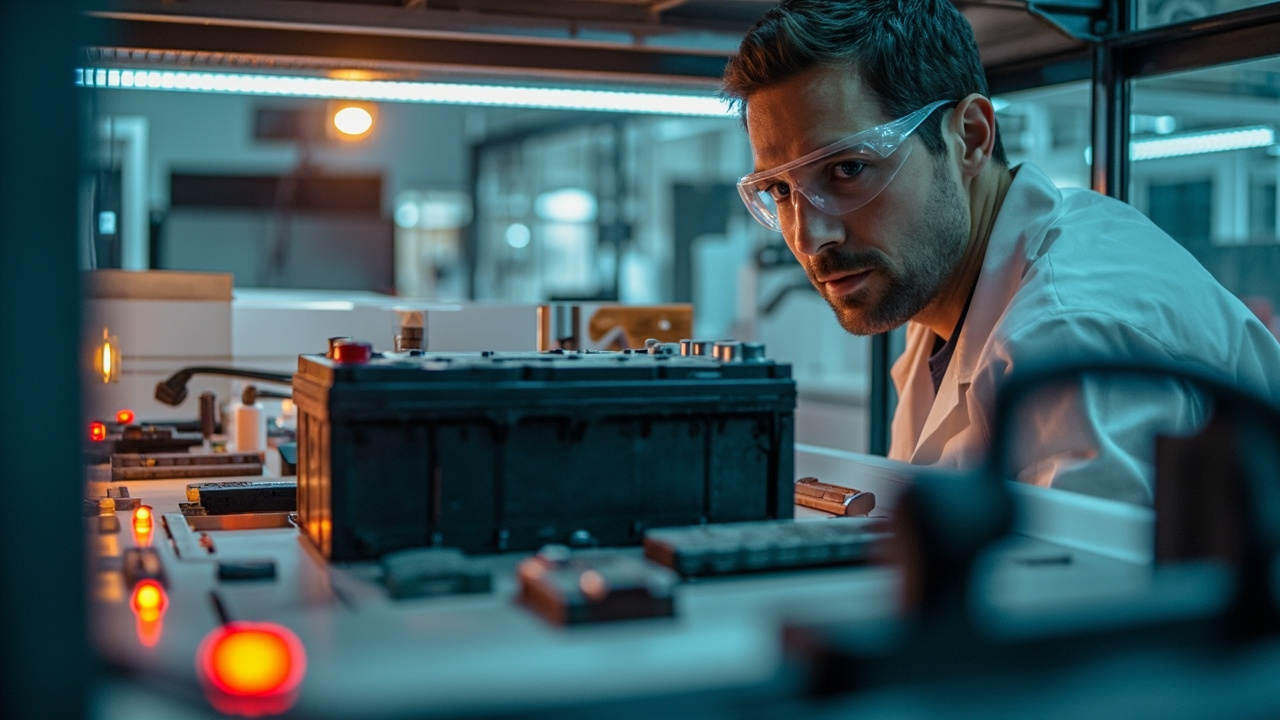
One of the persistent anxieties around electric vehicles just lost its empirical footing. A University of Michigan-led study published in Nature Climate Change found that improvements in EV battery chemistry are outpacing the degradation caused by rising global temperatures. [1]
The research team analyzed battery performance data across multiple generations of lithium-ion cells, modeling degradation rates against projected warming scenarios through 2050. Their conclusion: while hotter climates do accelerate capacity loss, advances in electrode materials, electrolyte formulations, and thermal management systems have more than compensated. [2]
"Equatorial and tropical regions — such as parts of India, sub-Saharan Africa, and Southeast Asia — will experience the greatest heat-related stress on batteries," the study noted. "But even there, the newest generation of cells performs better under heat than older cells did in temperate conditions." [3]
The finding matters for two reasons. First, it undermines a talking point frequently deployed by EV critics: that climate change itself would render electric vehicles unreliable. Second, it strengthens the case for EV deployment in the global south, where heat concerns have slowed adoption. [1]
The study does carry caveats. Battery improvements require continued investment in R&D and manufacturing, and the cheapest cells on the market still lag behind premium formulations. But the trajectory is clear: engineering is winning the race against thermodynamics, at least for now.
-- DARA OSEI, London