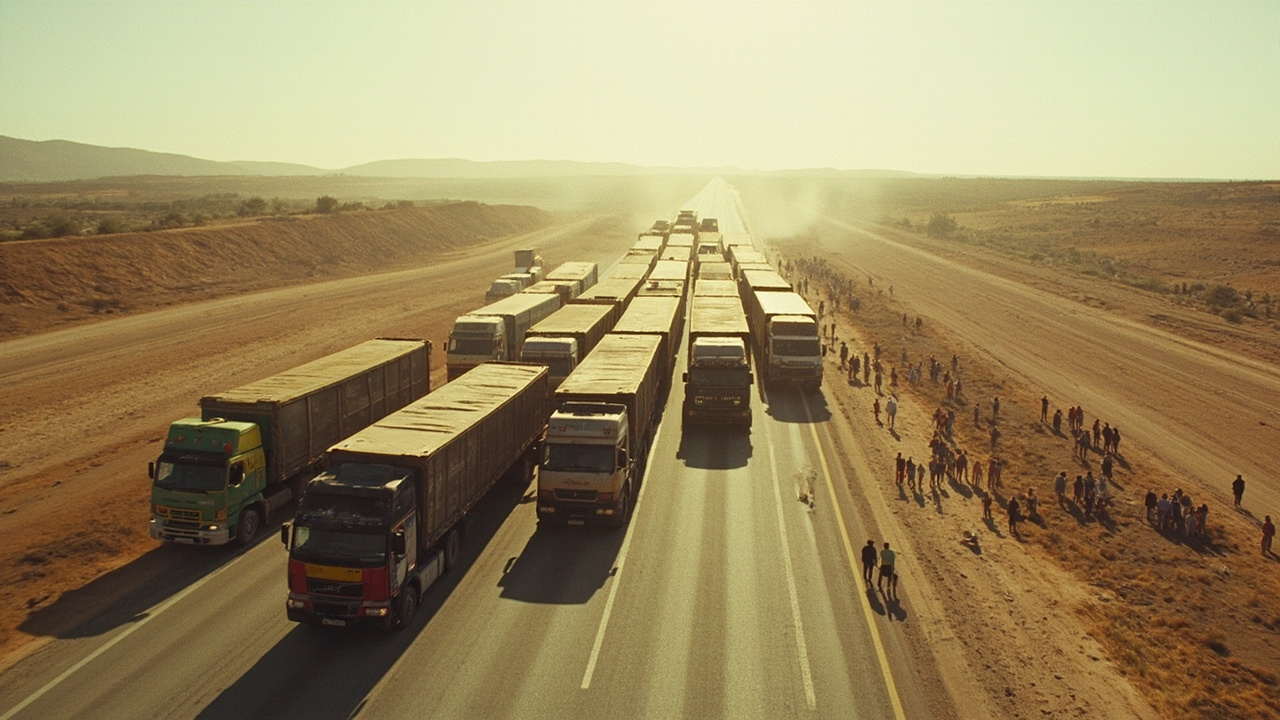
The US-Iran ceasefire sent oil futures plunging below $95 per barrel on Wednesday. It has not yet sent diesel prices down in Mexico, where truckers and farmers are blockading highways across more than 20 states in an indefinite strike that entered its fourth day. [1]
The truckers' demands are specific: a reduction in diesel prices, elimination of the IEPS fuel tax, urgent highway repairs, and government action against cargo crime that has made Mexico's roads among the most dangerous in the hemisphere. [2] The ceasefire, while welcome in principle, addresses none of these.
Diesel at Mexican pumps remains above the levels that triggered the strike. Global crude prices may have dropped, but retail fuel pricing in Mexico operates on a different timeline — one governed by Pemex refining capacity, government subsidy decisions, and IEPS tax structure rather than Brent crude futures. [3]
FreightWaves reported that the strike has already fractured, with some regional trucking associations returning to work after local negotiations while others maintain blockades on critical freight corridors. [1] The disruption is real: food shipments are delayed, manufacturing supply chains interrupted, and border crossing wait times extended.
The strike's timing creates an awkward juxtaposition. Global markets celebrated the ceasefire as an energy price lifeline. Mexico's truckers — who consume the fuel, move the goods, and absorb the costs — are still waiting for that lifeline to reach them.
For the drivers parked on the highways, the ceasefire is something that happened on television.
-- LUCIA VEGA, Sao Paulo