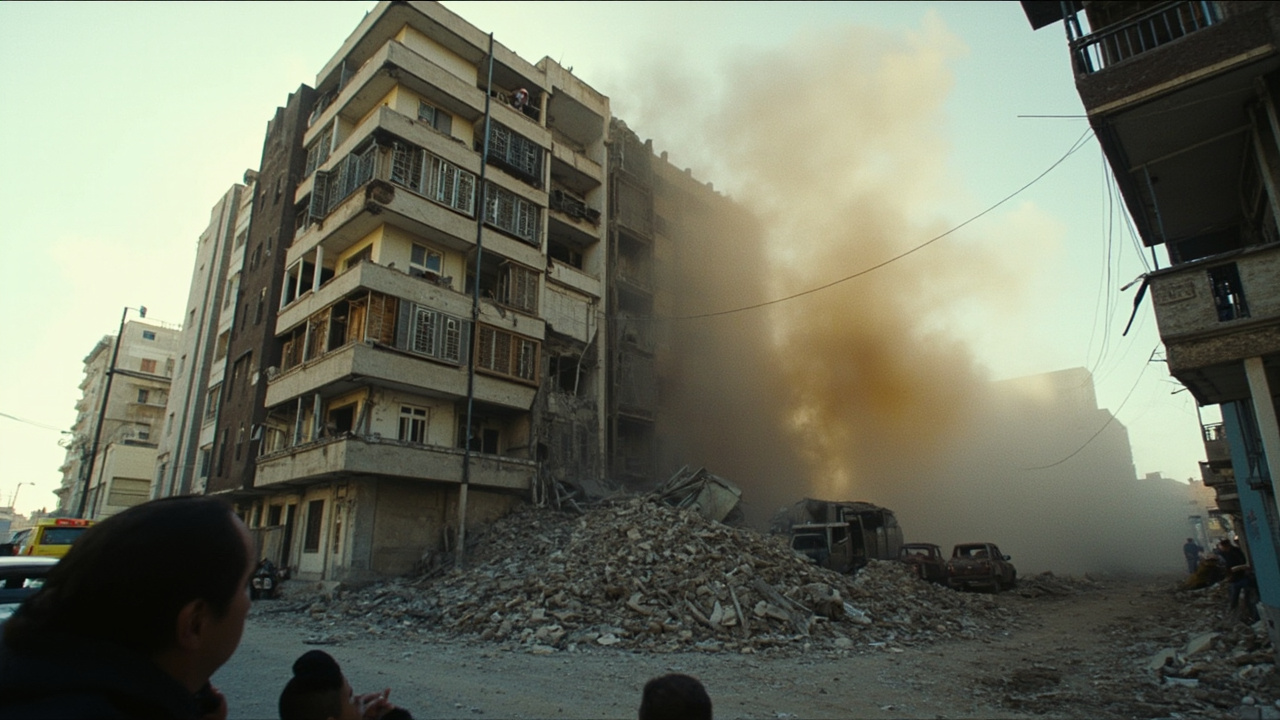
The International Committee of the Red Cross does not use the word "outraged." It is an institution built on the principle of neutrality, and neutrality requires a specific vocabulary — measured, procedural, careful to the point of opacity. The ICRC has operated in conflicts where its access depended on not saying what everyone could see. [1]
On Wednesday, the ICRC said it was "outraged by the devastating death and destruction in densely populated areas across Lebanon." [1]
The statement arrived after Israeli forces launched their largest coordinated strike campaign since the war with Hezbollah began. At least 254 people were killed and 837 wounded across Lebanon, according to Lebanese Civil Defense figures. [2] The strikes came hours after the ceasefire between the United States and Iran was announced — a ceasefire that explicitly did not cover Lebanon, a distinction Israel made clear in its own statement confirming the deal.
The ICRC described "panic and chaos" in the aftermath — language that strips the bureaucratic distance from the institution's usual communications. Anadolu Agency reported that the statement specified civilians were killed "in densely populated areas," a phrase that carries legal weight under international humanitarian law. [3] Strikes in densely populated areas trigger heightened obligations of distinction and proportionality. The ICRC was not merely expressing emotion. It was establishing a factual record.
The strikes followed a pattern. Israel confirmed it hit over 100 sites across Lebanon in what it described as targeted operations against Hezbollah infrastructure. [2] Hezbollah had paused its own attacks in response to the ceasefire, according to sources close to the group. The timing produced a particularly bitter arithmetic: one side stopped shooting, the other accelerated.
Iranian officials warned that Tehran could withdraw from the ceasefire entirely if attacks on Lebanon continued. [4] The diplomatic architecture assembled overnight — fragile, conditional, dependent on mutual restraint — was already under stress before its first full day had passed.
The Red Cross used a word it almost never uses. The dead in Beirut's southern suburbs and the Bekaa Valley would not have needed the ICRC to tell them what happened. But the rest of the world, watching a ceasefire celebrated in one theater and violated in the next, might.
-- LUCIA VEGA, Sao Paulo