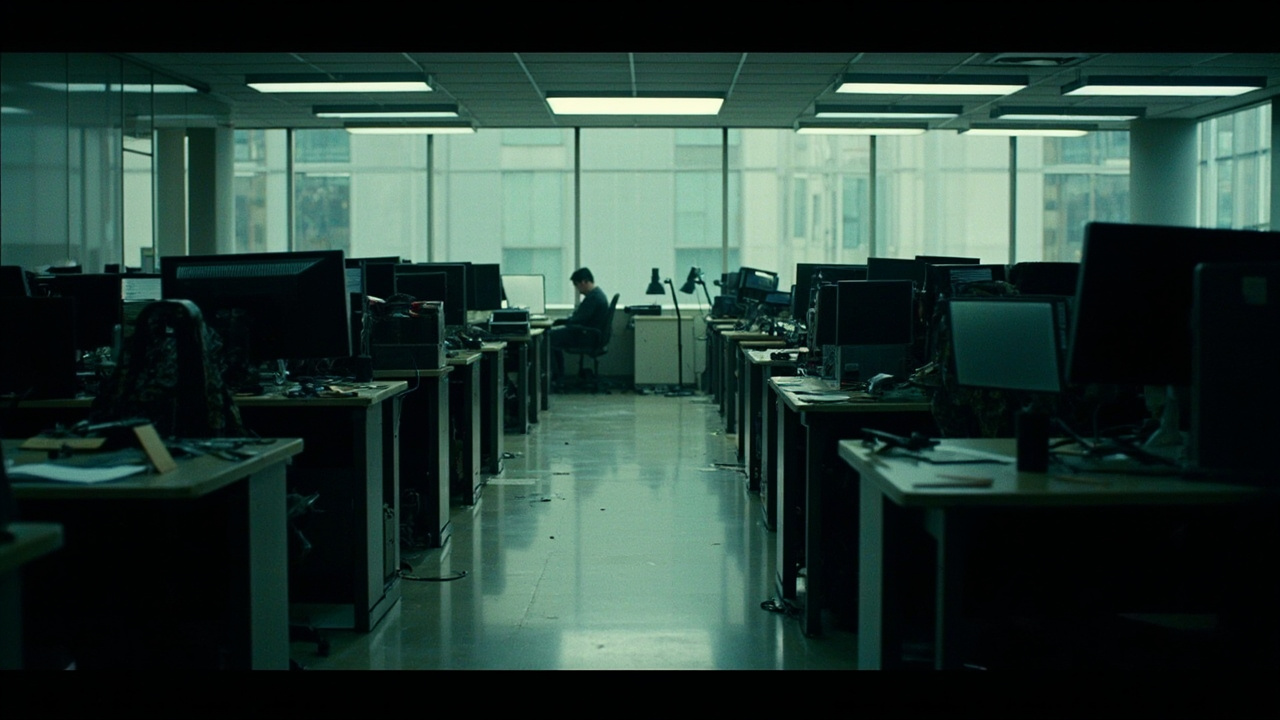
SAN FRANCISCO — The arithmetic is brutal even by Silicon Valley's standards. More than 150,000 tech workers have been laid off in 2026. [1] Over 52,000 lost their jobs in the first three months alone, according to Challenger, Gray and Christmas. [2] Oracle cut up to 30,000 people on April 1. Meta planned layoffs affecting 20 percent of its workforce. The industry that invented the modern knowledge economy is dismantling it at industrial speed.
Into this landscape, OpenAI — the company whose products have accelerated the layoff cycle more than any other — published a 13-page policy blueprint proposing, among other things, a four-day work week at full pay, funded by AI productivity gains. [3]
The proposal arrived in a document that also called for a "robot tax" on companies that replace human workers with AI, a public wealth fund to redistribute AI-generated profits, and government incentives for employers to trial 32-hour weeks. [4] Sam Altman's name was on the cover. The timing — days after Oracle's mass layoff, weeks after Meta's — was either tone-deaf or deliberate.
The Band-Aid Theory
JPMorgan CEO Jamie Dimon offered his own version of the pitch the same week, predicting that AI would reduce the workweek to 3.5 days. [5] The framing is consistent across the executive class: AI destroys some jobs but improves the remaining ones so much that everyone works less and earns the same.
The theory is elegant. The evidence is not. Goldman Sachs published a research note warning that laid-off tech workers face longer job searches and lower earnings upon re-employment than in any previous tech downturn. [2] The bank estimated that 6 to 7 percent of U.S. jobs face displacement risk if AI fully scales, with 2.5 percent at risk under current use cases alone. [6]
The gap between the four-day-week vision and the Goldman research is where the actual story lives. OpenAI's proposal assumes that AI productivity gains are distributed to workers in the form of reduced hours at the same pay. In practice, those gains are being distributed to shareholders in the form of reduced headcount at the same output. The four-day week and the 150,000 layoffs are products of the same force — one is the theory, the other is the practice.
Who Gets the Four-Day Week
The proposal's most revealing detail is its target audience. OpenAI is not proposing that warehouse workers or retail employees get a four-day week. It is proposing that knowledge workers — the same cohort being displaced by AI — should work less. The suggestion implicitly acknowledges that AI's primary displacement effect is concentrated in precisely the white-collar, high-productivity roles that would benefit from reduced hours.
The Guardian's analysis connected the dots that OpenAI's document did not: "Tech companies are cutting jobs and betting on AI. The payoff is far from certain." [7] The piece noted that Microsoft cut 15,000 workers last year while simultaneously increasing its AI investment by $80 billion. The pattern — fire humans, hire algorithms, propose better conditions for the remaining humans — is not a policy framework. It is a public relations strategy dressed as social responsibility.
On X, the reaction has been predictably bifurcated. One thread treats the four-day-week proposal as visionary. Another calls it "the arsonist selling fire extinguishers." [8] Both are partially right. The shorter workweek is a defensible idea with decades of research behind it. The problem is the messenger. When the company most responsible for accelerating job displacement proposes reduced hours, the contradiction is not a bug. It is the product.
-- THEO KAPLAN, San Francisco