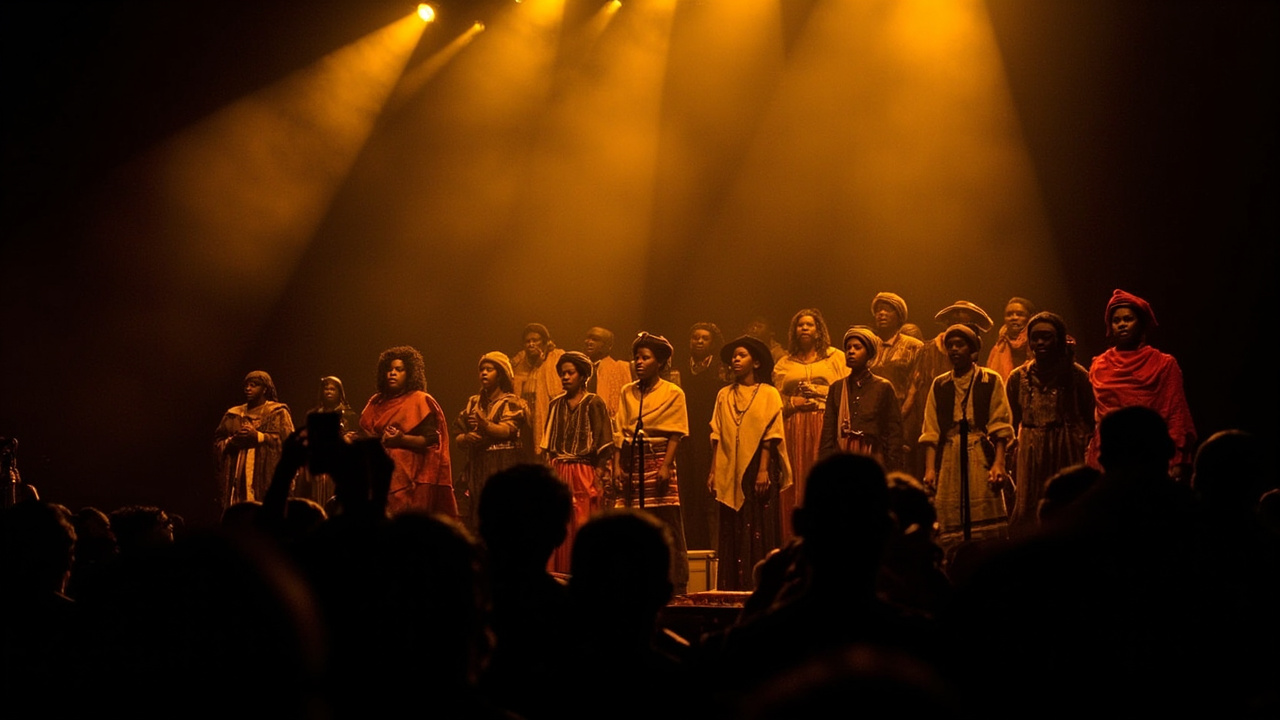
Albert Mazibuko, who sang with South Africa's Ladysmith Black Mambazo for more than five decades and helped transform a Zulu choral tradition into one of the most recognized sounds in world music, died Sunday after a short illness. He was 77.
The group confirmed his death on Facebook, calling him "kind to a fault" and a "saint" who served as a "wise elder" for younger members. [1] South Africa's Culture Minister Gayton McKenzie said Mazibuko was "more than a performer; he was the custodian of a uniquely South African sound that travelled across the world and united people through music." [2]
Born in uMnambithi — the town formerly known as Ladysmith — Mazibuko left school early to work on a farm. His cousin Joseph Shabalala founded the group in 1960 and eventually recruited him in 1969. What followed was a partnership that outlasted apartheid, survived the cultural boycott era, and reached global audiences when Paul Simon featured the group on his 1986 album Graceland. [1]
Ladysmith Black Mambazo fused indigenous Zulu music with isicathamiya, an acapella tradition accompanied by a soft, shuffling style of dance. A 1970 radio performance led to a recording contract, and by 1973 they had released Africa's first gold-selling album, Amabutho. The group went on to win five Grammy Awards from 19 nominations. [1]
Mazibuko's life tracked the arc of modern South Africa. In a 2015 BBC interview, he recalled the terror of apartheid's pass laws. "If you don't carry it, you're arrested," he said. "In my life I was so afraid of being arrested… even now I'm afraid." He described seeing South Africans queue for miles to vote in the first post-apartheid election in 1994 as "like heaven." [1]
The group had been touring in the United States since February and was scheduled to play its last American show this Friday. The current lineup mixes long-standing members with younger musicians carrying the tradition forward. [1]
What obituaries sometimes flatten is how isicathamiya functioned during apartheid — not merely as entertainment but as a form of coded resistance. The harmonies were a way of speaking when speaking was dangerous. Mazibuko understood this. He spent 55 years not just singing but testifying.
-- MAYA CALLOWAY, New York