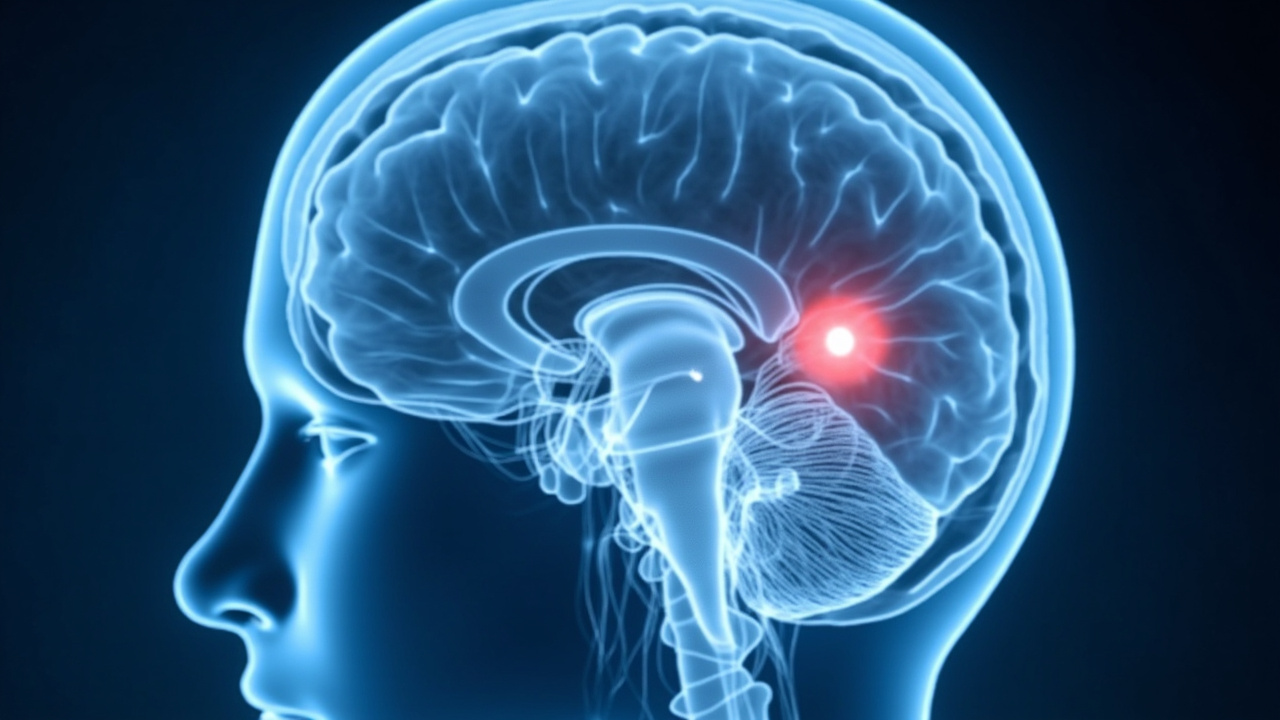
About 1.3 billion people worldwide have high blood pressure, and roughly 40 percent of them don't respond adequately to medication. A collaboration between the University of São Paulo and the University of Auckland may have found part of the reason: a previously overlooked region deep in the brainstem that actively drives hypertension. [1] [2]
The region is called the lateral parafacial area, or pFL. It sits in the medulla, the part of the brainstem that controls breathing and cardiovascular function. In a study published in Circulation Research, the team found that neurons in this region generate abnormal expiratory oscillations — rhythmic signals tied to breathing — that constrict blood vessels and raise blood pressure in hypertensive animals. [3]
The critical experiment was deceptively simple. When researchers inhibited the lateral parafacial neurons, blood pressure returned to normal levels. The effect was sustained, suggesting the pFL is not merely correlated with hypertension but actively maintaining it. [1] [2]
"We've unearthed a new region of the brain," said Professor Julian Paton, who holds positions at both universities and led the research. The discovery builds on decades of understanding that the sympathetic nervous system — the body's fight-or-flight machinery — is overactive in many hypertensive patients. What was missing was where in the brain this overactivation originates. [2]
The study found that pFL neurons become activated under conditions of high blood pressure, generating expiratory oscillations that amplify sympathetic nerve outflow to blood vessels. This creates a feedback loop: the brain tells the vessels to constrict, pressure rises, and the constriction sustains itself. [3]
For clinicians, the finding may help explain a stubborn clinical puzzle. Current blood pressure medications target the kidneys, blood vessels, and heart. None target the brain directly. If pFL is driving hypertension from within the brainstem, patients whose medications fail may be treating symptoms rather than the source. [1]
The research team includes scientists from São Paulo who discovered the role of expiratory neurons in sympathetic drive, and Auckland researchers who mapped the pFL's connections. Together they propose that this region could become a target for new therapies — possibly including neuromodulation techniques that adjust brain activity without drugs. [2] [3]
There is a clinical intuition here worth naming. Doctors have long suspected that some cases of resistant hypertension have a neurological origin. This study gives that intuition an address.
-- NORA WHITFIELD, Chicago