There is a number that the Department of Homeland Security does not want you to think about: fifty-six. That is how many days the department has been operating without full funding, which makes this the longest partial government shutdown in American history. As we noted yesterday, there were faint rumblings about a possible test vote. Those rumblings died in a pro forma session that lasted less than two minutes.
On Wednesday, the House gaveled in and gaveled out. No vote on DHS funding. No vote on anything. The members who were not present — which was nearly all of them — had already scattered to their districts for a recess that runs through April 13. The department that is responsible for border security, disaster response, cybersecurity, and the Coast Guard will continue to operate on fumes while Congress enjoys constituent coffee hours.
The shutdown began on February 14, when a continuing resolution expired and Republicans declined to extend DHS funding over disputes about immigration enforcement provisions attached to the spending bill [4]. What started as a negotiating tactic has calcified into something closer to permanent dysfunction. Fifty-six days later, neither chamber has brought a clean funding bill to a vote.
The human cost is documented and growing. TIME reported last week on the agency-by-agency damage [1]. FEMA has frozen new disaster preparedness grants — this during a spring tornado season that has already produced outbreaks across the Ohio Valley and Deep South. CISA, the Cybersecurity and Infrastructure Security Agency, has furloughed forty percent of its workforce at precisely the moment when the country is engaged in cyber operations against Iran. The Coast Guard, which interdicts drug shipments and patrols maritime borders, has sent non-essential personnel home.
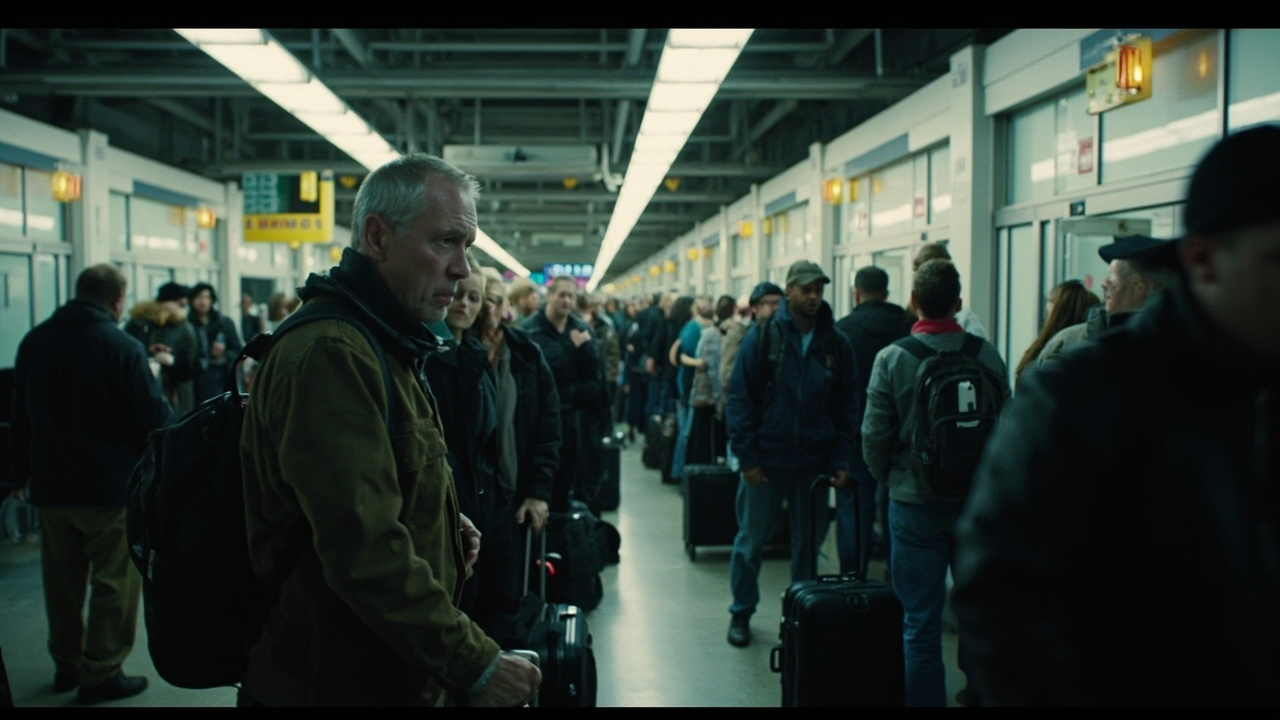
TSA agents are still being paid — Congress passed a narrow carve-out in early March after airport lines became a cable news staple — but the agency is operating under a stop-gap measure that expires April 30 [2]. If the broader shutdown is not resolved by then, the screeners who remain at their posts will join their DHS colleagues in working without guaranteed pay.
The political dynamics are as frozen as the funding. Speaker Johnson and Senate Majority Leader Thune announced a two-track plan on April 1 that would separate immigration enforcement measures from core DHS operations funding [3]. The idea was to give immigration hawks a standalone vote while allowing the department to reopen. It was, by Washington standards, a reasonable compromise. It has not received a vote in either chamber.
The reason is familiar: a bloc of roughly twenty House Republicans has refused to support any DHS funding bill that does not include the full suite of immigration enforcement provisions the White House has demanded. These provisions — expanded detention authority, asylum restrictions, and mandatory E-Verify — were the same measures that killed the bipartisan border deal in 2024. They are the same measures that killed the continuing resolution in February. They are, in effect, a legislative suicide vest strapped to the department responsible for keeping the country safe.
CBS News documented the absurdity in a segment that aired Tuesday evening [2]. A Coast Guard crew in the Pacific — tasked with interdicting fentanyl shipments — had been told that their next paycheck was not guaranteed. A FEMA regional director in Atlanta was working with a skeleton staff to prepare for hurricane season, which begins June 1. A CISA analyst had been told to hand over her classified laptop and report back when funding was restored.
These are not abstractions. They are the operational consequences of a Congress that cannot perform its most basic function: appropriating money. And they are occurring during a war. The United States is conducting military operations against Iran, enforcing — or attempting to enforce — a ceasefire in the Strait of Hormuz, and running a cyber campaign that CISA itself has been asked to support. The agency tasked with defending domestic networks from Iranian retaliation has forty percent of its staff sitting at home.
The irony is structural, not incidental. DHS was created in 2002 specifically to unify the federal government's response to national security threats. It was the bureaucratic answer to September 11 — the idea that a single department could coordinate border security, disaster response, and infrastructure protection under one roof. Twenty-four years later, that department is the only part of the federal government that Congress cannot fund.
When members return on April 14, they will face the same arithmetic they left behind. The Johnson-Thune plan needs 218 votes in the House. The immigration hardliners have not moved. The TSA carve-out expires in twenty days. And the war powers clock — a separate but entangled crisis — will have only nineteen days remaining.
Fifty-six days. The previous record for a partial shutdown was the thirty-five-day standoff over border wall funding in 2018-2019. That shutdown ended when air traffic controllers began calling in sick and LaGuardia Airport briefly closed. It took the threat of a genuine safety crisis to force action.
The current shutdown has not yet produced a single dramatic failure point. It has instead produced a slow erosion — grants unfunded, positions unfilled, operations degraded — that is harder to photograph and easier to ignore. Which is, of course, exactly why it has lasted fifty-six days and counting.