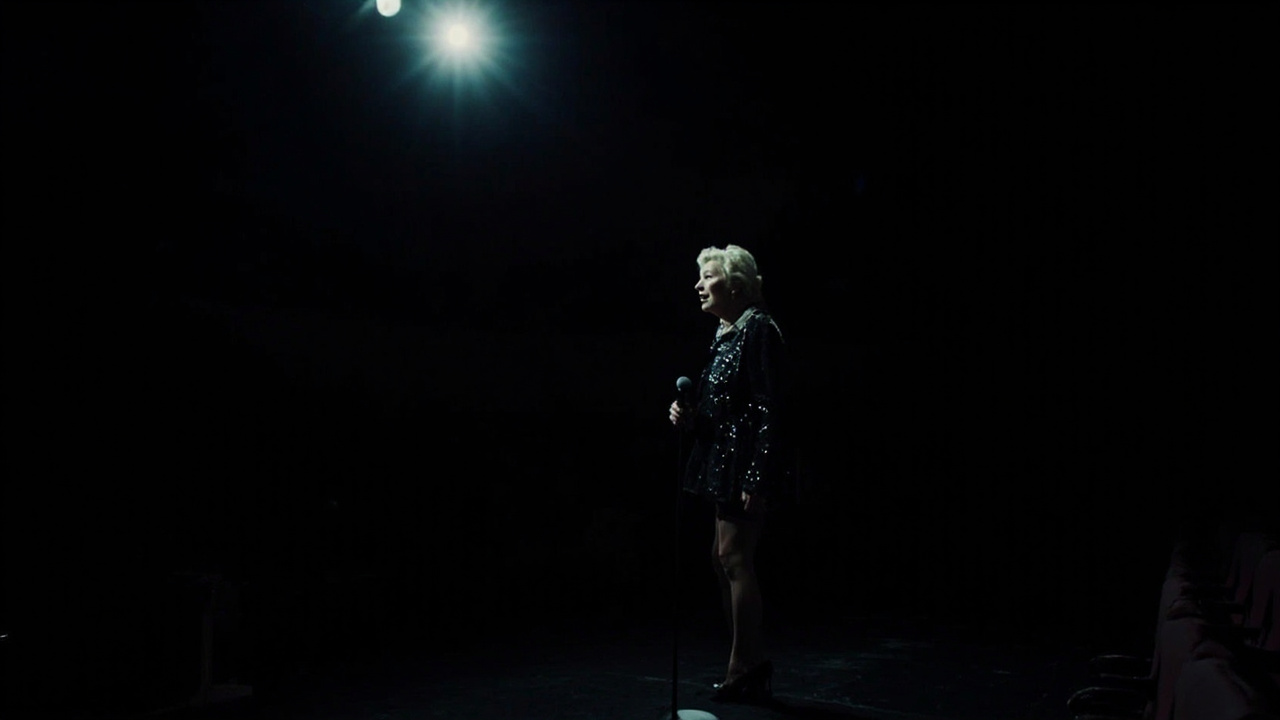
The problem with calling something the best comedy on television is that it forces you to define what comedy is doing right now. And what comedy is doing right now — the good comedy, the comedy that will survive the decade — is being made by people who understand that funny and furious are not opposites. Hacks, which premiered its fifth and final season on HBO Max on April 9, is the proof [1]. Ten episodes. Weekly drops. The finale lands May 28. And the show arrives with a 100% Rotten Tomatoes score that feels less like critical consensus and more like critical surrender — the reviewers have simply run out of objections [1].
Four seasons and twelve Emmys will do that. Jean Smart has won four consecutive Best Comedy Actress Emmys for her performance as Deborah Vance, the aging Las Vegas comedian who refuses to age, refuses to soften, and refuses to let anyone in the room be smarter than she is [1]. Smart is now the most decorated comedy performer of her generation by a margin that is becoming embarrassing for everyone else. And if the first episodes of Season 5 are any indication, she intends to leave the stage the way Deborah Vance would — not gracefully, but spectacularly.
The Setup
The premise this season is elegant in its cruelty. Deborah, having reached the summit of late-night television in Season 4, now finds herself legally prevented from performing. A non-compete clause. A gag order. The queen of comedy, gagged [1][2]. Her goal — a sold-out Madison Square Garden show — sits on the other side of a legal wall that the show's creators, Lucia Aniello, Paul W. Downs, and Jen Statsky, use not as a plot device but as a structural metaphor for what happens to women in entertainment when the contracts expire and the leverage shifts [1].
Angie Han at The Hollywood Reporter sees it differently, and her dissent is worth taking seriously precisely because the consensus is so overwhelming. Han calls the final season a "sugarcoated obituary" — a show that has traded its sharpness for sentiment, that wants so badly to give Deborah a triumphant exit that it has forgotten the thing that made Deborah interesting was her capacity for destruction [2]. It is a fair criticism. There are moments in the early episodes where the show reaches for warmth in places where the earlier seasons would have reached for a knife. Whether that represents maturity or softness depends on what you think a final season owes its audience.
The AI Episode
But the episode that will define this season — and possibly this year in television — is the anti-AI hour. I will not spoil the mechanics, but the premise puts Deborah and Ava squarely in the crosshairs of the entertainment industry's most contentious active debate: whether artificial intelligence should be permitted to generate comedy, and what it means for the people who have spent their lives learning to do it the hard way [1][3].
Hannah Einbinder, who plays Ava, has not been subtle about where she stands. In interviews surrounding the premiere, she called the creators of AI comedy tools "losers" — not with the diplomatic vagueness of a studio-managed press tour, but with what Deadline described as "vitriolic opposition" [3]. It is the kind of statement that gets clipped, posted, shared, and argued about in ways that transcend the show itself. Einbinder is not performing a position. She is staking one out, and the episode gives her the dramatic architecture to make the argument inside the fiction as forcefully as she is making it outside of it.
Matt Zoller Seitz at RogerEbert.com called the season "practically flawless" [1]. His colleague Matt Tallerico went further, naming Hacks "the best comedy of the 2020s" [1]. These are not casual superlatives from casual critics. Seitz has been writing about television with the rigor of a literary critic for two decades. When he says a comedy is flawless, he means it has solved a set of problems — tonal, structural, emotional — that most shows in the genre do not even attempt.
The New Arrivals
The casting this season suggests a show that knows exactly how much runway it has left and intends to use every foot of it. Ann Dowd — an actress whose presence in any scene immediately raises the dramatic stakes by a factor that physics cannot explain — arrives as a guest star [3]. Christopher Briney, best known as Conrad in The Summer I Turned Pretty, plays a rock star love interest, a choice that is either inspired or insane and will probably turn out to be both [3].
Smart herself has said that the ending was "shocking" — "not remotely anything I could have imagined" [4]. From an actress who has played Deborah Vance for five years, who has inhabited the character's rhythms so completely that it has become difficult to tell where Smart's intelligence ends and Vance's begins, this is not a throwaway promotional quote. It is a warning. Aniello, Downs, and Statsky have written an ending that surprised the woman who has to perform it, and that kind of creative ambition in a final season — the willingness to go somewhere that your own star did not expect — is rarer than perfect Rotten Tomatoes scores.
What the Consensus Misses
The near-universal praise for Hacks obscures an interesting question that Han's review at least gestures toward: what do we lose when a show this good decides to be kind to its characters? The early seasons of Hacks were powered by mutual contempt — Deborah's disdain for Ava's generation, Ava's disdain for Deborah's compromises, and the grudging recognition that each needed the other to survive. That tension was the engine. If Season 5 has softened it, as Han suggests, then the show faces the same challenge every great comedy faces in its final chapter: how to end without betraying the thing that made you begin.
The answer, based on the episodes available, is that Hacks has not abandoned its edge so much as redirected it. The target is no longer the relationship between mentor and protégé. The target is the industry that shaped both of them — an industry that gags its performers, replaces its writers with algorithms, and then expects applause for content. The AI episode is the clearest expression of this shift, but it runs through every storyline: a comedy about comedians becomes, in its final hours, a comedy about whether comedy itself will survive.
Ten episodes. Weekly. The finale on May 28. Clear your Wednesday nights.