When your blood sugar rises after a meal, something in your brain tells you to stop eating. Scientists have long assumed that message travels directly from one type of brain cell to another. A new study reveals there is an unexpected middleman in the chain — and it belongs to a class of cells that neuroscience has historically treated as furniture. [1]
The study, published April 6 in the Proceedings of the National Academy of Sciences, was led by researchers at the University of Concepción in Chile in collaboration with the University of Maryland. The team identified a previously unknown communication relay in the hypothalamus, the brain region that governs hunger and fullness. [1]
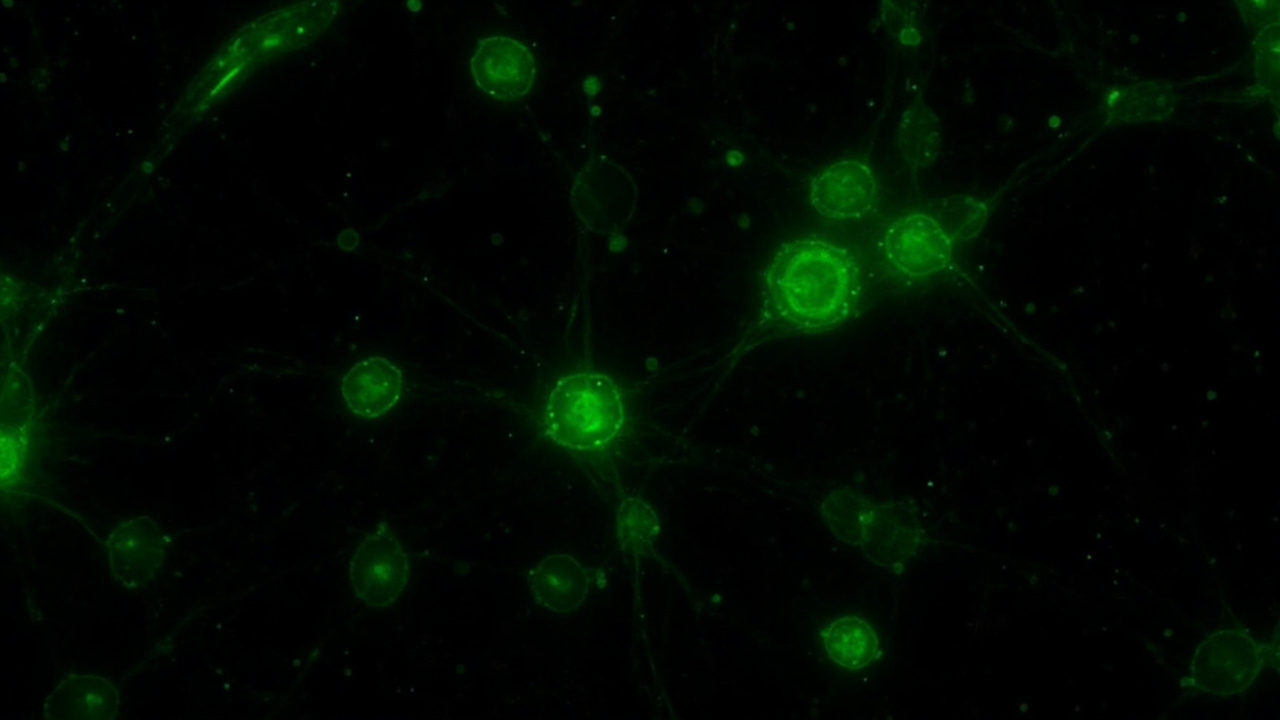
Here is how it works. Tanycytes — specialized cells lining a fluid-filled cavity deep in the brain — detect glucose circulating in cerebrospinal fluid. When blood sugar rises after a meal, tanycytes process the glucose and release a byproduct called lactate. That lactate then reaches astrocytes, star-shaped cells abundant throughout the brain. The astrocytes express a receptor called HCAR1 that detects the lactate, triggering them to release glutamate. When that glutamate reaches appetite-suppressing neurons, the brain registers fullness. [1]
"Researchers used to think that lactate produced from tanycytes 'spoke' directly to neurons involved in appetite control," said Ricardo Araneda, a professor at UMD's Department of Biology and a corresponding author. "But we found that there was an unexpected middleman in that conversation — astrocytes." [1]
The researchers demonstrated the chain's sensitivity by delivering glucose directly into a single tanycyte while monitoring surrounding astrocytes. One cell's activity was enough to trigger responses across multiple neighboring astrocytes, showing that even a tiny metabolic event ripples outward through the network. [1]
The team also noted a dual mechanism. The hypothalamus contains two opposing populations of neurons: those that promote hunger and those that suppress it. Lactate appears to work on both simultaneously — activating fullness neurons through the astrocyte relay while potentially quieting hunger neurons through a more direct route. [1]
The practical implications point toward obesity treatment. Current therapies like GLP-1 drugs work on gut-brain signaling. This study identifies a different pathway entirely — one that operates within the brain itself. "We now have a different mechanism where we might be able to target astrocytes or specifically this HCAR1 receptor," Araneda said. "It would be a novel target that may complement existing therapies like Ozempic." [1]
The study was conducted in animal models, but tanycytes and astrocytes exist in all mammals, including humans. The next step is testing whether manipulating the HCAR1 receptor in astrocytes can change feeding behavior — a necessary preclinical milestone.
What deserves emphasis is the conceptual shift. For decades, neuroscience drew a hard line between neurons (the thinkers) and glia (the helpers). That line is dissolving. The brain's support staff, it turns out, has been making decisions all along.
-- NORA WHITFIELD, Chicago