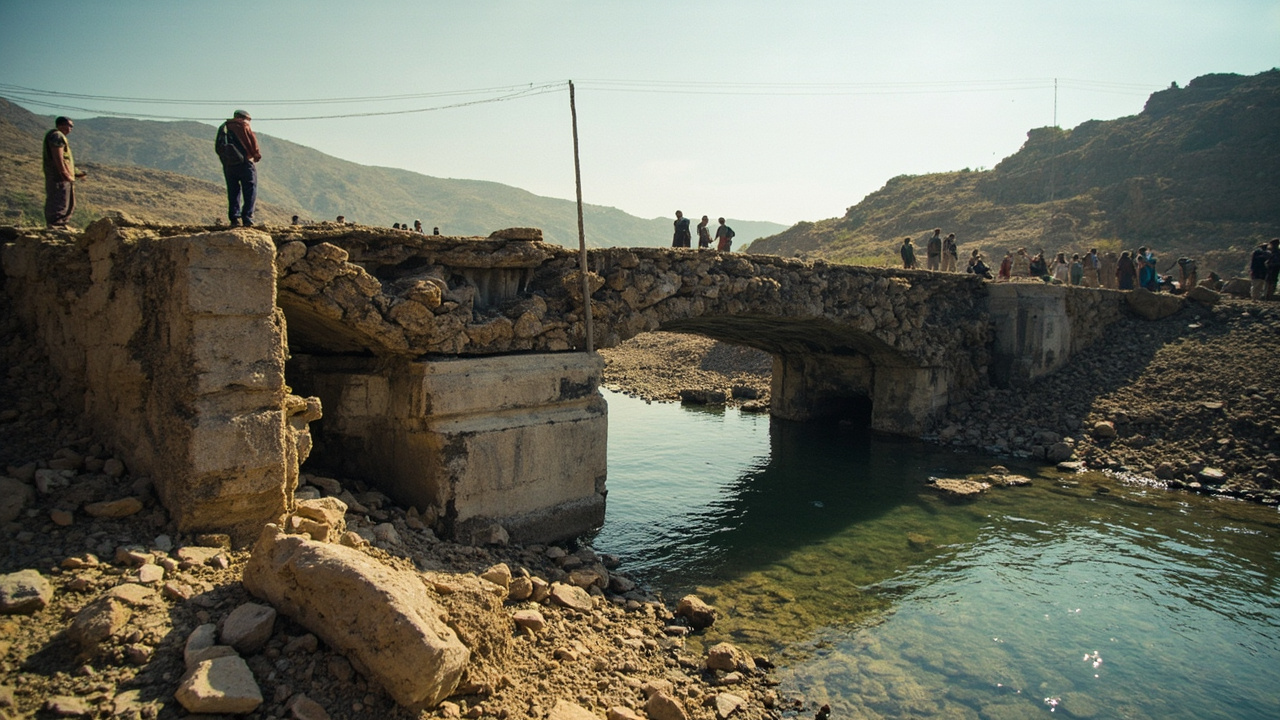
The last functional bridge over the Litani River in southern Lebanon was destroyed on Thursday, cutting tens of thousands of civilians off from humanitarian aid corridors to the north [1].
Human Rights Watch confirmed the destruction in a report published on April 10, documenting that all major crossings over the Litani have now been rendered impassable. The organization identified at least seven bridges destroyed since the conflict intensified in March, calling the pattern "consistent with a deliberate strategy to isolate the population south of the river."
The Litani runs roughly east to west across southern Lebanon, forming a natural barrier between the zone of active hostilities and the relative safety of the Bekaa Valley and Beirut. Aid convoys from the United Nations, the Red Cross, and Lebanese civil defense relied on these bridges to deliver food, medicine, and fuel to an estimated 80,000 to 120,000 people who have not been able to evacuate.
Without bridge access, the remaining options are limited. Small boats can cross the river at certain points, but they cannot carry the volume of supplies needed. Helicopter deliveries are possible but have not been authorized in the current airspace environment. Overland routes through mountain roads are slow, dangerous, and impassable to heavy vehicles.
The IDF did not claim or deny responsibility for the bridge destruction. Hezbollah blamed Israeli airstrikes. Satellite imagery shows blast patterns consistent with precision-guided munitions, though independent verification remains ongoing.
The ceasefire does not cover Lebanon. The bridges are proof.
-- YOSEF STERN, Jerusalem