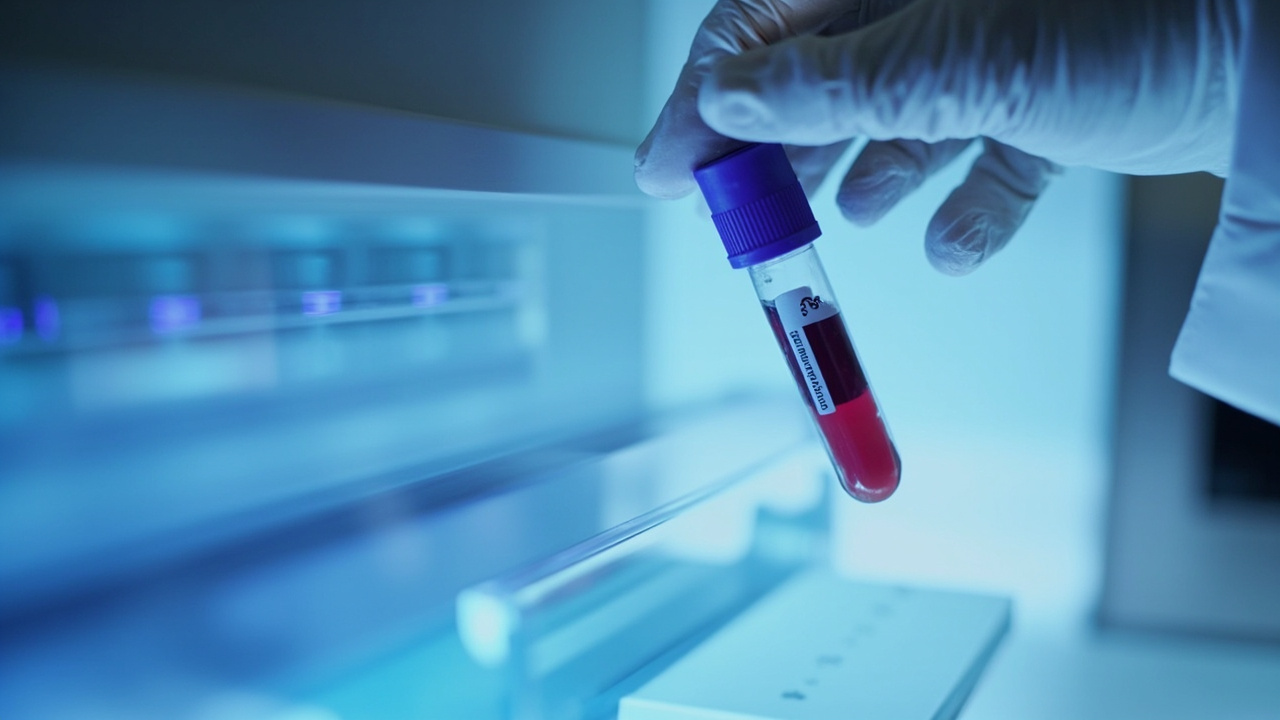
Consider the strangeness of what happens inside you at this very moment. As you read this sentence, somewhere between 50 and 70 billion of your cells are dying. This is not pathology. This is maintenance. Your body is a city perpetually demolishing its own buildings and raising new ones in their place, and the rubble — fragments of DNA from liver cells and lung cells and the lining of your stomach — drifts into your bloodstream like confetti after a parade nobody organized [1].
For most of medical history, we have ignored this confetti. It seemed like noise, biological detritus, the body taking out its own trash. But a team of scientists at UCLA, led by Professor Jasmine Zhou, has discovered that this cellular debris is not noise at all. It is signal. And they have built a test — a simple, inexpensive blood test called MethylScan — that can read it [1].
The study, published in the Proceedings of the National Academy of Sciences, describes an approach to cancer detection that departs fundamentally from the methods most of us associate with the term "liquid biopsy" [2]. Traditional liquid biopsies look for mutations — genetic errors, misspellings in the DNA code that are the hallmarks of cancer. MethylScan does something different. It looks for methylation patterns — the chemical tags that cells attach to their DNA to regulate which genes are turned on and which are turned off. Methylation is the grammar of the genome, the punctuation that tells each cell what kind of cell it is and what it should be doing. And when a cell becomes cancerous, its grammar changes [1].
"Every day, 50 to 70 billion cells in our body die," Zhou explained. "They don't just disappear — their DNA goes into the bloodstream. That means we already have information from all our organs circulating in the blood" [2]. The insight is almost embarrassingly simple: the body is already broadcasting its health status, continuously, into a medium we routinely draw and discard. The question was always whether we could learn to listen.
MethylScan listens through an elegant technical maneuver. About 80 to 90 percent of the cell-free DNA floating in your blood comes from normal white blood cells — the background chatter of a healthy immune system. The test uses an enzyme-based process to selectively ignore these unmethylated fragments, enriching the sample for the methylated DNA that carries the signal from organs deeper in the body [1]. What remains is then sequenced and analyzed by machine learning algorithms trained to distinguish the methylation signatures of healthy tissue from those of cancerous or diseased tissue.
The numbers, as reported, are encouraging without being miraculous — a distinction that matters greatly in a field plagued by overpromise. The researchers tested MethylScan on blood samples from 1,061 people, including patients with liver, lung, ovarian, and stomach cancers, as well as individuals with various liver diseases and healthy controls [1]. At a specificity of 98 percent — meaning that only 2 percent of healthy people would receive a false alarm — the test detected approximately 63 percent of cancers across all stages, and roughly 55 percent of early-stage cancers. For liver cancer specifically, the detection rate rose to nearly 80 percent at a specificity above 90 percent [2].
These are not the numbers of a perfect test. A 55 percent sensitivity for early-stage cancer means that roughly half of early cancers would be missed. But the comparison should not be to perfection; it should be to the current standard, which for most cancers is no routine blood-based screening at all. The existing paradigm depends on organ-specific tests — colonoscopies, mammograms, low-dose CT scans for lung cancer — each of which screens for one disease at a time, each of which carries its own costs, discomforts, and barriers to access. MethylScan proposes something different: a single draw, a single assay, a scan of the body's entire molecular weather system from a tube of blood [1].
Perhaps the most remarkable feature of the test is its ability to identify the tissue of origin — to determine not only that something is wrong, but where in the body the signal is coming from. "Being able to trace signals back to their source is important," said Wenyuan Li, a professor of pathology at UCLA and a co-author of the study, "because a positive blood test needs to be followed by imaging or other diagnostic procedures directed at the right organ" [2]. This is the difference between a fire alarm that tells you there is smoke somewhere in the building and one that tells you which room is burning.
The test also demonstrated an unexpected versatility beyond cancer. It could distinguish between different types of liver disease — hepatitis B, hepatitis C, alcohol-related liver disease, and fatty liver disease — with approximately 85 percent accuracy [1]. This capability transforms MethylScan from a cancer screening tool into something more like a general health surveillance system, reading the methylation signatures of multiple organ systems from a single sample.
And then there is the cost. The researchers estimate that MethylScan could be performed for less than $20 per test if sequencing costs continue their steady decline — a figure that, if realized, would place multi-cancer screening within reach of primary care clinics in settings where colonoscopies and MRI scans remain logistically or financially impossible [1].
The caveats are real and should not be minimized. This is a proof-of-concept study with 1,061 participants [3]. Larger prospective trials — studies that follow healthy people over time to see whether MethylScan detects cancers before symptoms appear in real-world conditions — are still needed. The gap between a promising laboratory result and a clinically validated screening tool is wide, and it is littered with technologies that looked transformative in small studies and faltered at scale.
But the underlying biology is sound. Your cells are dying. Their DNA is entering your bloodstream. And the chemical grammar of that DNA is telling a story about what is happening inside you — a story that, until now, nobody was equipped to read. MethylScan is learning the language.