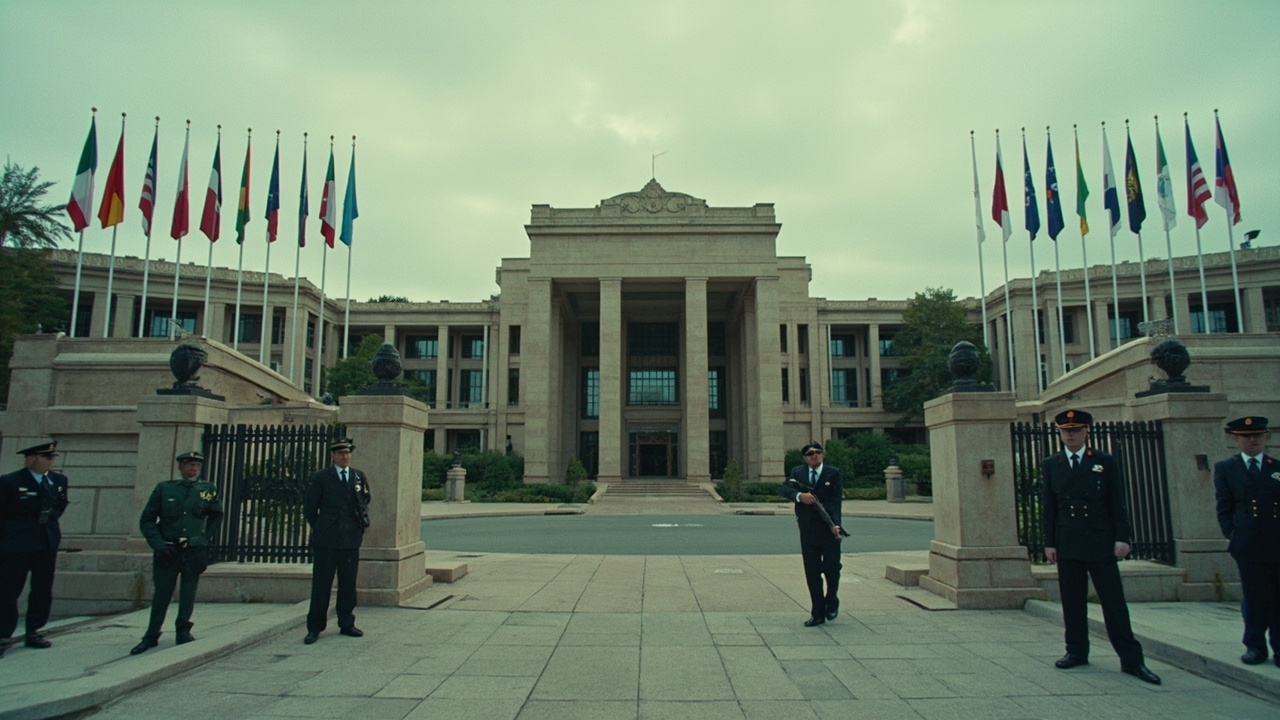
The Serena Hotel in Islamabad is a building designed for exactly this kind of occasion, which is to say it is a building designed to look as though nothing extraordinary is happening inside it. The marble floors have been polished. The garden hedges have been trimmed to geometry. The snipers on the roof are the only visible concession to the fact that two nations at war are sending their representatives through the same lobby.
Pakistan declared April 9 and 10 public holidays in the Islamabad Capital Territory and Rawalpindi. [1] The announcement came from the Interior Ministry at 11 p.m. on April 8 — late enough to suggest the decision was not planned, early enough to clear the streets by morning. Schools closed. Government offices shuttered. The Margalla Hills highway was sealed from Faisal Mosque to the Serena's eastern gate. What remained was a city emptied for diplomacy.
The security protocol is Blue Book — VVIP tier, the highest classification Pakistan maintains, typically reserved for visiting heads of state or the Prime Minister's own movements. [2] Al Jazeera reported that three concentric perimeters were established around the hotel. The innermost ring is manned by the Special Services Group. The outermost extends to the Islamabad Expressway.
Pakistan's role here is not accidental. It shares a 909-kilometer border with Iran. PM Shehbaz Sharif personally brokered the ceasefire text that was delivered to both Washington and Tehran on April 7, carried by ISI Director General Nadeem Anjum. [3] Qatar had hosted earlier back-channel contacts between Iranian and American intermediaries. Oman had offered. Egypt had positioned itself. None of them delivered what Islamabad delivered — both delegations in one city, at one table, on a fixed date.
Iran's delegation is led by Foreign Minister Abbas Araghchi. The US side is led by Secretary Rubio's special envoy. Tehran initially rejected Islamabad as a venue — the Chosun Ilbo reported that Supreme Leader Mojtaba Khamenei considered it too close to American influence. [4] PM Shehbaz made a direct call to Khamenei. The conversation lasted forty minutes. Iran accepted.
The talks open this morning, Friday April 10, with a stated fifteen-day window to reach a comprehensive agreement. The agenda, according to Al Jazeera, includes Hormuz transit, the status of Lebanon, nuclear enrichment limits, and prisoner exchanges. That is an ambitious list for fifteen days. It is an impossible list for any other venue.
The hedges are trimmed. The snipers are positioned. The marble is clean. The rest is negotiation.
-- PRIYA SHARMA, Islamabad