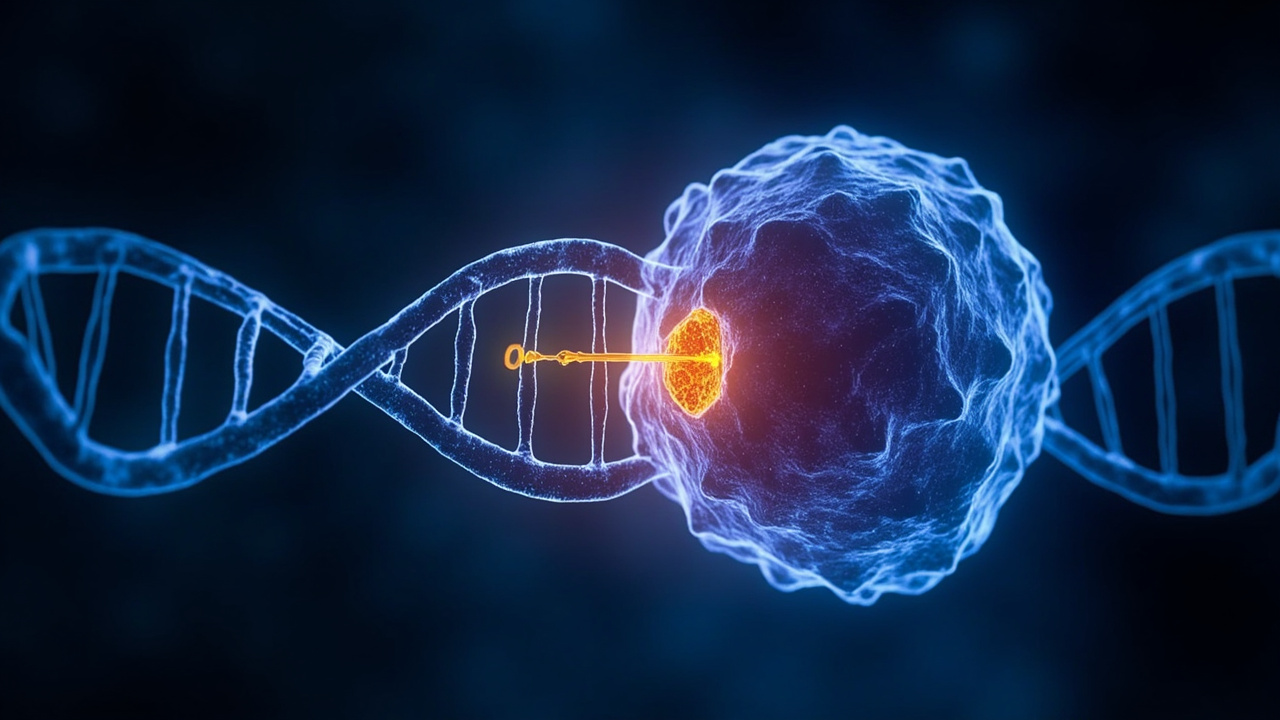
Researchers at Scripps Research have identified the precise mechanism by which cancer cells survive the kind of catastrophic DNA damage that should kill them [1].
The study, published in Molecular Cell, centers on an enzyme called Pol theta — formally DNA polymerase theta. When a cell's DNA suffers double-strand breaks, the damage is normally fatal. Healthy cells have repair pathways, but many cancers lack those pathways entirely. They should die. They do not.
Pol theta is the reason. The enzyme acts as a last-resort repair tool, stitching broken DNA back together through an error-prone process called microhomology-mediated end joining. The repair is sloppy, introducing mutations, but it keeps the cell alive. For tumors, survival with mutations is better than death.
The Scripps team mapped exactly how Pol theta recognizes and binds to broken DNA ends, revealing structural details that had eluded researchers for years. More importantly, they demonstrated that when Pol theta is blocked in combination with ATR inhibitors — drugs that target another DNA damage response pathway — cancer cells with defective repair mechanisms are killed with striking efficiency.
The finding matters because ATR inhibitors already exist and are in clinical trials. If Pol theta can be targeted with a complementary drug, the combination could attack treatment-resistant tumors from two angles simultaneously, leaving them no escape route.
The research remains in preclinical stages. No human trials of a Pol theta inhibitor have begun. But the mechanistic clarity of the finding gives drug developers a specific molecular target to pursue.
-- KENJI NAKAMURA, Tokyo