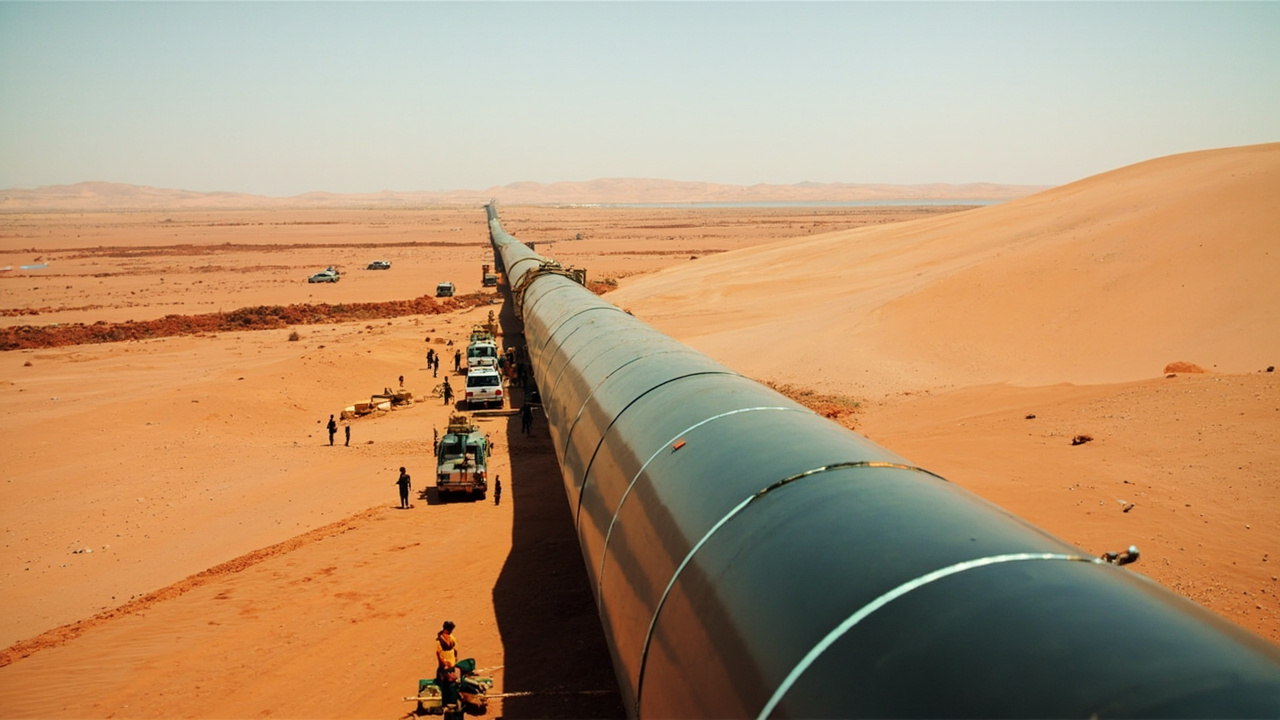
Saudi Arabia formally confirmed on Thursday that Iranian strikes damaged the East-West pipeline, also known as the Petroline, marking the first official acknowledgment that the conflict directly impacted Saudi infrastructure [1].
The East-West pipeline runs 1,200 kilometers from the oil fields of the Eastern Province to the Red Sea port of Yanbu. It was built in the 1980s precisely to bypass the Strait of Hormuz — an insurance policy against the kind of disruption now unfolding. The pipeline can carry roughly 5 million barrels per day, though it typically operates well below capacity.
Saudi Energy Minister Prince Abdulaziz bin Salman said the damage was "limited and repairable" but did not provide a timeline for restoration. Satellite imagery analyzed by commercial firms showed scorch marks and construction equipment at two points along the pipeline's central section, consistent with drone or cruise missile strikes.
The confirmation matters beyond the physical damage. Saudi Arabia has carefully positioned itself as a non-belligerent in the U.S.-Iran conflict, maintaining diplomatic channels with Tehran while hosting U.S. military assets. Acknowledging an Iranian strike on sovereign infrastructure shifts that posture, even if Riyadh calibrates its response to avoid escalation.
For oil markets, the pipeline damage means the Hormuz bypass is partially compromised. Traders who assumed Saudi oil could flow west through Yanbu regardless of the strait's status must now factor in repair timelines and vulnerability to further strikes.
The ceasefire may protect the pipeline from additional damage. It cannot undo what has already been done.
-- PRIYA SHARMA, Delhi