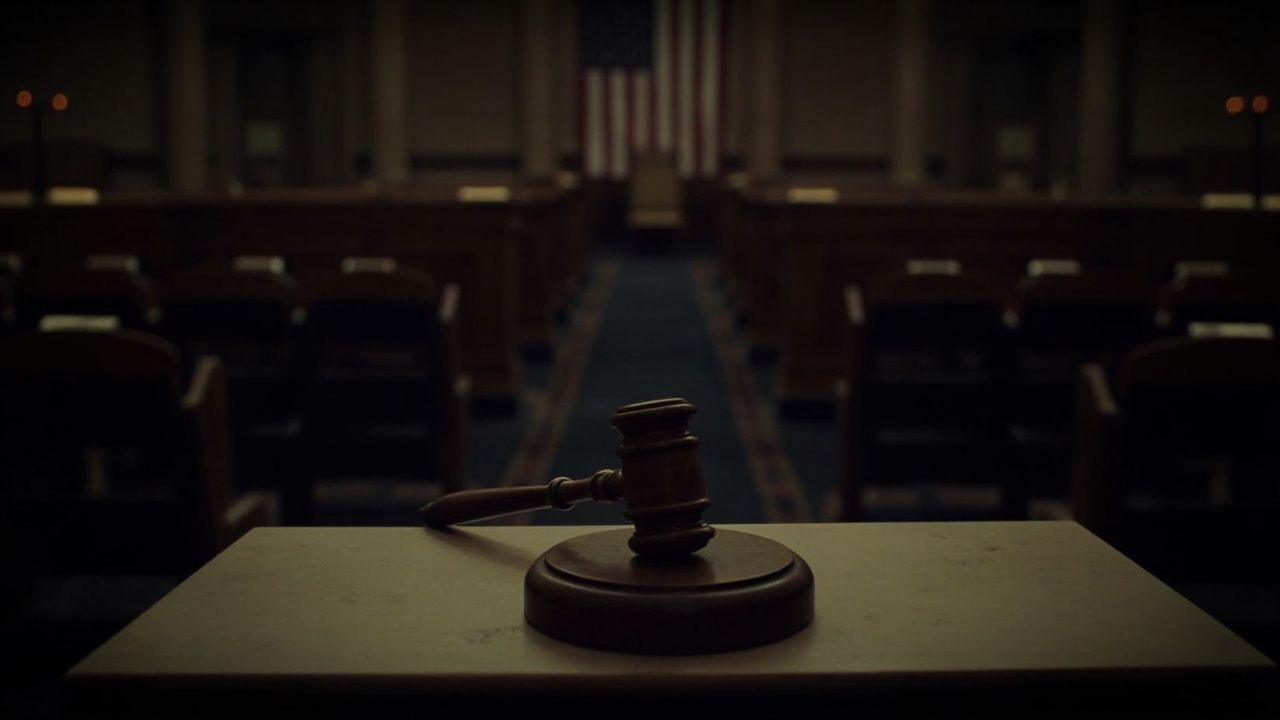
The gavel came down at 11:02 a.m. on Wednesday, and with it fell the fourth attempt to force Congress to do its constitutional job. Rep. Glenn Ivey rose during a pro forma session to seek unanimous consent on a war powers resolution — and Rep. Chris Smith of New Jersey, presiding over an otherwise empty chamber, gaveled the session closed without recognizing him [1]. The whole thing took less than ninety seconds. As we reported yesterday, the math was already dire. It got worse.
Day 41. That is where the clock stands under the War Powers Resolution of 1973, the statute that gives a president sixty days to conduct hostilities without congressional authorization before being required to withdraw. The United States has been engaged in military operations against Iran since March 1. Congress has not voted to authorize those operations. It has not voted to reject them either. It has, in fact, done nothing at all — and then it left town.
The recess runs through April 13. Members return April 14. When they do, nineteen days will remain before the sixty-day deadline on April 29. Nineteen days to do what they have failed to do in forty-one.
The procedural mechanics of Wednesday's blockage deserve scrutiny. Pro forma sessions exist precisely so that Congress can claim it has not formally adjourned — a constitutional nicety that prevents recess appointments and preserves the fiction of legislative availability. Ivey attempted to use that fiction against itself, seeking recognition during a session that was designed to be purely ceremonial [1]. Smith, following what Republican leadership has treated as standing orders, refused.
This was not improvisational. It was the fourth time in six weeks that a war powers resolution has been blocked from reaching a vote. The first three were procedural kills in committee. This one was cruder: a presiding officer simply pretending a member of Congress was not standing in front of him.
The constitutional implications are not subtle. Article I, Section 8 of the Constitution grants Congress — not the president — the power to declare war. The War Powers Resolution was enacted over Richard Nixon's veto specifically to prevent the executive branch from waging indefinite military campaigns without legislative consent. It has been tested before — in Lebanon, in Kosovo, in Libya — but the current standoff is remarkable for the brazenness of the avoidance. Congress is not debating whether to authorize the Iran operation. It is refusing to hold a debate at all [3].
Reuters reported Wednesday evening that Democrats are preparing to force recorded votes immediately upon the House's return on April 14 [2]. The strategy involves a discharge petition, which would bypass committee leadership and bring a resolution directly to the floor. A discharge petition requires 218 signatures — a simple majority. Democrats hold 215 seats. They would need three Republicans.
The names being discussed are familiar: those members who have publicly expressed discomfort with the scope of the Iran operation but have stopped short of breaking with leadership on procedural votes. Whether discomfort translates to signatures is the question that will define the next nineteen days.
The calendar makes the stakes unusually concrete. The ceasefire — such as it is — expires on April 22. The War Powers deadline falls on April 29. That leaves a seven-day window in which the United States could be conducting active hostilities with no ceasefire protection and no congressional authorization. Seven days of pure executive war.
This is not a hypothetical. The ceasefire itself has been porous — oil traders have already priced in its fragility, and the Strait of Hormuz remains functionally restricted. If the ceasefire collapses on April 22 and Congress has not acted by April 29, the War Powers Resolution would technically require the president to begin withdrawing forces. No president in the statute's fifty-three-year history has complied with that requirement. But no president has faced it during an active naval confrontation with a nuclear-threshold state in the world's most important oil chokepoint.
The constitutional crisis is not approaching. It is here, running on a timer, in an empty chamber where a gavel fell on a member trying to speak.
What makes the current moment different from previous War Powers confrontations is the simultaneity of pressures. The DHS shutdown — now in its fifty-sixth day — means the government cannot fund homeland security while it wages war abroad. The oil price remains above $97 a barrel. Gas is $4.16 at the pump. The president's approval rating on the Iran operation has dropped eleven points since March.
And Congress left town.
The pro forma sessions will continue through the recess — brief, choreographed appearances designed to maintain the legal fiction that the legislature is present. Ivey or another Democrat may attempt another unanimous consent request. Another presiding Republican will gavel it down. The clock will tick.
Nineteen days. Three Republicans. One constitutional obligation that two hundred and thirty-seven years of practice have never quite resolved: who decides when the country goes to war, and what happens when the answer is nobody?