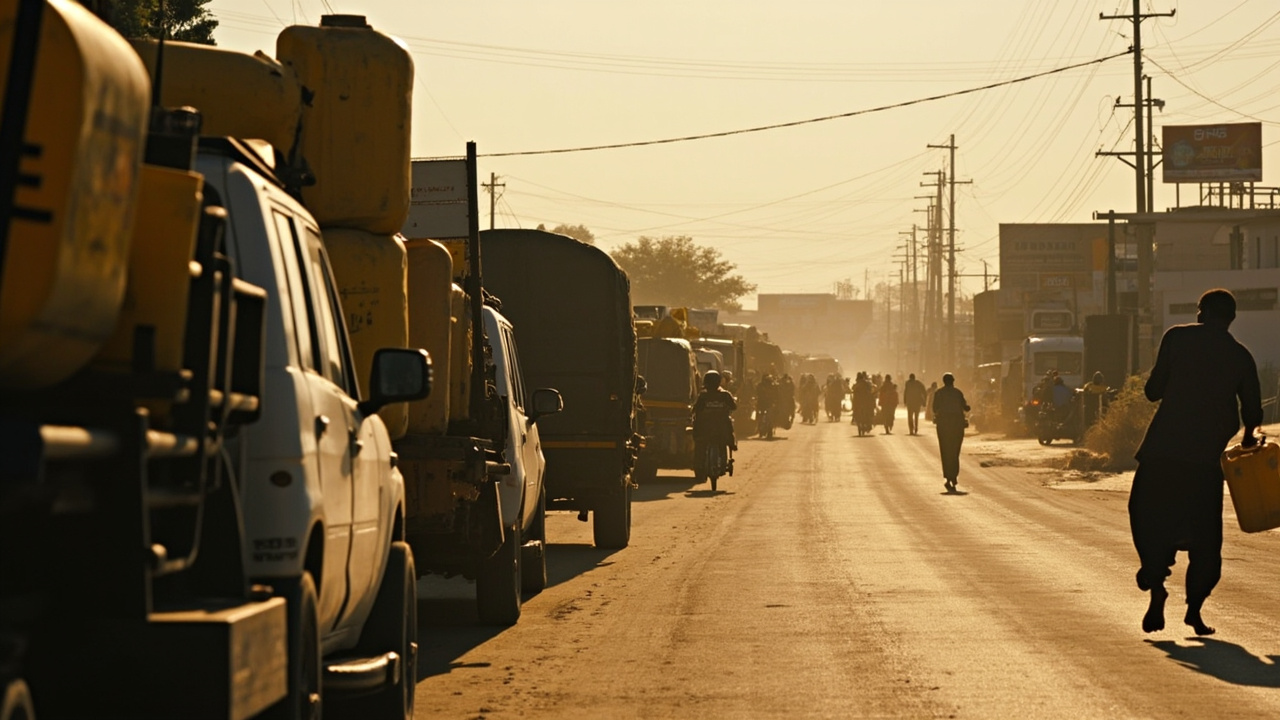
Seven weeks into the Hormuz crisis, its second-order effects are rationing fuel across Africa. Nations that import the bulk of their energy from the Middle East — Kenya, Tanzania, Ghana, Senegal among them — are reporting price increases of 40 to 50 percent, with no relief in the supply pipeline. [1] [2]
The arithmetic is punishing. Roughly 90 percent of Africa's fertilizer is imported from the Gulf region. With shipping routes disrupted and insurance costs tripling, the price of moving cargo from the Arabian Sea to Mombasa or Lagos has made marginal shipments uneconomic. The result is not just expensive fuel but a cascading agricultural crisis: farmers who cannot afford fertilizer plant less, and the food price shock arrives months after the energy shock. [1]
Current account deficits are widening across the continent. Kenya and Ghana, already running tight fiscal balances, face the prospect of emergency borrowing. Sahel states — landlocked, aid-dependent, and furthest from alternative supply routes — are under humanitarian stress. [1] [2]
One bright spot exists. Nigeria's Dangote refinery, which began full operations in 2025, gives West Africa a domestic refining option that did not exist during prior oil shocks. But its capacity cannot offset the regional shortfall. [1]
On X, African energy accounts frame this as war externalities falling on bystanders. MSM covers it as an economic disruption. What neither platform adequately tracks is the fertilizer dimension — the food crisis that is now being planted alongside the fuel crisis.
-- DARA OSEI, London