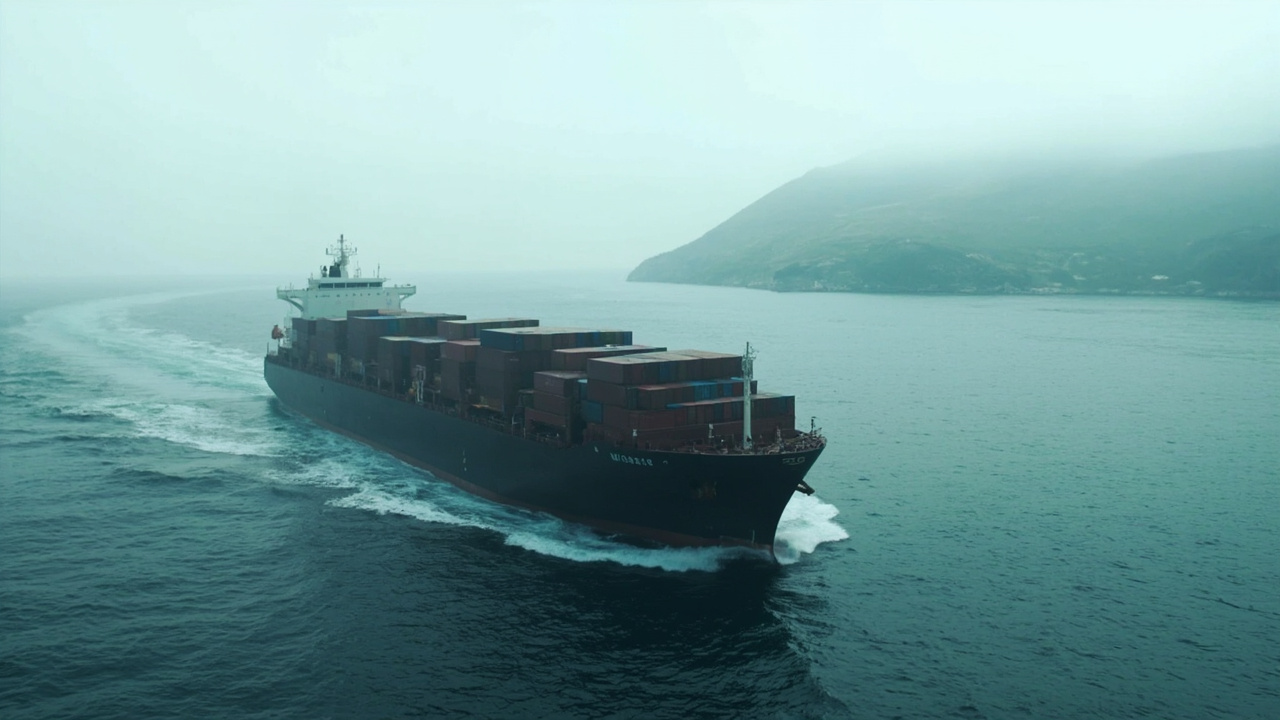
While the rest of the world's shipping fleet remains frozen outside the Strait of Hormuz, Chinese vessels continue to transit — paying Iran's Islamic Revolutionary Guard Corps in yuan for the privilege. [1]
Three Chinese ships passed through the strait last week after coordination with Iranian authorities, Beijing's Foreign Ministry confirmed, while calling for "peace and stability in the Gulf Region." [2] Ship-tracking data showed two COSCO container vessels — stuck in the Gulf since the war began on February 28 — successfully crossed on their second attempt after turning back on a first try in late March.
The fee structure has become a functioning system: approximately $1 per barrel for tankers, payable in Chinese yuan or dollar-pegged stablecoins like USDT, with ad hoc fees for other vessels reaching $2 million per transit. [1] Iran's National Security Committee approved a bill in early April to codify the arrangement into law.
The economics are modest — perhaps $500 million to $1 billion annually — but the precedent is not. This is the first large-scale, operationally consistent use of yuan as a settlement currency for transit fees in global energy markets. [1]
Kenneth Rogoff, the Harvard economist, told Al Jazeera that Iran is "dead serious about preferring yuan to avoid US sanctions and to cultivate its ally, China." [1] Beijing buys more than 80 percent of Iran's crude exports. The war has done little to disrupt that flow.
-- DAVID CHEN, Beijing