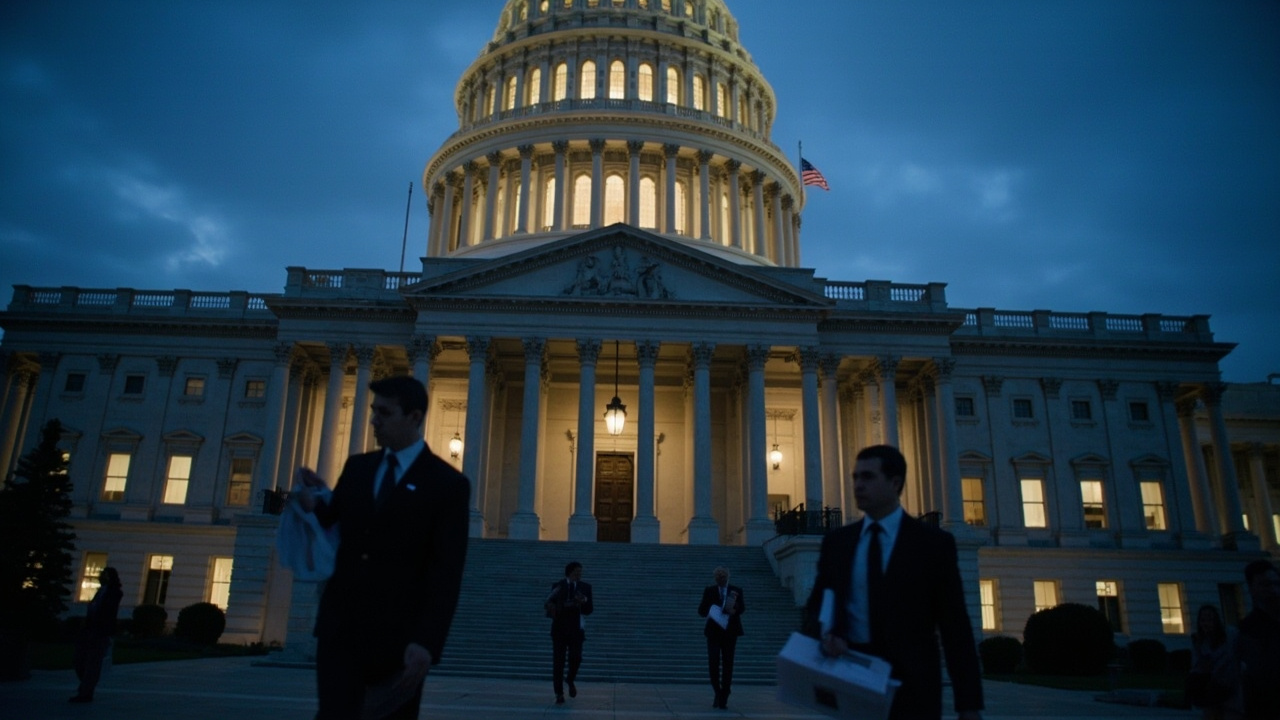
The senators will find their desks exactly as they left them two weeks ago, which is to say cluttered with the same unresolved question: does this war have legal authorization, or doesn't it? Congress returns Tuesday from its Easter recess to confront a War Powers Resolution clock that now reads Day 44 — forty-four days since President Trump committed American forces to combat operations against Iran on March 1 without a congressional vote. [1]
The arithmetic has shifted during the break. Senate Majority Leader Chuck Schumer told reporters Friday that he intends to force a floor vote on the War Powers resolution before the 60-day statutory deadline, which falls on April 29. The move requires only a simple majority to bring to the floor under the War Powers Act's expedited procedures, and Schumer claims he has 49 firm votes. [1] The question, as always, is whether he can find the fiftieth.
Three Democrats who voted against the initial resolution in committee — Senators Fetterman, Gallego, and Kelly, all representing states with significant defense-industry employment — have signaled varying degrees of reconsideration. Fetterman's office issued a statement last Thursday that described the Islamabad talks' collapse as "deeply concerning" and said the senator was "reassessing his position in light of the expanded naval blockade." [2] Gallego and Kelly have been quieter, but Democratic leadership aides say both have requested classified briefings for Tuesday morning, a move that typically precedes a vote shift rather than a vote hold.
The blockade adds urgency that the original authorization debate lacked. When Congress left for recess, the war was primarily an air campaign with limited naval operations. It has since expanded into a full maritime blockade of the Strait of Hormuz, oil prices have spiked past $130 a barrel, and the diplomatic track collapsed in Islamabad over the weekend. [1] Each escalation strengthens the legal argument that the president has exceeded the scope of what the original notification to Congress described, which was "limited strikes to degrade Iran's nuclear capabilities."
Representative Gabe Amo captured the mood of the Democratic caucus with characteristic bluntness, posting on X that "Trump's B team let peace talks with Iran collapse" — a reference to the delegation led by Jared Kushner that was rebuffed by Iranian negotiators. [2] The House Foreign Affairs Committee's own account noted the unusual composition of the diplomatic team, posting that "this delegation includes the president's son-in-law." [1]
Republicans remain largely united against the resolution, though cracks have appeared among the libertarian-leaning wing. Senator Mike Lee has said repeatedly that the Constitution requires congressional authorization for offensive military operations, a position that puts him closer to Schumer than to his own leadership on this particular vote.
The 60-day clock is not merely symbolic. If Congress does not either authorize the military action or pass a resolution directing withdrawal by Day 60, the president is legally required to begin removing forces within 30 days. No president has ever complied with that requirement, and Trump is unlikely to be the first, but the political cost of openly defying the statute would be significant — particularly with an election 18 months away.
Tuesday's session begins at 2 p.m. The classified briefings begin at 9 a.m. The votes that matter will be decided somewhere in the five hours between.
-- SAMUEL CRANE, Washington