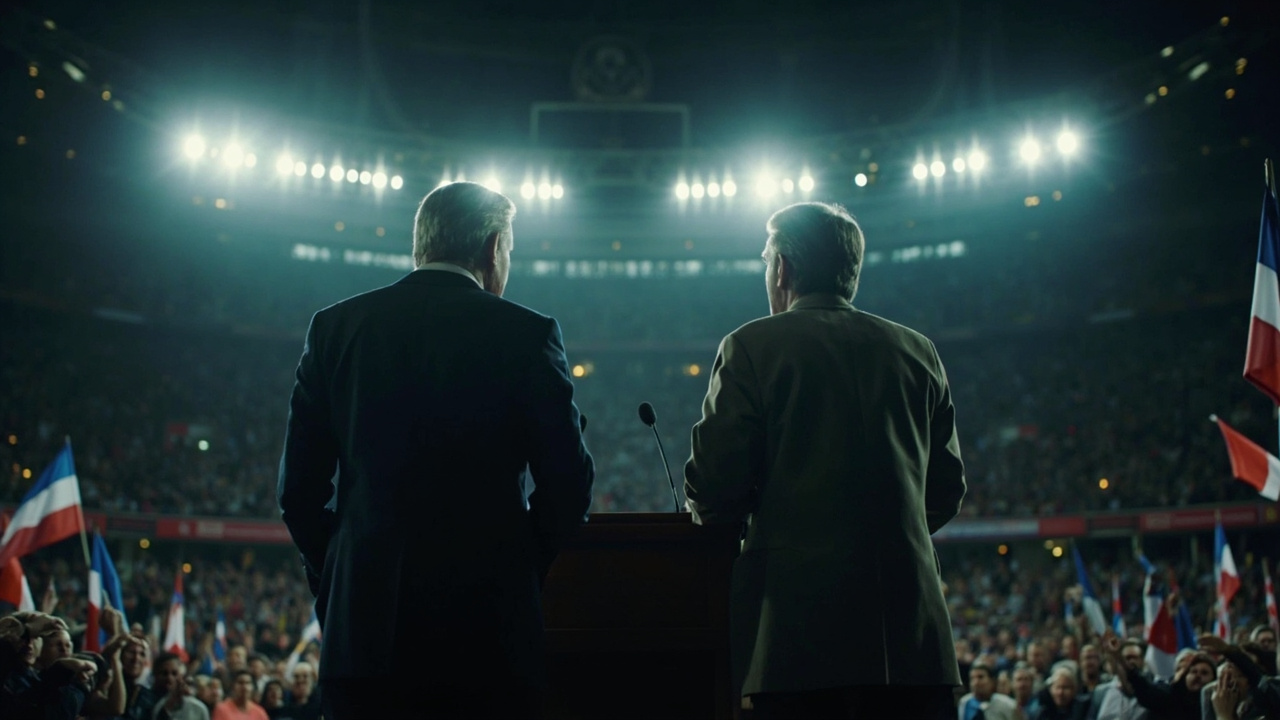
Vice President JD Vance stood on a stage at MTK Sportpark in Budapest on April 7, five days before Hungary's parliamentary election, and told a crowd of Viktor Orban supporters to "go to the polls and stand with Viktor Orban, because he stands for you." [1] On Sunday, Hungarian voters went to the polls in record numbers and buried Orban in the worst defeat of his political life. Peter Magyar's Tisza party won 138 of 199 parliamentary seats — a two-thirds constitutional supermajority — while Orban's Fidesz was reduced to 55. [2]
The margin was not close enough to debate. Turnout reached nearly 80 percent, the highest in any post-communist Hungarian election. [3] Orban, who had governed continuously since 2010 and served 20 years as prime minister in total, conceded before his supporters with a single sentence that captured the scale of the rout: "The election result is painful for us, but clear." [4]
Politico's post-election analysis listed the winners and losers with surgical precision. Among the losers: "Donald Trump and JD Vance." [2] The assessment was blunt. The Trump administration had invested extraordinary political capital in Orban's survival. Trump issued at least five public endorsements, including a March 25 all-caps Truth Social post urging Hungarians to "GET OUT AND VOTE FOR VIKTOR ORBAN." [1] Secretary of State Marco Rubio visited Budapest in February. Vance's April 7 trip was the culmination — a sitting American vice president openly campaigning for a foreign leader in the final week before an election, something virtually unprecedented in modern diplomacy.
At the Budapest rally, Vance called Trump from the podium and held his phone to the microphone so the crowd could hear the president praising Orban. The first attempt went to a voicemail box that had not been set up. The second try connected. [1] The scene played as farce in retrospect. Vance accused the European Union of "one of the worst examples of foreign election interference that I've ever seen," even as he stood on a foreign stage endorsing a foreign candidate. [4]
Magyar, the 45-year-old former Fidesz insider who broke with Orban in 2024, responded to Vance's visit with a pointed message on X: "This is our country. Hungarian history is not written in Washington, Moscow, or Brussels — it is written by Hungarians." [4] The line became a rallying cry. Independent polling after Vance's visit showed Magyar's lead widening, not shrinking. A February Publicus Institute survey had found that 48 percent of Hungarians thought Trump's involvement would hurt Orban, while only 38 percent thought it would help. [2]
The irony is structural, not incidental. Vance visited Budapest in the same week that his negotiations in Islamabad over the Iran-Hormuz crisis stalled and nearly collapsed. He backed a losing autocrat in Europe while failing to close a deal in South Asia. The twin failures constituted the worst week of his vice presidency, and they shared a common flaw: the assumption that American endorsement translates automatically into political leverage abroad.
For the European Union, Orban's defeat removes the bloc's most persistent obstructionist. Hungary under Orban used its veto to block a 90 billion euro loan to Ukraine, delay sanctions on Russia, and stall institutional reforms. [3] European Commission President Ursula von der Leyen celebrated on X within hours: "Hungary has chosen Europe. Europe has always chosen Hungary." [4]
For Ukraine, the implications are immediate. Orban was Vladimir Putin's closest ally inside the EU. He maintained cordial ties with Moscow throughout the invasion, refused to send arms to Kyiv, and repeatedly accused Ukraine's intelligence services of meddling in Hungarian affairs — a claim Vance echoed during his Budapest visit without providing evidence. [1] Magyar has pledged to repair relations with Brussels and NATO, join the European Public Prosecutor's Office, and restore constitutional checks and balances that Orban dismantled over 16 years. [3]
The domestic political fallout in Washington is harder to measure but real. Republican Representative Don Bacon of Nebraska posted on X: "Don't fiddle-paddle in other democracies' elections." [1] Democratic Representative Ro Khanna aimed directly at the vice president: "Your ally Orban conceded. In 2028, will you follow suit if you lose?" [1] Matt Schlapp, chairman of the American Conservative Union, offered a gentler explanation — "Eventually, democracies just want change" — but the Conservative Political Action Conference, which hosted Orban as a keynote speaker in Dallas in 2022, had clearly bet on the wrong horse. [1]
The deeper lesson is about the limits of exported populism. Orban was the original template — the leader who proved you could win democratic elections while dismantling democratic institutions. Trump admired the model. Vance studied it. The American conservative movement elevated Orban into an icon of "illiberal democracy," a phrase the Hungarian prime minister coined with pride. But Orban's model depended on controlling domestic media, gerrymandering districts, and suppressing turnout among opponents. When turnout hit 80 percent, the architecture collapsed. [3]
Magyar understood this. He ran not as a liberal or a progressive but as a center-right anti-corruption candidate who accused Orban of betraying conservative principles. He turned Orban's own rhetoric against him, arguing that the prime minister had not defended Hungarian interests but enriched his allies while isolating his country. [4] The two-thirds majority gives Magyar the power to rewrite Orban's constitution, unlock frozen EU funds, and dismantle the patronage networks that sustained Fidesz for a generation.
Trump, notably, has not publicly commented on the result. His silence speaks where his endorsements shouted.
-- CHARLES ASHFORD, London