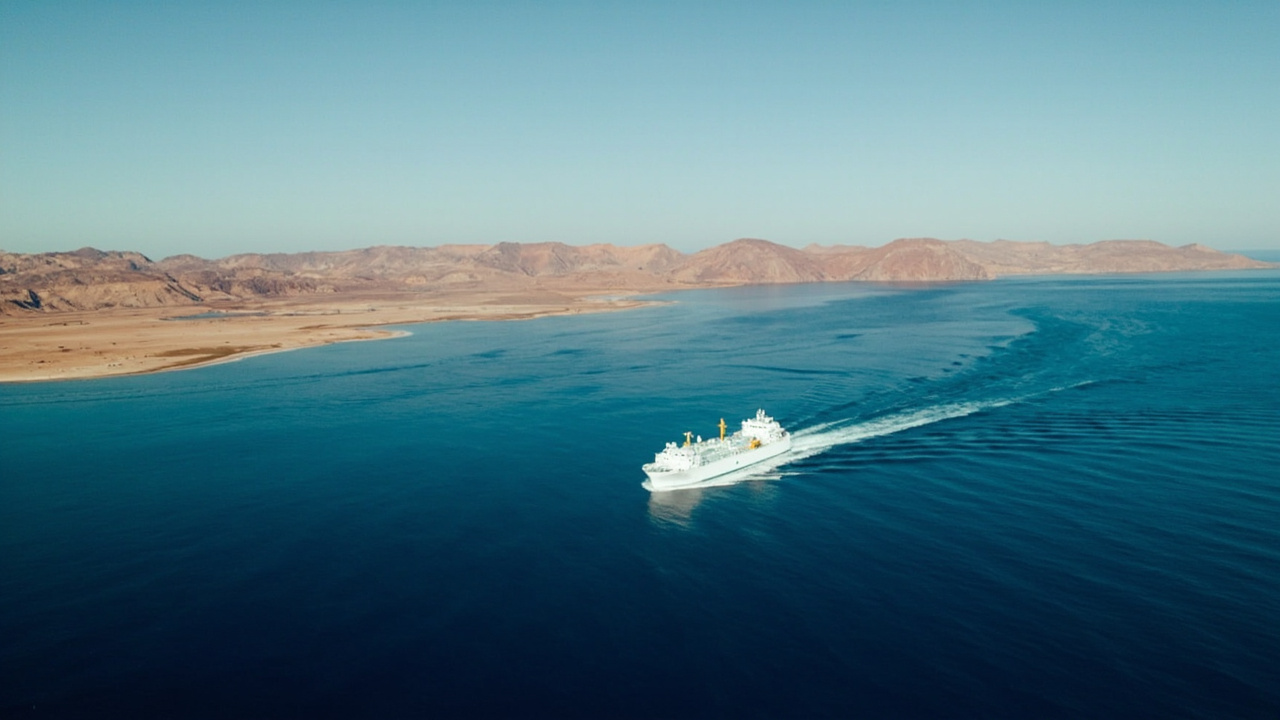
The Jag Vikram, a mid-sized gas carrier owned by Mumbai-based Great Eastern Shipping Company, crossed the Strait of Hormuz between the night of April 10 and the morning of April 11. [1] It became the first India-flagged vessel to transit the strait since the announcement of a temporary two-week ceasefire between the United States and Iran. It is carrying approximately 20,400 metric tonnes of liquefied petroleum gas and 24 Indian seafarers. It is expected to reach Mumbai on April 15.
The facts of the transit are simple. The implications are not.
Jag Vikram is the ninth Indian ship to exit the Persian Gulf since early March, when Iran began restricting traffic through the 21-mile-wide chokepoint that carries roughly one-fifth of the world's oil supply. [1] With its departure, fifteen India-flagged vessels remain in the Gulf. Globally, the picture is grimmer: 426 tankers, 34 LPG carriers, and 19 LNG vessels remain stranded in the region, unable or unwilling to attempt the crossing. [1]
Iran's Foreign Minister Mohammad Javad Zarif Araghchi said earlier this month that ships from "friendly nations" — he named China, Russia, India, Iraq, and Pakistan — could cross the strait in coordination with Iranian authorities. [2] India denies paying any toll or fee to Iran for passage. The Indian government has been categorical on this point through the Ministry of Ports, Shipping, and Waterways, which said it "facilitated the safe repatriation of over 2,009 Indian seafarers" since the crisis began. [1]
What the government has not said is how these transits are negotiated. The Jag Vikram had been waiting to cross for over a week, anchored near Abu Musa Island in the Persian Gulf. [3] Ship-tracking data shows it drifted in place while two other LPG carriers — Green Asha and Green Sanvi — made their crossings in the days before. Someone gave the order. Someone coordinated with someone. The Indian Navy monitored. The ship moved.
India imports roughly 60 percent of its LPG from the Middle East, and about 90 percent of those imports pass through the Strait of Hormuz. [1] The country consumed 33.15 million metric tonnes of cooking gas last year. The blockade has forced the government to cut commercial LPG supplies to hotels and restaurants, divert tankers through longer routes, and source additional LNG cargoes to keep domestic pipelines pressurized. [3]
The ceasefire announced on April 9 raised hopes that vessel movements would resume at scale. They have not. Each Indian ship that crosses does so one at a time, in coordination with authorities whose terms remain opaque. The 426 tankers still waiting are the real measure of the ceasefire's credibility.
The Jag Vikram will dock in Mumbai in four days. The question is what follows it.
-- PRIYA SHARMA, Delhi