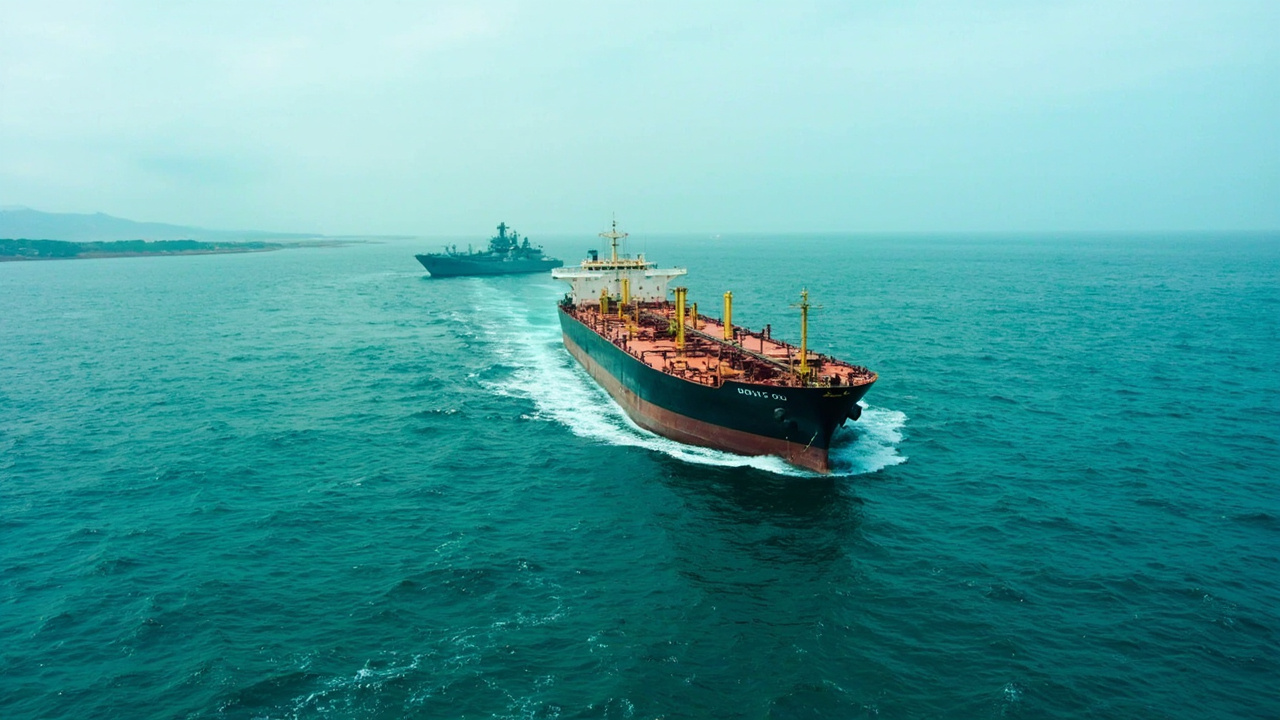
The blockade has not formally begun, but the Strait of Hormuz is already closing by persuasion. Two Pakistan-flagged oil tankers — the Agios Fanourios I and the Shalamar, identified by Bloomberg — turned back from the strait after warnings from the Trump administration about an impending naval blockade of Iranian ports. [1]
Iran's Fars news agency confirmed the turnarounds. A third tanker, the Mombasa B, made it through — a detail that reveals the mechanism. This is not a physical barrier. It is a risk calculation that each vessel's operator makes independently, factoring insurance premiums, U.S. sanctions exposure, and the probability of interception. Two captains decided the math no longer worked. One decided it did. [1]
Crude oil prices surged as investors priced in the possibility of further supply disruption. Euronews reported that the U.S. blockade plan targets Iranian ports directly, a step that risks widening the conflict by threatening third-party shipping in one of the world's most critical maritime chokepoints. [2]
The pattern is familiar from this paper's Hormuz coverage: the strait functions as both a physical bottleneck and a psychological one. Ships do not need to be stopped to be deterred. The threat of interdiction reprices risk across every tanker route in the Gulf, and the market responds before the first warship moves into position.
-- DARA OSEI, London