The numbers stopped being abstract somewhere around the fifteenth village. Lebanon's Ministry of Public Health reported Sunday that at least 2,020 people have been killed by Israeli military operations since March 2, a figure that includes 130 children and 89 paramedics who died attempting to reach the wounded. [1] The toll passed the 2,000 threshold over the weekend as Israel launched what it described as its most intensive 24-hour bombardment of Hezbollah positions since the campaign began, striking more than 200 targets across southern Lebanon and the Bekaa Valley. [2]
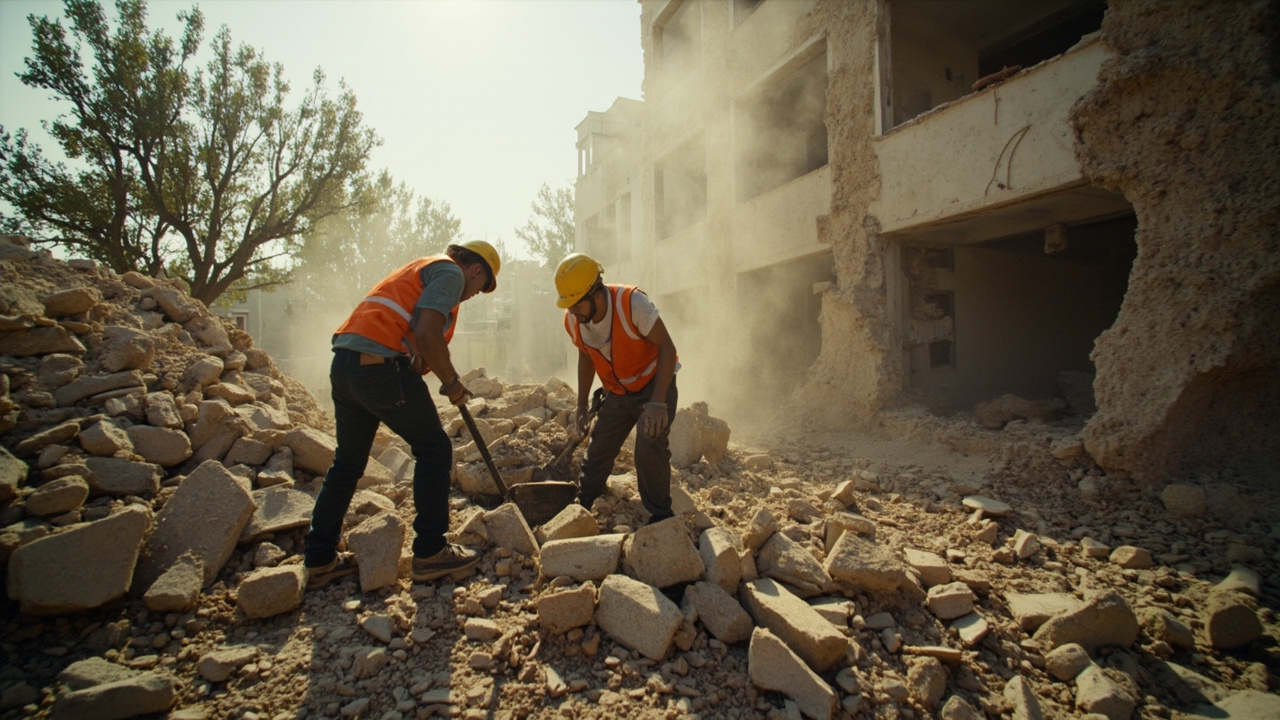
Six of the dead were recovered Sunday from the rubble of a single house in a village south of Tyre. The family — three generations, the youngest four years old — had sheltered in a ground-floor room because the upper stories had already been damaged in a strike two weeks earlier. Neighbors said no warning had been given. The Israel Defense Forces said the structure had been used to store short-range rockets, a claim that could not be independently verified because the building no longer exists. [1]
The IDF's operational tempo tells its own story. In the 24 hours ending Sunday evening, Israeli warplanes and artillery units hit what military spokespeople called "over 200 Hezbollah-linked targets," including weapons depots, launch sites, and what were described as command nodes embedded in civilian neighborhoods. [2] The phrase "embedded in civilian neighborhoods" has become the IDF's rhetorical cornerstone for the campaign — an explanation that does double duty as justification and warning. The CIS Security Index, which tracks the conflict independently, placed the cumulative toll at 2,055 killed as of Saturday, slightly above the Health Ministry's figures, a discrepancy it attributed to bodies not yet recovered from collapsed structures. [3]
Hezbollah, for its part, has refused to enter direct negotiations with Israel, a position that has hardened rather than softened as the death toll has climbed. The group's deputy secretary-general reiterated last week that any ceasefire discussion must flow through the Lebanese state, not through bilateral channels — a formulation that effectively ensures no talks happen at all, given the Lebanese government's inability to act independently of Hezbollah's political wing. The refusal is strategic: Hezbollah has calculated, apparently correctly, that time and international sympathy are assets that accrue to the side absorbing punishment rather than delivering it. [1]
The geography of the killing is worth tracing. The heaviest strikes have concentrated in the strip of territory between the Litani River and the Israeli border, the zone that UN Security Council Resolution 1701 was supposed to have demilitarized after the 2006 war. Twenty years later, the resolution reads like a historical curiosity. Hezbollah rebuilt its positions; Israel is now destroying them again, along with the villages that grew up around them. The pattern is older than the current war, older than the current century.
What the numbers cannot capture is the texture of displacement. The United Nations estimates that 450,000 people have fled southern Lebanon since March, most heading north toward Beirut or into the Bekaa, where overcrowded shelters have become semi-permanent encampments. Hospitals in Sidon and Nabatieh are operating beyond capacity, and the Health Ministry has warned that its casualty figures are likely undercounts because medical staff cannot reach certain areas under active bombardment. [1]
The broader conflict context weighs on every calculation. The U.S. naval presence in the eastern Mediterranean has expanded — American warships recently entered the Strait of Hormuz to clear suspected Iranian mines — linking the Lebanon front to the wider regional confrontation between Washington and Tehran. [2] For the families south of Tyre, the geopolitics are irrelevant. They are counting bodies, not strategic implications.
Israel has not released its own casualty figures for Lebanese civilians, maintaining that it targets only Hezbollah military infrastructure. The distinction, in a landscape where fighters live among families and rockets are stored beneath living rooms, is one that the dead themselves cannot adjudicate. The war is now in its seventh week, and the only number that moves reliably upward is the one the Health Ministry publishes each morning.
-- YOSEF STERN, Jerusalem