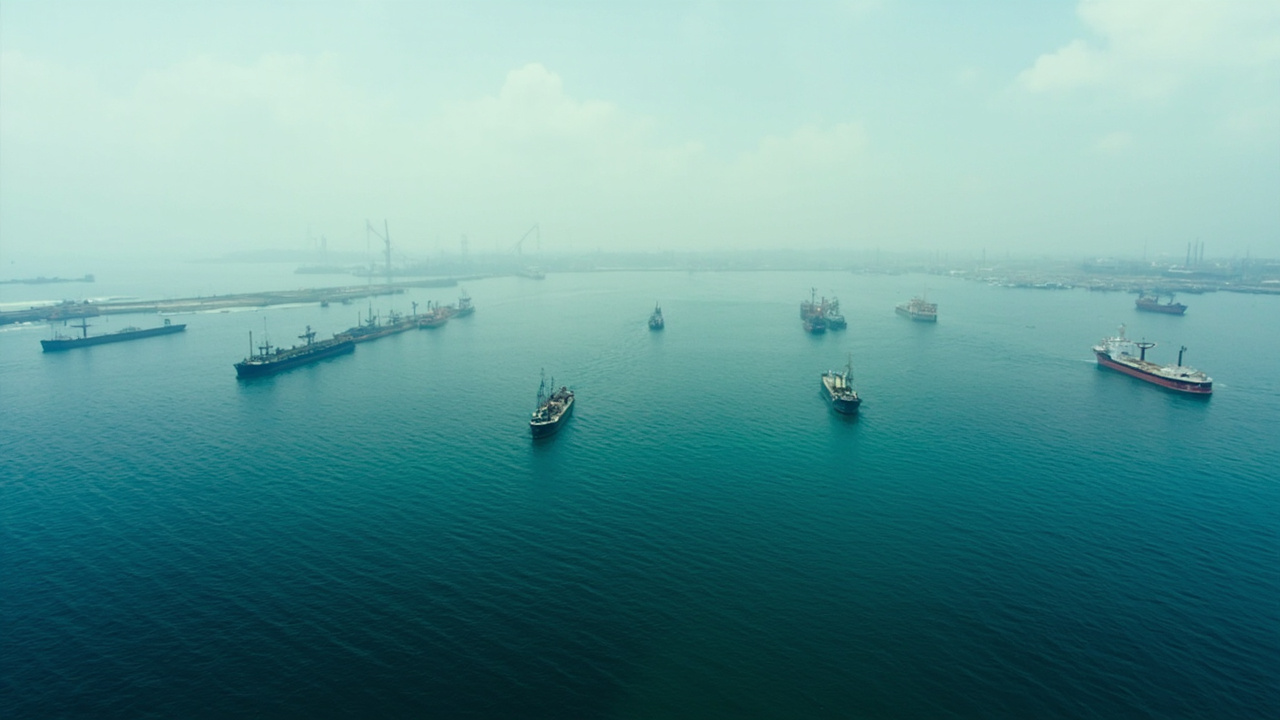
Brent crude rose approximately eight percent to $102.29 per barrel on Sunday after President Trump announced a naval blockade of Iranian ports. [1] West Texas Intermediate climbed 8.4 percent to $104.65. [2] The numbers dominated headlines across every business desk in the world. They are also the wrong numbers to watch.
The more alarming figure sits in the physical crude market, where actual barrels change hands for delivery to actual refineries. Reuters reported in early April that European and Asian refiners were paying "record-high prices of near $150 a barrel for some crude oil grades, far exceeding prices for paper futures." [3] The gap between futures — which represent financial contracts for future delivery — and physical barrels — which represent oil a refinery can process today — has widened to a level not seen in modern energy markets. The WTI May-June spread hit $16.70 per barrel, the largest single-month backwardation in the contract's history. [3]
Backwardation at this scale means one thing: the market believes crude available right now is worth dramatically more than crude available next month. Traders will pay a sixteen-dollar premium per barrel to take delivery in May rather than June. That is not a price signal. It is a scream. The front-month premium reflects real supply scarcity — refineries that need feedstock this week, not a promise for next month.
The blockade puts up to two million barrels per day of Iranian exports at direct risk. [1] Iran was exporting 1.85 million barrels per day through March, according to Kpler data. [1] The Strait of Hormuz handles roughly twelve million barrels per day in total — twenty percent of global oil and liquefied natural gas shipments. [4] CENTCOM's narrower version of the blockade targets only Iranian ports, not the full Strait, which means non-Iranian traffic should theoretically continue. But "theoretically" is doing heavy lifting. Shipping insurers have raised premiums to punitive levels. LSEG data shows tankers rerouting. [2] The practical effect of a military operation in one of the world's most congested waterways extends well beyond its legal scope.
Saudi Arabia has restored its East-West pipeline to seven million barrels per day, providing a partial bypass around the Strait. [5] OPEC+ agreed to a modest 206,000 barrel-per-day production increase starting in May. [1] Neither measure addresses the fundamental problem. The physical market is short of barrels now. Pipeline capacity and future production quotas do not move crude from a wellhead to a refinery this week.
American consumers are already paying the price. The national average gasoline price has risen to $4.12 per gallon, a 38 percent increase since the war began on February 28. [1] European natural gas futures spiked approximately eighteen percent on Sunday. [6] Heating oil rose ten percent. [7] These are not speculative moves. They reflect the real cost of energy uncertainty in a market where the world's most important shipping lane is now a declared military operations zone.
The deeper structural issue is time. Oil for October delivery is trading at roughly $73.64 per barrel — $30 less than the front month. [3] Oil for May 2027 sits at approximately $68.43 — more than $40 below the spot price. [3] This inverted curve tells the market's consensus view: the crisis is acute, not chronic. Traders expect supply disruptions to resolve within months. But if the blockade persists through the April 22 ceasefire expiration and the April 29 War Powers vote, the backwardation could deepen further, and the physical premium could exceed the futures price by a margin that distorts every refinery margin calculation in the Western world.
The headline is $102. The story is $150.
-- DARA OSEI, London