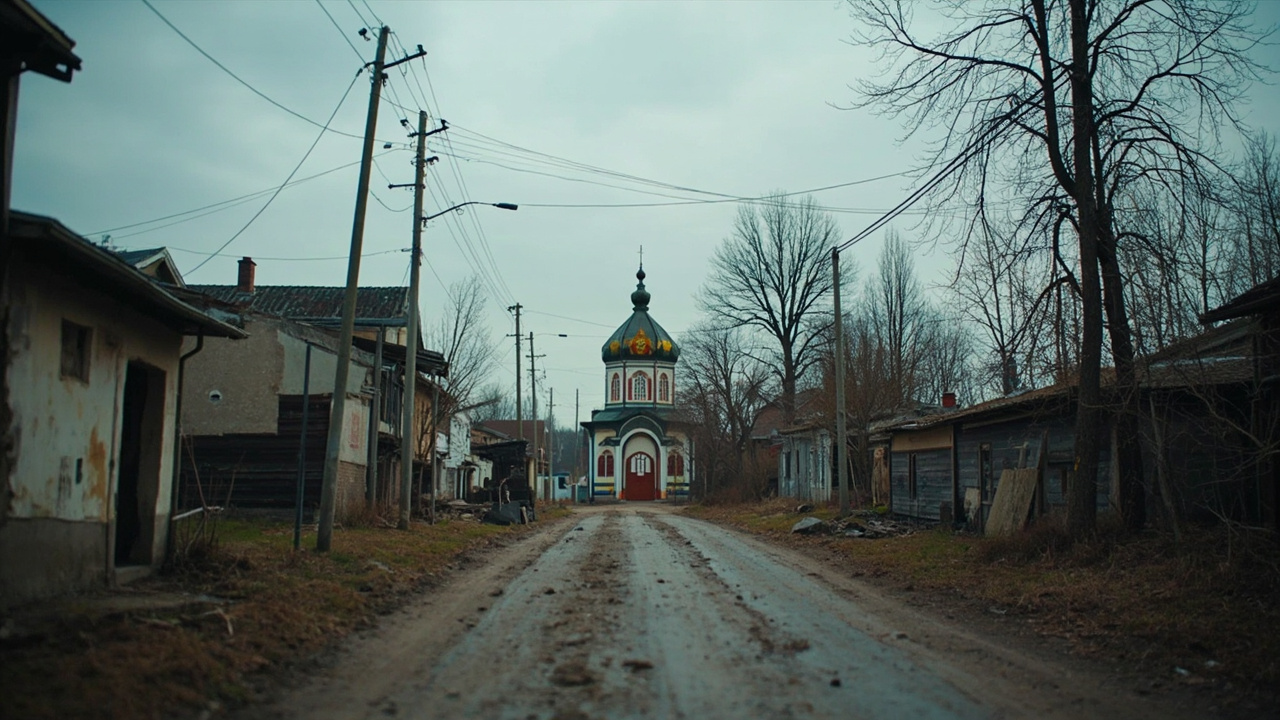
The Easter ceasefire died the way most ceasefires in this war have died — smothered by accusations so numerous that the original act of faith became indistinguishable from the fighting it was supposed to pause. The Kremlin announced Sunday evening that it would not extend the 32-hour truce, which expired at midnight, calling it a "temporary humanitarian measure" that had served its purpose. [1]
Dmitry Peskov, the Kremlin spokesperson, delivered the rejection with the particular brand of bureaucratic finality that Moscow has perfected over three years of war. The ceasefire, he said, "was never intended as a pathway to negotiations" but rather as "a gesture of goodwill timed to the holy celebration of Pascha." [1] The translation from diplomatic Russian is straightforward: the truce was a performance, not a policy, and its expiration was always the intended outcome.
The numbers each side produced to justify its grievance are staggering in their asymmetry. Ukraine's military command reported 7,696 Russian violations during the 32-hour window — a figure that, if accurate, would mean Russia violated the ceasefire roughly every 15 seconds. [2] The violations ranged from artillery fire and drone launches to small-arms engagement along the front lines in Donetsk and Zaporizhzhia oblasts. Russia's Defense Ministry, for its part, counted 1,971 Ukrainian violations, a number that was offered without elaboration or geographic specificity. [1]
President Zelenskyy's response carried the moral clarity he has maintained since the full-scale invasion began. "Nothing is sacred," he wrote on Telegram. "Not churches, not hospitals, not Easter. We agreed to silence and they answered with shells." [2] The statement was amplified across Ukrainian media and Western social networks within minutes, becoming the defining quote of the weekend's diplomatic failure.
The mutual accusations follow a pattern so established it has become ritual. Every ceasefire in the Russia-Ukraine war has produced competing violation counts that cannot be independently verified in real time. The OSCE Special Monitoring Mission, which once provided that verification, withdrew from Ukraine in 2022. What remains is a he-said-she-said architecture where both sides produce numbers calibrated to their narrative needs — Ukraine's figure large enough to demonstrate Russian bad faith, Russia's figure large enough to claim provocation. [3]
What the numbers obscure is the human reality of those 32 hours. In cities like Kherson and Mykolaiv, residents had cautiously emerged for Easter services, some attending church for the first time in months. The return of shelling before midnight meant a return to basements and shelters before the paschal candles had been extinguished. Humanitarian corridors that were supposed to allow civilian movement in occupied territories were reportedly opened and then closed within hours. [2]
The broader diplomatic context makes the ceasefire's failure both predictable and consequential. The collapse of the Islamabad talks between the United States and Iran has reshuffled the geopolitical deck in ways that touch Ukraine directly. Russia has been a quiet beneficiary of Washington's distraction — every American carrier group sent to the Persian Gulf is a carrier group not available for European deterrence. Vice President Vance, who spent the weekend failing to secure an Iran deal, represents the same administration that has pressured Zelenskyy to accept territorial concessions. [1]
Moscow's calculus is transparent. A ceasefire extension would have created diplomatic momentum that Russia does not want. Every day the war continues on its current trajectory — with Ukrainian forces stretched thin and Western attention divided — is a day that favors the Kremlin's position. Peskov's phrase "temporary humanitarian measure" was not a description. It was a boundary marker.
The guns resumed at midnight. Easter Monday dawned the way most Mondays have dawned in Ukraine for three years: with the sound of artillery.
-- KATYA VOLKOV, Moscow