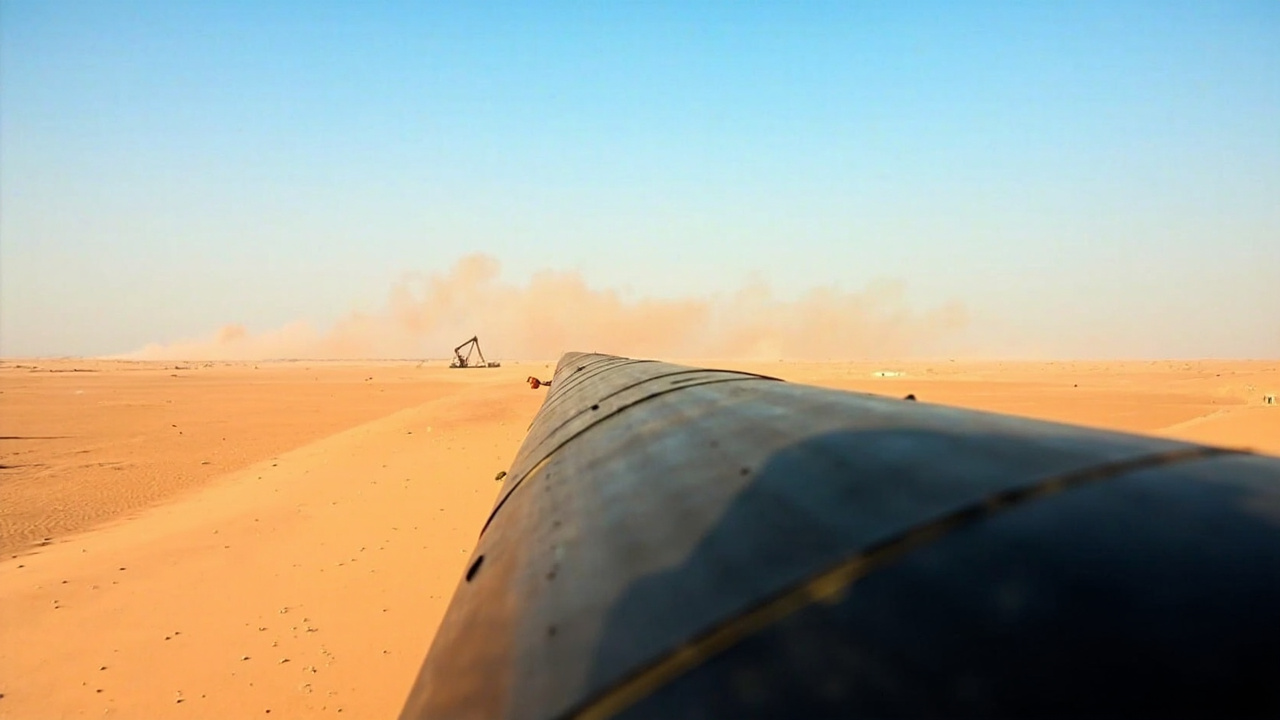
Saudi Arabia announced Saturday that its East-West Pipeline — the 1,200-kilometer artery connecting the kingdom's eastern oil fields to the Red Sea port of Yanbu — has been restored to its full capacity of 7 million barrels per day. The pipeline is currently the only viable export route for Saudi crude with the Strait of Hormuz effectively closed to commercial traffic. [1]
The strike that damaged the pipeline hit one of eleven pumping stations, reducing throughput by approximately 700,000 barrels per day. Saudi Aramco has since restored the Manifi field, which contributes roughly 300,000 barrels per day. The Khurais field, also affected, is undergoing repairs with a similar 300,000-barrel-per-day contribution expected to return in stages. [1] [2]
The attack came hours after a ceasefire was announced — a timing that underscored the fragility of the infrastructure on which global oil supply now depends. With Hormuz closed, the East-West Pipeline carries an outsized share of the kingdom's export capacity. A sustained disruption would have cascaded through global markets within days. [1]
On X, energy analysts treat the pipeline as a single point of failure and question how long it survives repeated targeting. MSM covers the restoration as good news for supply. The gap between those frames is the real story: the pipeline is functioning, but the war has exposed that Saudi Arabia's entire export strategy now runs through one corridor.
-- YOSEF STERN, Jerusalem