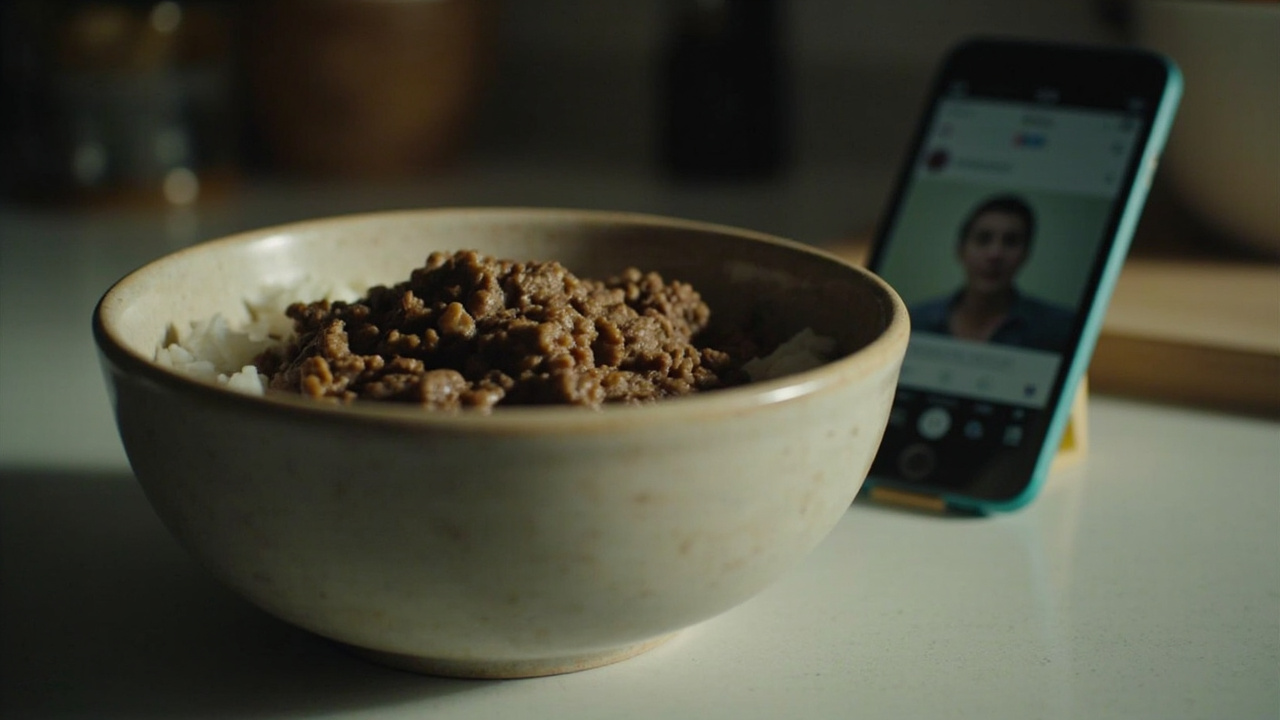
A Gen Z man described his regular meal to the Washington Post: ground beef and white rice, mixed together in a bowl. He called it "boy kibble." The Post published the interview. The Guardian published a nutritional analysis. HuffPost published a health explainer. Fox News published a trend piece. [1] Healthline consulted dietitians. CNN ran a TikTok segment. And across X and TikTok, the people who had been eating the meal since before it had a name watched the coverage pile up and laughed.
Boy kibble — a bowl of seasoned ground beef over white rice, sometimes with vegetables, sometimes without — has been the default cheap-protein meal for bodybuilders, college students, and budget-conscious cooks for decades. The "recipe," such as it is, requires a skillet, a rice cooker, and approximately twelve minutes. It contains roughly 250 calories per serving with 34 grams of protein when made with 96 percent lean beef. [2] It is not new. It is not a trend. It is Tuesday dinner in every gym rat's apartment since the Carter administration.
What is new is the name, and the name is where the media literacy gap opened. The term "boy kibble" emerged on TikTok in early 2026 as a partly ironic self-deprecation — young men calling their functional, joyless meals "kibble," as if they were feeding themselves the human equivalent of dog food. [1] The irony was layered: the meal is genuinely nutritious, the name is deliberately unflattering, and the act of naming it was itself a joke about how Gen Z needs a meme framework to discuss anything, including eating.
Mainstream outlets missed the ironic layer. The Guardian described boy kibble as "inspired by dog food," which is approximately as accurate as saying sushi was inspired by bait. [3] HuffPost consulted three dietitians, concluding that ground beef and rice is "missing a lot of key nutrients" and would benefit from vegetables. [4] This is dietary advice any grandmother could have delivered in six words.
TikTok trends operate on multiple registers simultaneously — sincere and ironic, aspirational and self-mocking. When legacy media treats a trend as simply a thing young people are doing, it flattens the cultural signal into noise. The nutritional analyses were not wrong. Ground beef and rice is incomplete nutrition. But publishing that analysis as news misunderstands what the "news" was.
The real story is about young men's relationship with cooking. Boy kibble's popularity reflects a generation of men drawn to the simplest possible entry point: two ingredients, one pan, no technique required. The meme name gave them permission to do it without pretending it was sophisticated. Calling your dinner "kibble" preempts anyone else calling it pathetic.
Aakash Gupta captured the dynamic on X: "Boy kibble is bodybuilding's oldest meal repackaged by a generation that needs a meme name before they'll eat it." [5] The observation is precise. The media coverage that followed was not.
-- MAYA CALLOWAY, New York