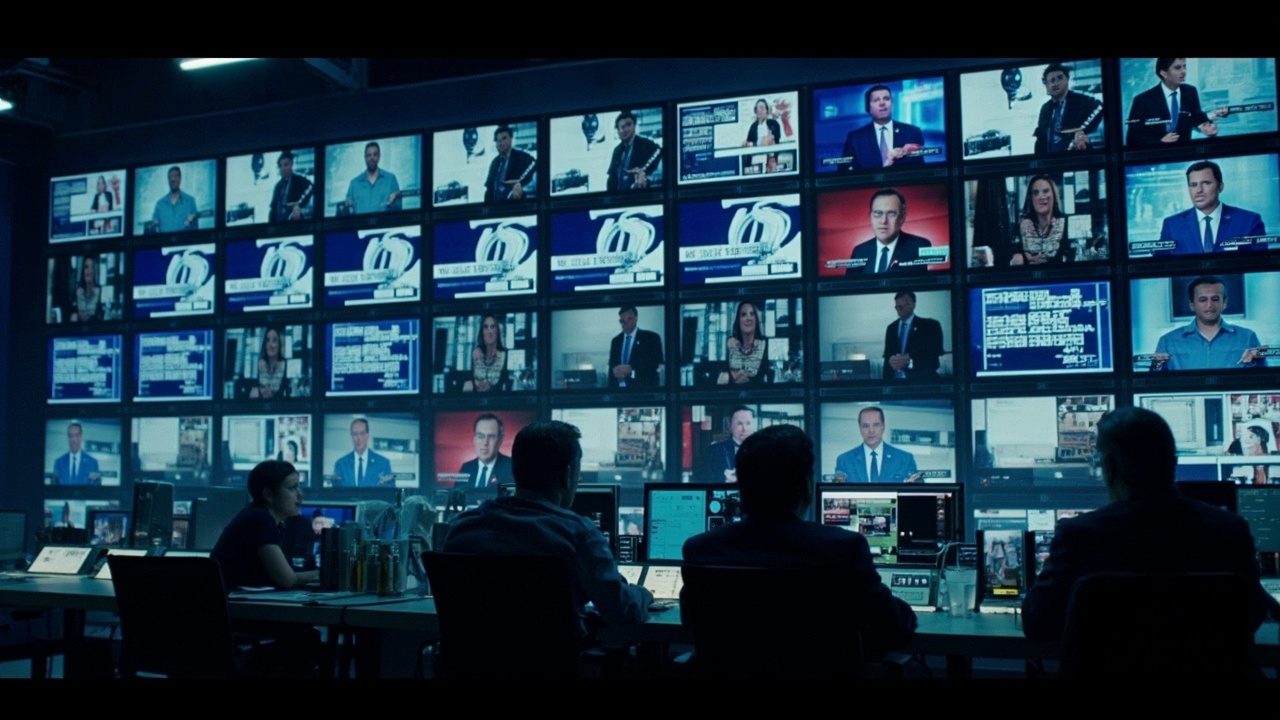
The Committee to Protect Journalists published a report this month arguing that the Nexstar-Tegna merger — approved by the FCC on March 19 in what CPJ called "unprecedented overreach" — has created a broadcast entity that reaches approximately 80 percent of American television households. [1] The merger gave Nexstar control of 265 local TV stations, a concentration of ownership that violates the FCC's own historical limits on how many homes a single broadcaster can reach. [2]
CPJ's argument is not merely about market share. The report connects the consolidation directly to FCC Chair Brendan Carr's threats to revoke broadcaster licenses over coverage the administration dislikes — specifically, war reporting that deviates from the White House narrative on Iran. [1] The logic is circular and dangerous: the regulator approves a merger that gives one company enormous reach, then uses that reach as leverage. A broadcaster reaching 80 percent of American homes has more to lose from a licensing threat than one reaching 8 percent.
The merger was approved without the public comment period that FCC rules typically require for transactions of this scale. [2] Free Press called it a decision that "flies in the face of the law," noting that Congress established ownership caps precisely to prevent a single company from dominating local news. [3] CPJ noted that where consolidation occurs, "cost cuts and shortcuts often follow" — local news is replaced by what the organization calls "news duplication," the same content replicated across markets. [1]
The Paramount-Skydance merger, also approved in 2025 after CBS settled a $16 million lawsuit filed by Trump, provides the template. [1] Regulatory approval follows political alignment. The press freedom question is whether stations reaching four out of five American homes can afford to ask hard questions when one regulator controls their license.
-- ANNA WEBER, Berlin