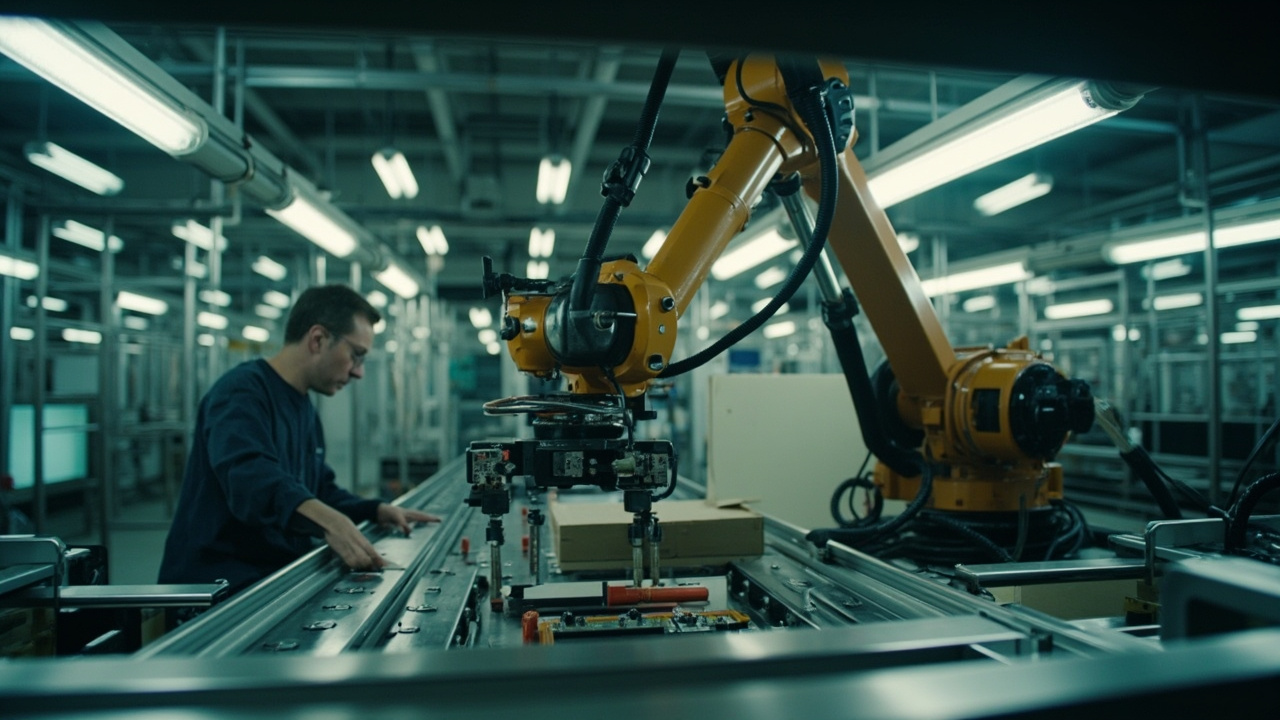
Generalist AI, a robotics startup backed by DARPA funding, released GEN-1 this month — a foundation model the company claims is the first general-purpose AI to master simple physical tasks at production-level reliability. [1] The numbers are striking: 99 percent average success rates on repetitive mechanical tasks, approximately three times faster than the previous state of the art, and the ability to adapt to unexpected disruptions in real time. [1]
The tasks in question are not trivial in a robotics context. Folding cardboard boxes, packing phones into protective cases, servicing vacuum cleaners — these require the kind of dexterous manipulation that has historically separated robotic demos from robotic deployments. [1] GEN-1 improved average success rates from 64 percent to 99 percent on tasks where prior models stumbled, and 99 percent of the model's parameters are trained from scratch rather than fine-tuned from existing vision models. [2]
Generalist's co-founder Adithya Murali described the approach as "rethinking everything for physical AGI from day one," and the architecture reflects that ambition — the model learns from approximately 500,000 hours of physical interaction data, then masters new tasks from as little as one hour of demonstration. [2]
The caveat matters as much as the achievement. GEN-1's results come from controlled environments with known objects, consistent lighting, and predictable geometries. [1] A factory floor introduces variables — dust, temperature shifts, irregular parts, human workers moving unpredictably — that controlled settings eliminate by design. The 99 percent success rate is real, but the distance between a lab benchmark and a production deployment is where most robotics companies go to die.
-- KENJI NAKAMURA, Tokyo