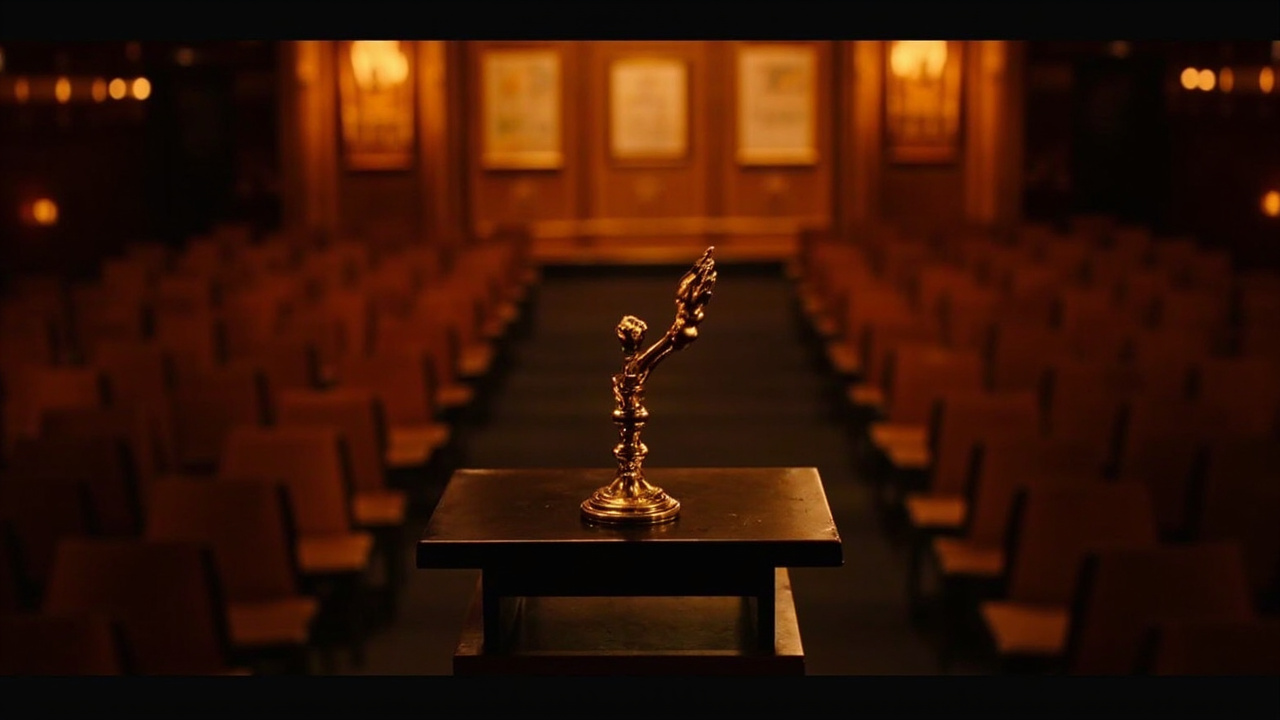
PEN America held its 62nd annual Literary Awards ceremony last week and distributed nearly $350,000 across ten prize categories. [1] The organization called it a celebration of free expression. Publishers Weekly called it a "return to form." [2] Both descriptions require a certain selective memory about what PEN America has been doing for the past three years.
The headline winner was Cannupa Hanska Luger, whose Surviva: A Future Ancestral Field Guide won the PEN/Jean Stein Book Award and its $75,000 prize — the largest single award PEN bestows. [1] Luger is a multidisciplinary artist of Mandan, Hidatsa, Arikara, Lakota, and European descent whose work blends visual art, performance, and text. Surviva is less a traditional book than an artifact — part manifesto, part field guide, part visual essay on Indigenous futurity. That PEN's top prize went to a work this formally adventurous and politically grounded is worth noting. It suggests the judges, at least, are not interested in safe choices.
The ceremony, hosted by comedian Hasan Minhaj, awarded prizes in translation, poetry, essay, sports writing, science writing, and debut fiction, among other categories. [1] The full list of winners reflects the breadth PEN has historically championed: international voices, experimental forms, work that treats literature as a civic act rather than a commercial product.
The "return to form" framing, however, invites scrutiny. PEN America's credibility has taken repeated hits since 2023. Staff resignations over the organization's initial response to the Gaza conflict, internal disputes about whether PEN adequately defended writers under authoritarian pressure, and a leadership transition that critics described as insufficiently transparent all preceded this ceremony. [2] The phrase "return to form" implies a departure and a correction. Publishers Weekly used it. PEN, more carefully, did not.
What PEN did say is that the awards represent "the organization's unwavering commitment to defending literary excellence and free expression." [1] The word "unwavering" does a remarkable amount of work in that sentence. Organizations that are unwavering do not typically need to announce it.
The $350,000 total distributed across all categories is significant in a literary economy where most advances for debut authors have fallen below $50,000. [2] A $75,000 award can fund a year of work. A $10,000 translation prize can make the difference between a project being completed or abandoned. Prize money of this scale matters materially, not just symbolically.
Whether PEN has earned the "return to form" label depends on what you think the form was. If the form was giving money to good writers and hosting a well-attended ceremony, then yes, form has returned. If the form was serving as the literary world's conscience on questions of censorship, state violence, and institutional accountability, the jury remains out — and the jurors are not especially patient.
-- MAYA CALLOWAY, New York