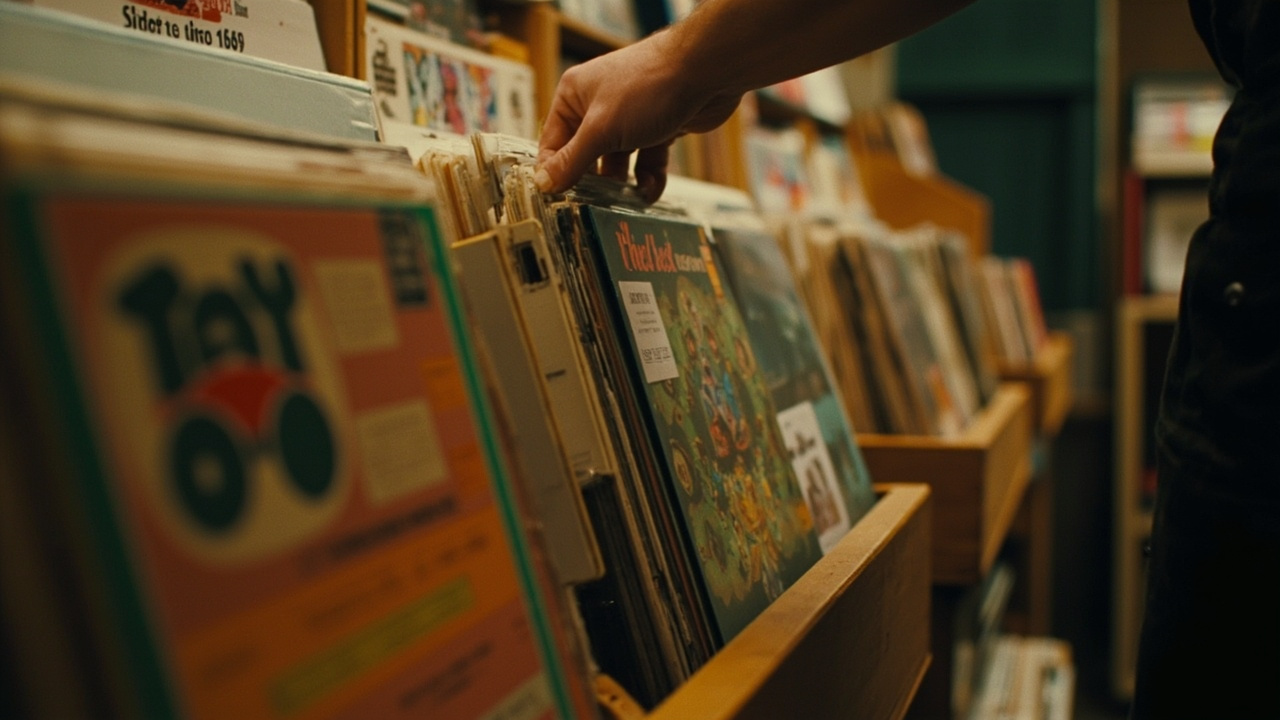
Record Store Day 2026 arrives Saturday, April 18, with approximately 460 special releases across vinyl, cassette, and limited-edition formats. [1] The annual event, now in its nineteenth year, will once again send collectors to independent record stores before dawn, generate lines that wrap around city blocks, and reignite the debate over whether the whole enterprise helps the shops it claims to celebrate or merely enriches the resale market that feeds on artificial scarcity.
The marquee releases this year include two David Bowie titles from Parlophone — a zoetrope picture disc and a companion release timed to the announcement of a new Bowie immersive exhibition opening in London on April 22. [2] Peter Gabriel's Sledgehammer gets a zoetrope 12-inch picture disc that uses imagery from the song's groundbreaking 1986 music video, a format designed to create animation effects when the record spins on a turntable. [3] Bruce Springsteen contributes a five-LP box set of his Asbury Park homecoming concert. Pink Floyd's Live From the Los Angeles Forum 1975 spans four LPs. Taylor Swift has a 7-inch single. Sleep Token has a 12-inch. Weezer's lost 1992 demos finally arrive on vinyl. [4]
Music journalist Eric Alper published his annual complete release guide, cataloging every title, format, and label. [4] A release list this long means pressing plants have been occupied for months producing limited-edition runs — capacity that might otherwise have been used for new albums by emerging artists who cannot get their records pressed.
The commercialization critique has sharpened in recent years. Limited-edition releases that retail for $30 to $50 appear on Discogs within hours at two to five times their sticker price. [1] The flipping economy has become so predictable that some collectors skip the store entirely and wait for resale, defeating the stated purpose of driving foot traffic. Shop owners are divided: some report their single best sales day of the year; others say margins on RSD exclusives are thin and managing crowds erodes the profit.
The vinyl revival that Record Store Day helped accelerate is now a mature market. Global vinyl revenue reached $2.1 billion in 2025, up from $400 million a decade earlier. [1] But growth has plateaued in North America, and the collector base has bifurcated into casual buyers and obsessive accumulators who treat vinyl as an investment asset. Record Store Day serves the latter far more effectively than the former.
What the event does well is generate cultural attention for a retail format the digital economy should have killed. An independent record store in 2026 is an improbable thing. That these shops exist at all is partly because Record Store Day made them an annual destination. Whether the destination justifies 460 limited releases and predawn lines of middle-aged men clutching want lists is a question the event has been answering the same way for nineteen years: enthusiastically, profitably, and without much self-examination.
-- CAMILLE BEAUMONT, Los Angeles