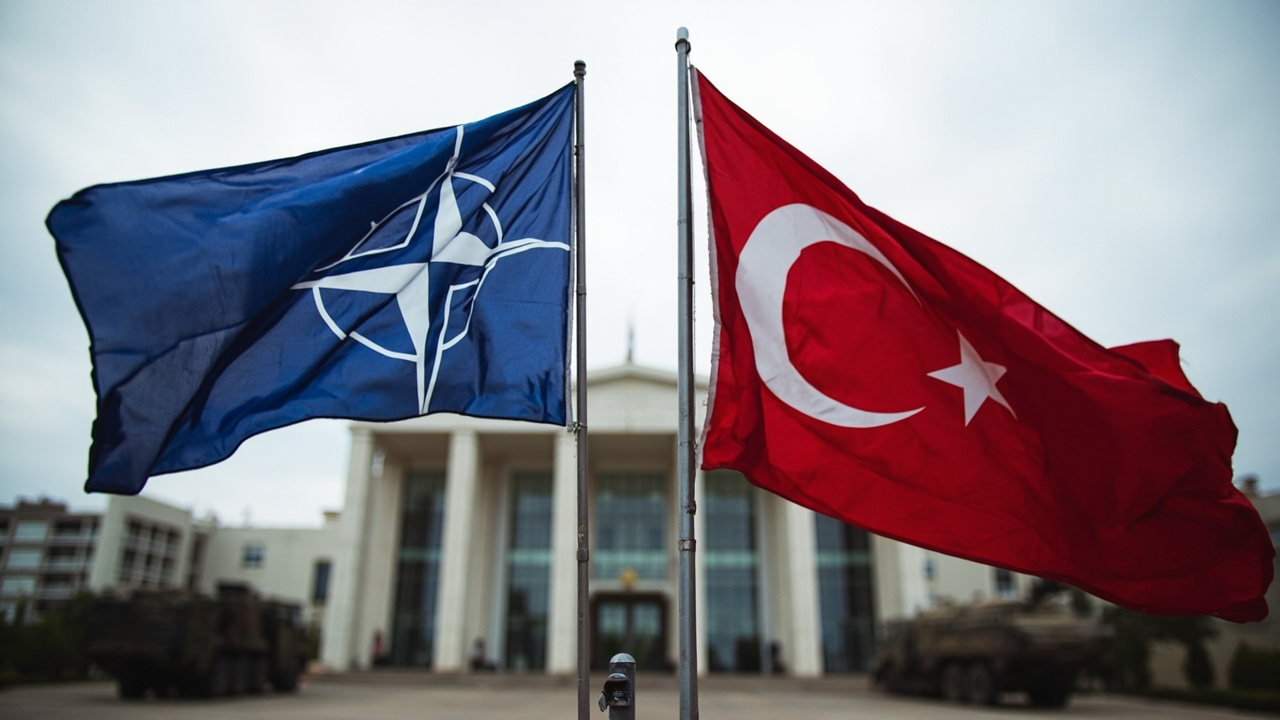
Turkey's defense minister, Yasar Guler, told an audience in Ankara on Sunday that shutting Turkey out of European defense initiatives "would cause more damage than the United States pulling troops from the continent." [1] The remark, delivered ahead of the NATO Summit that Ankara will host July 7-8, was aimed squarely at Greece and Cyprus, whose vetoes have blocked Turkish participation in the EU's Permanent Structured Cooperation framework and the European Defence Fund for years.
The timing is deliberate. Turkey has the second-largest military in NATO, a defense industry that has become the alliance's fastest-growing exporter, and a geographic position that the Iran-U.S. war has made impossible to ignore. Ankara controls the southern flank of the Strait of Hormuz approach, hosts critical NATO infrastructure, and has spent the past six weeks carefully not committing its forces to the American blockade while making clear that it could. [1] The leverage is not subtle. It does not need to be.
The specific prize is inclusion in PESCO — the EU's framework for joint military procurement and capability development — and access to the European Defence Fund. [1] Both programs were established in 2017 partly as a response to American reliability concerns that have only grown under Trump. Both have excluded Turkey because the EU framework requires unanimous consent, and Greece and Cyprus have withheld theirs, citing unresolved territorial disputes.
Guler's argument is that this exclusion is a strategic error the war has made untenable. If Europe is serious about reducing dependence on American military capability, then excluding NATO's second-largest army from European defense coordination is incoherent. [1] Athens and Nicosia counter that Turkish military behavior in the Eastern Mediterranean — unauthorized drilling in Cypriot waters, airspace violations, and the continued occupation of northern Cyprus — disqualifies Ankara from the frameworks it seeks to join.
NATO's decision in March to stay out of the Hormuz crisis left Europe exposed to energy supply disruptions it cannot mitigate alone. [2] Turkey, which shares a border with Iraq and Iran, has positioned itself as a mediator, a trade corridor, and a potential naval partner. Each role gives Ankara leverage that peacetime diplomacy never provided.
NATO has confirmed that Turkey will command the Allied Reaction Force from 2028 to 2030. [1] The country commanding NATO's rapid-response capability will also be the country hosting the alliance's next summit and demanding inclusion in the EU's parallel defense architecture.
France and Italy appear sympathetic — Ankara recently discussed missile defense cooperation with Rome — and both view PESCO's geographic limitations as a structural weakness. [3] Germany has been quieter, wary of provoking Athens.
The question is whether Greece and Cyprus can sustain their vetoes when European defense autonomy has moved from aspiration to urgent necessity. The war did not create Turkey's ambition. It merely gave Ankara what every negotiator wants: a circumstance in which refusing the request costs more than granting it.
-- HENDRIK VAN DER BERG, Brussels