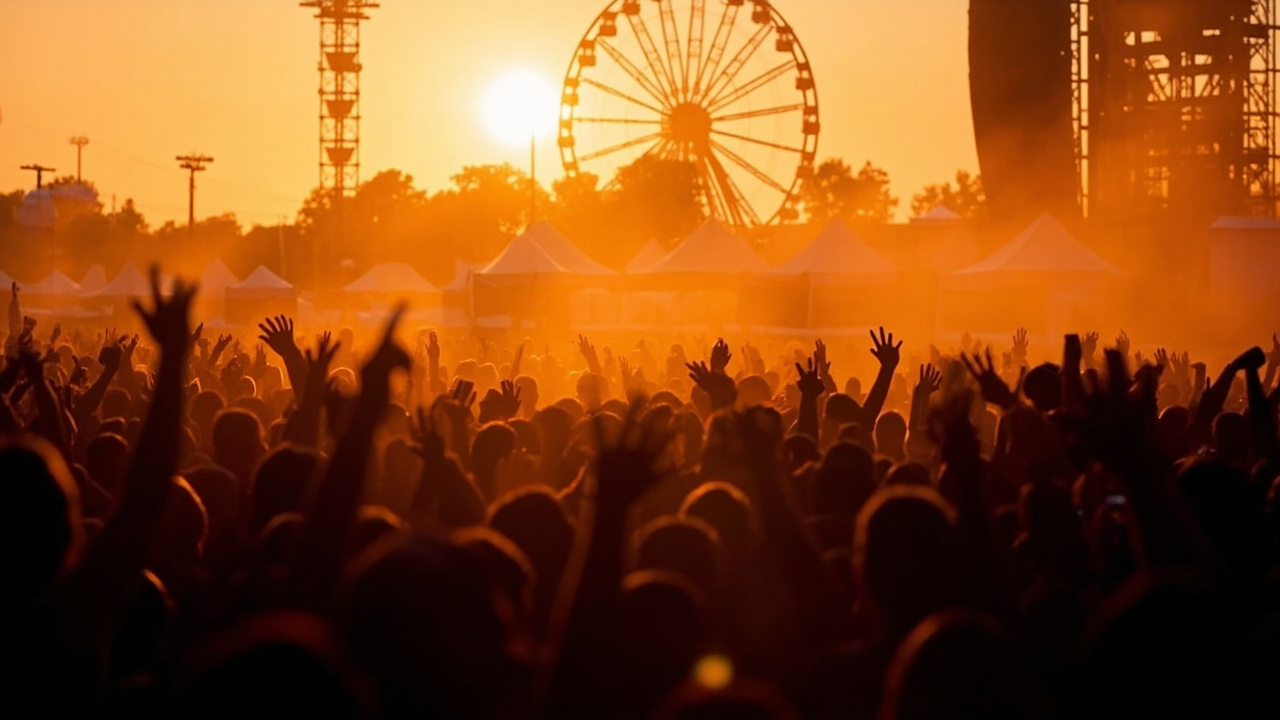
Coachella's first weekend closed Sunday night in Indio, California, with Justin Bieber's headlining set — a performance the Guardian described as "millennial nostalgia power in a windy year." [1] The wind was literal. Desert gusts disrupted sound systems and scattered festival infrastructure across the Empire Polo Club grounds. But the nostalgia was deliberate, and it tells a story about what American culture reaches for when the present becomes too much to sit with.
The 2026 lineup is a comfort blanket stitched together from the last decade's biggest pop acts. Bieber, returning to live performance after years of health-related absences, was reportedly paid $10 million — the highest Coachella headliner fee in the festival's 25-year history. Sabrina Carpenter, whose pop ascent over the past two years has been built on TikTok virality and Gen Z fandom, anchored Friday night. Karol G, the Colombian reggaeton star who has become the biggest Latin music artist in the world, took Saturday. [2]
What none of them did — and what Coachella as an institution did not do — was acknowledge that the festival took place during a war.
This is not a criticism of the artists. Coachella has never been a politically engaged festival in the way that, say, Glastonbury or Lollapalooza's early years were. Its identity is aspirational consumption — fashion, influencer content, brand activations, and music as the backdrop to a social media event. In 2026, that identity has become something more interesting: festival as refuge.
The Guardian's review identified the programming strategy as deliberate comfort. [1] Bieber's setlist drew primarily from his 2015-2021 catalog — "Sorry," "Peaches," "Love Yourself" — songs that belong to a pre-pandemic, pre-war cultural moment that the audience remembers as simpler. Carpenter's performance leaned into the sparkly, self-aware pop persona that has made her a streaming phenomenon, offering spectacle without substance and not apologizing for it. Karol G's set was the weekend's most energetically joyful, built on reggaeton rhythms that demand physical movement rather than intellectual engagement.
Variety ranked the best performances of the weekend and noted that the most-discussed moments were not the headliners but the surprise guests — Billie Eilish appearing during a DJ set, a reunited BIGBANG drawing the largest crowd of any non-headlining act, and Taemin's solo performance generating a social media storm that briefly outpaced Bieber's own hashtag. [2]
The LA Times ran a "21 best moments" list that functioned, intentionally or not, as a catalog of escapism. [3] Every entry was about spectacle, joy, surprise, or technical excellence. None referenced the world outside the festival grounds. The blockade, entering its third day during Coachella's opening weekend, appeared in zero festival coverage from any major outlet.
Pitchfork's review was the exception that proved the rule. Its "best and worst" roundup noted that Coachella 2026 "felt like a festival specifically designed to not make you think about anything" — a characterization intended as mild criticism but which may more accurately be read as an achievement. [4] The festival sold 125,000 passes per day at prices starting north of $500. Those 375,000 weekend attendees paid for the experience of temporarily inhabiting a space where the Hormuz blockade, the FISA collapse, and the helium shortage do not exist.
The 25th anniversary framing amplified this dynamic. Coachella's promotional materials emphasized the festival's legacy — the 2004 Radiohead set, Beyoncé's Beychella in 2018, the Frank Ocean controversy of 2023. The effect was to position 2026's edition as a chapter in a cultural tradition rather than an event occurring in a specific and troubled present.
This is what cultural institutions do during wartime. They offer alternatives to the news cycle — not as opposition but as relief. The USO shows of World War II, Woodstock during Vietnam, Glastonbury during the Iraq War — each served the function of creating a temporary space where the dominant national experience was suspended. Coachella 2026 fits this pattern precisely, with the significant difference that it makes no claim to countercultural identity. It is not protesting the war. It is not ignoring the war. It is offering, for $549 and the price of a flight to Palm Springs, a weekend in which the war does not exist.
Bieber's closing number was "Baby," his 2010 debut single. He was 16 when he recorded it. The audience that sang along was, on average, the same age then. They are now in their early thirties, with mortgages, children, and a war they did not vote for. The nostalgia is not for the song. It is for the world in which the song existed — a world that, from the vantage point of a desert festival during a naval blockade, looks impossibly distant.
Week two begins Friday. Same lineup, same venue, same escape. The blockade will also continue.
-- CAMILLE BEAUMONT, Los Angeles