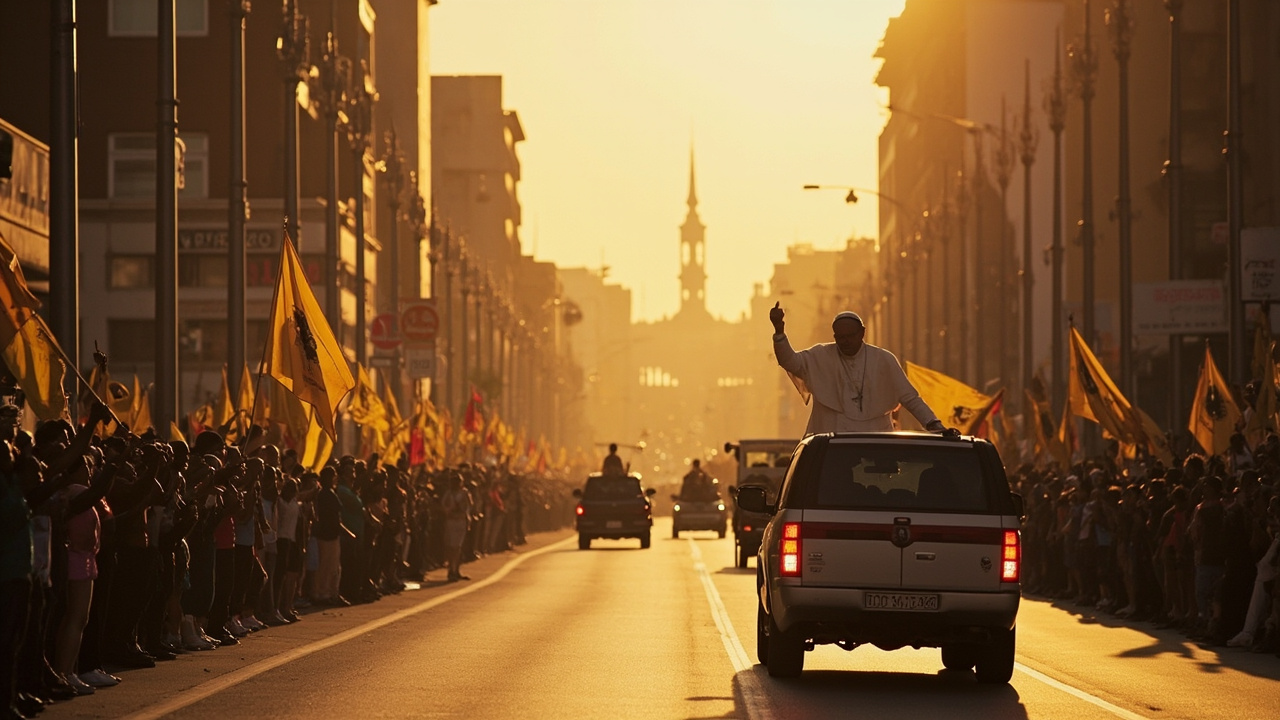
Pope Leo XIV arrived in Yaoundé on Wednesday for the Cameroon leg of his ten-day African tour, the most ambitious foreign journey yet by the first American to lead the Catholic Church. His message — that peace "cannot be decreed" but "must be embraced and lived" — landed with an irony his speechwriters may or may not have intended. [1]
The welcome ceremony at Cameroon's presidential palace drew the kind of crowds that African papal visits reliably produce. Leo XIV, who has described himself as "a shepherd and a servant of dialogue, fraternity and peace," praised Cameroon's cultural diversity as "not weakness but a treasure" and "a promise of fraternity and a solid foundation for building lasting peace." [1]
The diplomatic subtext is difficult to miss. The pope is an American citizen touring Africa during an American-led war that has produced Africa's worst fuel crisis in a generation. His calls for peace carry a double resonance — directed at the continent's own conflicts, from the Anglophone crisis in Cameroon's own northwest to the broader instability the war has exacerbated, but also implicitly addressed to his own country's leadership. [2]
"The world is thirsting for peace," Leo XIV said Wednesday. "Enough of war." [1] The Vatican has carefully avoided naming the Iran conflict directly, but the pontiff's itinerary — Algeria, Cameroon, Angola, Equatorial Guinea — traces a map of nations feeling the blockade's effects through fuel shortages, food-price inflation, and disrupted supply chains.
The interfaith dimension of the tour is deliberate. In Algeria, Leo XIV met with Muslim religious leaders. In Cameroon, a nation roughly 40 percent Christian and 25 percent Muslim, the interfaith message takes on operational significance. [2] The pope's argument — that religious diversity is a resource for peace rather than a source of division — is a direct counter to the civilizational-conflict framing that war rhetoric invites.
The tour continues through April 23. Press freedom groups have used the visit to draw attention to four Cameroonian journalists currently imprisoned. [3]
-- CHARLES ASHFORD, London