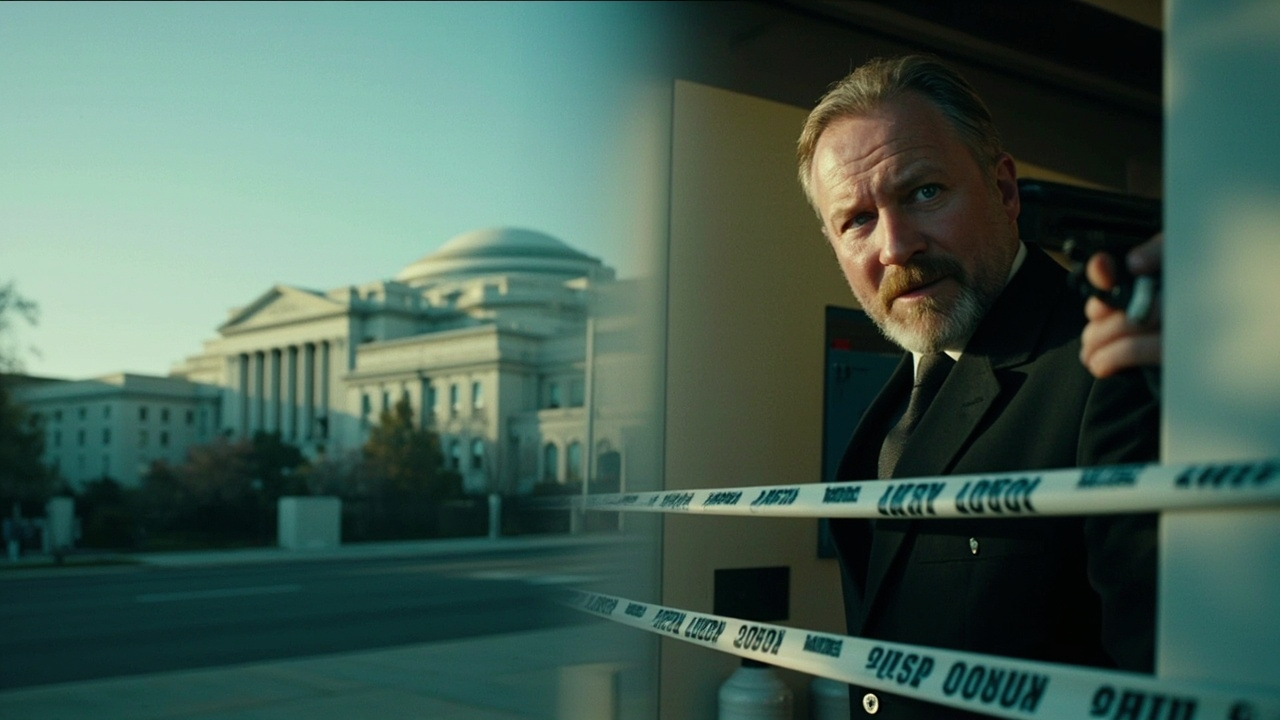
Two countries. Two mechanisms. One outcome: journalists pushed further from the institutions they cover.
In Washington, a federal judge vacated key provisions of the Pentagon's October 2025 media access policy that had restricted reporter movement in the building's corridors [1]. The ruling was a legal victory, but the underlying posture remains. The Defense Department had argued that security concerns justified limiting where credentialed journalists could walk — effectively converting physical access into an administrative gatekeeping tool.
Four separate court rulings have now addressed Pentagon press access since late 2025, an extraordinary volume of litigation over a question that prior administrations resolved through informal negotiation. The pattern suggests that restricting access has become a deliberate strategy, not an administrative oversight [1].
In Moscow, the mechanism is blunter. Police raided Novaya Gazeta's offices and detained journalist Oleg Roldugin on personal data charges tied to his investigation of Ramzan Kadyrov [2]. No court ruled in Roldugin's favor. No judge vacated the arrest order. The Russian system does not require the procedural friction that slows American press restrictions — it simply acts.
The comparison is not equivalence. The US system offers legal recourse; Russia's does not. American reporters face bureaucratic obstruction; Russian reporters face prison cells. The severity differs enormously.
But the directional vector is shared. Both governments are testing how much distance they can place between journalists and the information those journalists need. One uses security memos. The other uses criminal codes. The reporters on both sides end up further from the story.
-- ANNA WEBER, Berlin