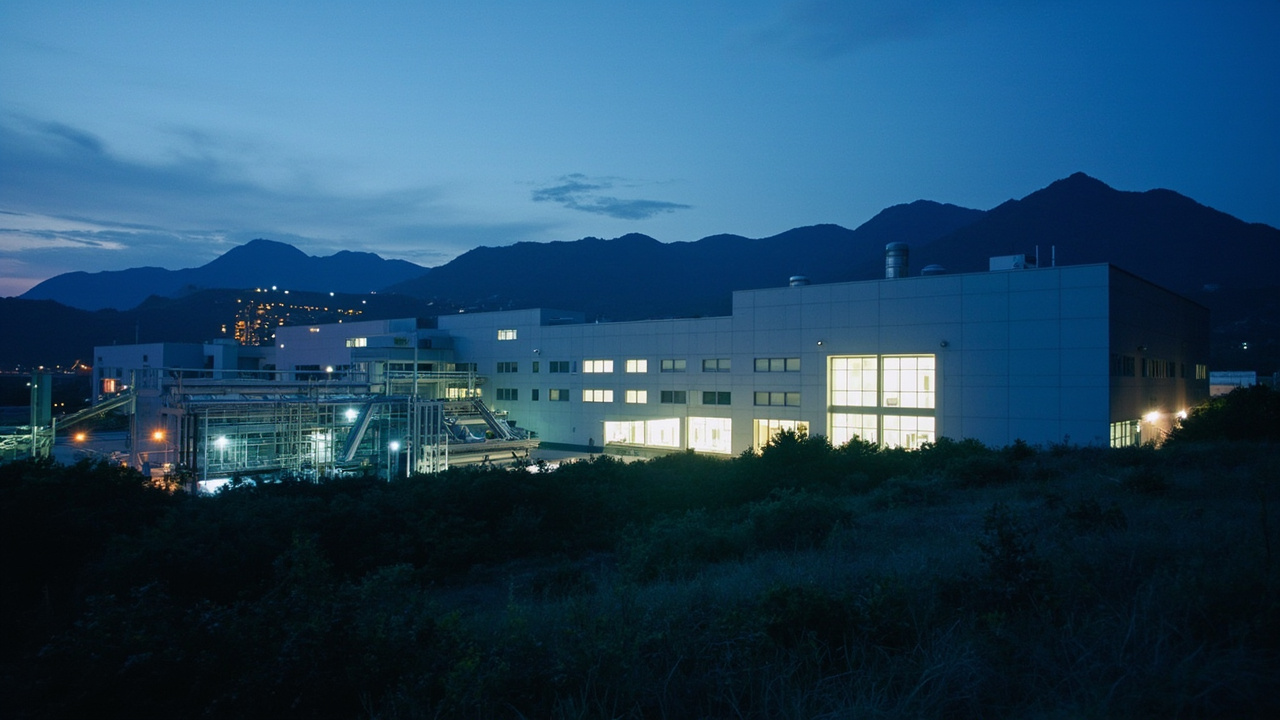
Taiwan Semiconductor Manufacturing Company reported first-quarter net income of NT$572.5 billion — roughly $18.2 billion — a 58 percent increase over the same period last year. Revenue rose 41 percent to $35.9 billion. Gross margins hit 66.2 percent, beating analyst estimates of 64.5 percent. The company raised its full-year revenue growth forecast to above 30 percent. [1]
These are not merely impressive numbers. They are chokepoint numbers.
TSMC fabricates more than 90 percent of the world's most advanced logic chips. Its 3-nanometer process technology now accounts for 25 percent of total wafer revenue, up from single digits a year ago. [2] The company spent $11.1 billion in capital expenditure during the quarter alone — more than most countries spend on their entire semiconductor industries in a year. [1]
The earnings arrived on the same day that CENTCOM reported turning back 13 vessels attempting to transit the Strait of Hormuz. Two chokepoints, two stories. One is about the concentration of oil supply through a narrow waterway that a naval blockade can close. The other is about the concentration of advanced chip supply through a single company that no blockade, tariff, or geopolitical realignment has managed to route around. [1]
The parallel is not poetic license. It is structural. The world runs on two things it cannot easily substitute: hydrocarbons and advanced semiconductors. Both flow through bottlenecks that are simultaneously geographic and institutional. Hormuz is a 21-mile strait between Iran and Oman. TSMC is a company on an island 100 miles from a mainland that claims sovereignty over it. The strategic logic is identical — concentration creates leverage, and leverage creates vulnerability.
What makes the TSMC chokepoint different is that it generates prosperity rather than crisis. When oil chokes, prices spike, economies stall, and governments scramble for alternatives. When chips choke — as they did during the pandemic and briefly after China's military exercises near Taiwan in 2022 — the entire consumer electronics and automotive supply chain seizes. But when the chokepoint operator itself is thriving, the bottleneck works in its favor.
TSMC's 66.2 percent gross margin tells that story. No oil major in the world operates at those margins. ExxonMobil's best recent quarter managed roughly 15 percent. Saudi Aramco, the world's most profitable oil company, runs at about 50 percent. TSMC's margin reflects the irreplaceability premium — what a customer pays when there is no credible alternative supplier. [1]
The AI demand wave is amplifying this dynamic. Nvidia's GPUs, AMD's data center processors, Apple's M-series chips, and Qualcomm's mobile SoCs are all fabricated at TSMC. The company's advanced packaging technology, CoWoS, has become another bottleneck within the bottleneck — demand for it exceeds supply by a factor of two, according to industry estimates. [2]
TSMC's raised forecast of over 30 percent revenue growth for the full year is effectively a prediction about the world's appetite for AI compute. [3] The company is seeing that demand directly, through orders from every major hyperscaler and chipmaker. When TSMC raises guidance, it is not speculating about AI adoption. It is measuring it.
The geopolitical risk is the shadow behind the numbers. China halted new Boeing orders this week, escalating tariff retaliation beyond consumer goods into strategic industrial procurement. TSMC's Arizona and Japan fabs are being built partly to mitigate the Taiwan concentration risk. But those facilities are years from matching the volume and process sophistication of TSMC's home island operations. The company spent $11.1 billion in one quarter on capex because it has to — the world needs more advanced capacity, and no one else can build it at this node. [1]
The quarterly report also reveals what might be called the chokepoint tax on global technology. Every Apple iPhone, every Nvidia H100 server, every AMD EPYC processor carries within its price the margin that TSMC's irreplaceability commands. Consumers do not see this tax itemized. But it is there, embedded in the cost of every device that requires a chip TSMC's competitors cannot yet make.
The Hormuz blockade has made chokepoint economics front-page news. TSMC's earnings report is the same story told in silicon rather than crude. One is a crisis. The other is a monopoly quarterly filing. Both describe a world that concentrates its most essential supply chains through the narrowest possible channels — and discovers, repeatedly, that it has no backup plan.
-- DAVID CHEN, Beijing