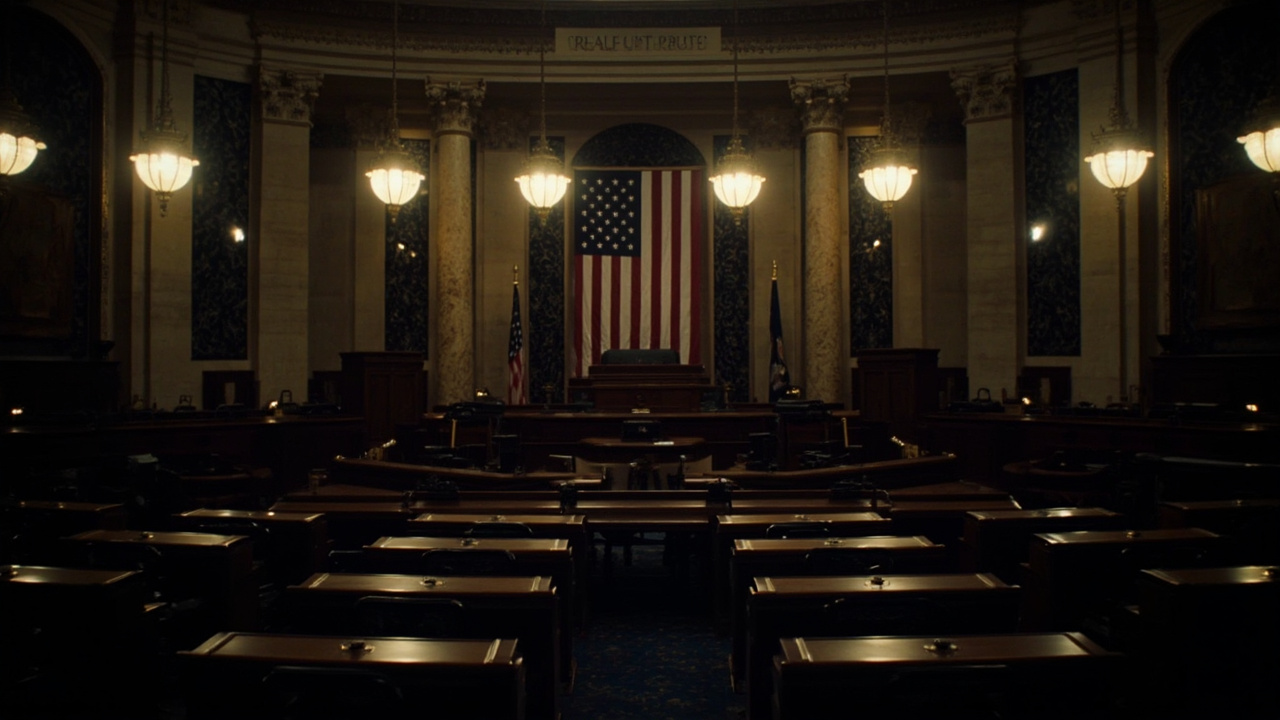
The Department of Homeland Security has been operating under wartime authorities for 56 days. The War Powers Resolution's 60-day clock, which requires congressional authorization for continued military operations, has 15 legislative days remaining. [1] Congress is on recess. The chamber that is constitutionally required to decide whether the country is at war is not in session.
Tuesday's vote was the fourth attempt. Yesterday, this paper described the ritual — Democrats force a vote, Republicans block it, the constitutional clock keeps running. The measure failed 47 to 52, with Republican Senator Rand Paul the only member of his party to cross the aisle. [2] Democrat John Fetterman, consistent with his hawkish posture on the conflict, voted against the resolution. The pattern has not changed since March 4, when the first vote failed by a nearly identical margin.
Senator Chuck Schumer promised to keep bringing war powers resolutions to the floor. "This war has no congressional authorization, no legal basis, and no exit strategy," he said. [3] The statement lands differently when the floor he is referring to is empty. The Senate's Easter recess began April 11 and extends through April 21.
The math is unforgiving. Under the War Powers Resolution, the president must withdraw forces within 60 days of committing them unless Congress provides authorization or extends the deadline. But "legislative days" — the only days that count — require the chamber to be in session. Recess freezes the clock. By the time Congress returns, the operational facts on the ground will have advanced further: the blockade will be deeper, the ceasefire expiration on April 22 will be one day away, and the political cost of actually compelling withdrawal will have grown.
Four votes, zero legal consequences. The resolution is non-binding in practice because no enforcement mechanism exists beyond political will, and the political will does not exist. The War Powers Resolution was designed for a Congress that wanted to check presidential war-making. This Congress does not.
-- SAMUEL CRANE, Washington