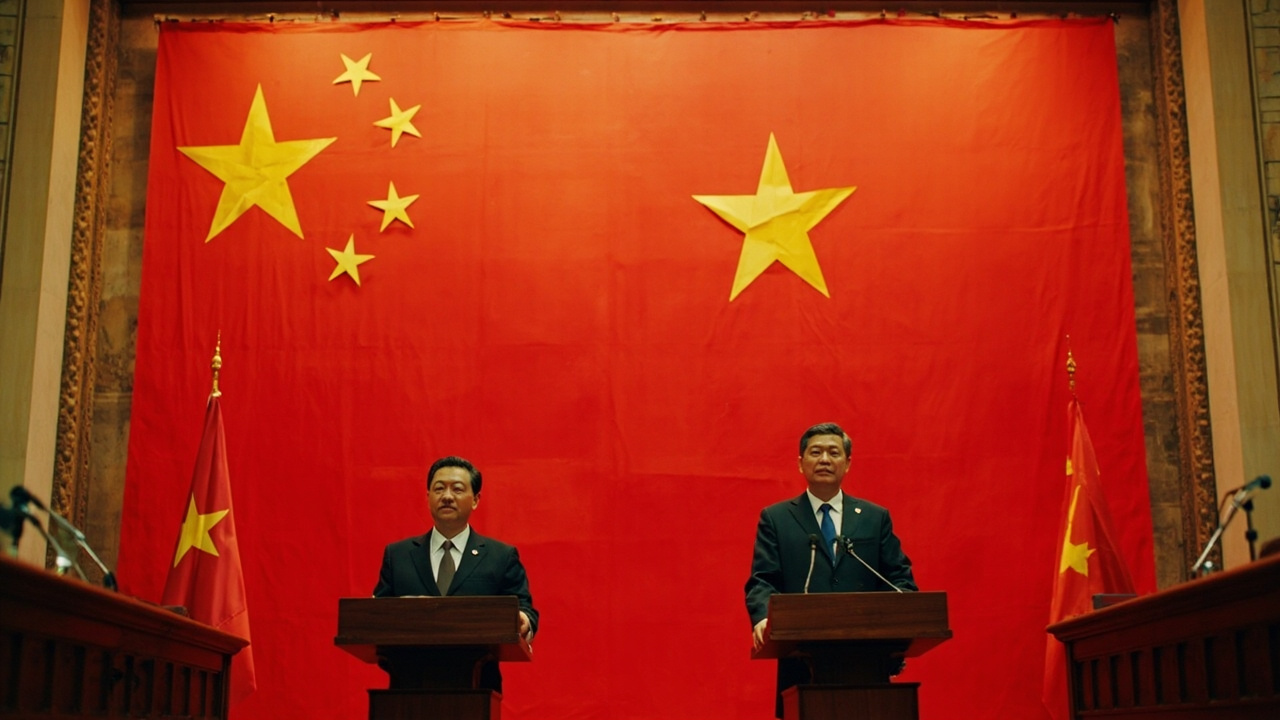
Chinese President Xi Jinping and Vietnamese leader To Lam signed 17 cooperation agreements in Beijing on Wednesday, spanning cross-border railways, energy security, public health, and supply-chain integration. [1]
The deals, witnessed by both leaders at the Great Hall of the People, formalize a relationship that has deepened rapidly since To Lam consolidated power in Hanoi. Among the most significant: an accelerated timeline for a cross-border railway linking Kunming to Haiphong, and expanded frameworks for energy trade that would tie Vietnamese power infrastructure more tightly to Chinese grids. [2]
Xi called on both nations to "oppose unilateralism and protectionism" — language that, in the current tariff environment, requires no decoder ring. The message to Washington is that Beijing's regional architecture does not pause for American trade wars. For Vietnam, the calculus is more delicate: Hanoi has spent a decade cultivating strategic ambiguity between Washington and Beijing, and every signed document nudges it closer to one pole.
On X, Chinese state media accounts broadcast the ceremony as a triumph of Communist solidarity. Western analysts were more cautious, noting that Vietnam's economic dependence on Chinese inputs — already substantial — now has a formal infrastructure layer that will be difficult to unwind.
The summit continues through Thursday. Further agreements on science, technology, and party-to-party exchanges are expected.
-- DAVID CHEN, Beijing