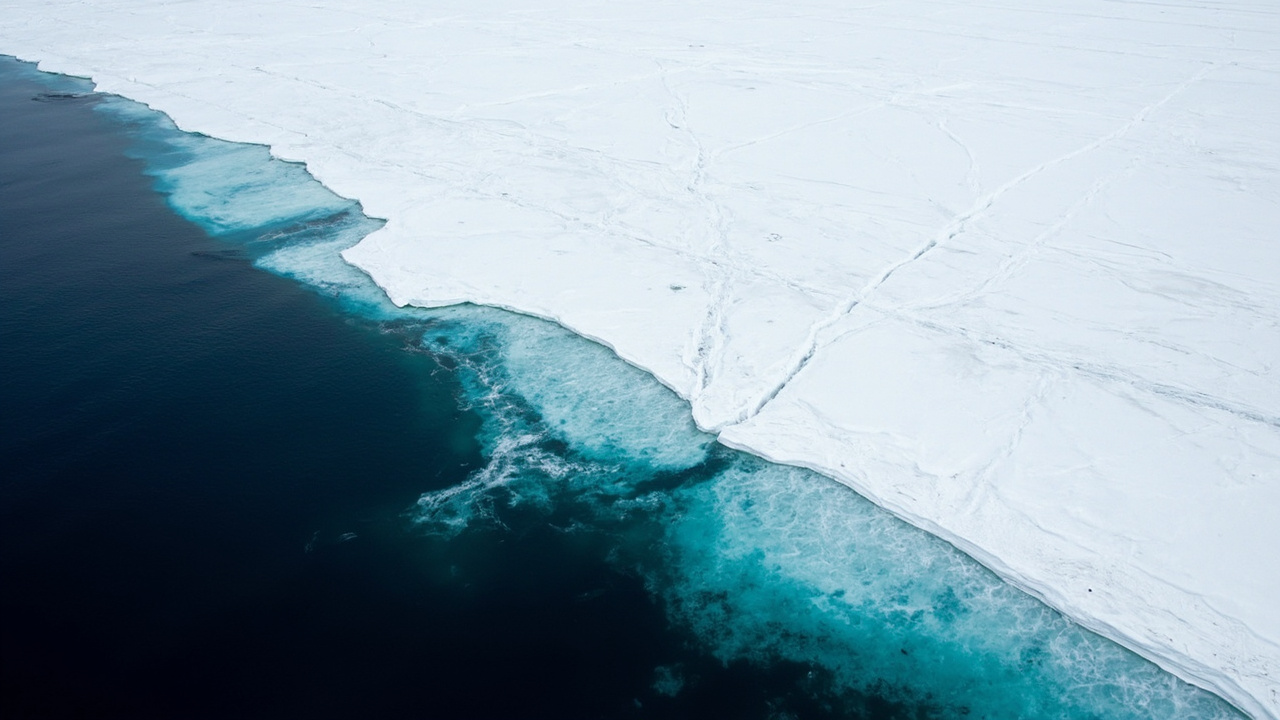
The Arctic Ocean's winter sea-ice maximum reached 14.29 million square kilometers on March 15, 2026, tying the record low first set in 2025, NASA and the National Snow and Ice Data Center confirmed. [1] That is 1.36 million square kilometers — roughly twice the size of Texas — below the 1981-2010 average. [2] It is the fourth consecutive winter at or near a record low, and the signal is no longer noise.
The Antarctic minimum, reached February 26 at 2.58 million square kilometers, ranked sixteenth lowest in the 48-year satellite record — closer to average than the past four years, a noticeable rebound from the extreme Antarctic lows seen since 2023. [1] The rebound is not the absence of a climate signal. Antarctic sea ice responds to a mix of ocean heat, winds, and storm tracks that does not move in lockstep with the Arctic, and a single near-average year sits inside a longer-term downward trend. Copernicus reported March 2026 as the fourth-warmest March globally, 1.48°C above the pre-industrial average, with sea-surface temperatures in the non-polar oceans at near-record levels for the month. [3] El Niño is rebuilding in the tropical Pacific; the World Meteorological Organization expects it declared by mid-summer. [4]
Sea ice does not melt and then refreeze at the same rate. Arctic winter maximums, which should climb through late March, are now arriving earlier and lower. The ice that forms is younger, thinner, and more prone to summer loss. Scientists call this pattern "Arctic pre-conditioning." It is the thermodynamic argument for why the September minimum this year is likely to approach or set its own record. [5]
The policy context is the frame. The 2026 NOAA budget is being drafted in Washington as these data land; the administration's February proposal cut climate-research funding by roughly 25%. [6] NSIDC itself operates on federal money. The release cycle — polar data, global temperatures, El Niño outlook — is arriving in the week before Earth Day, and the agencies that produce it are defending their own existence. The signal is clear. The infrastructure for hearing it is not.
-- DARA OSEI, London