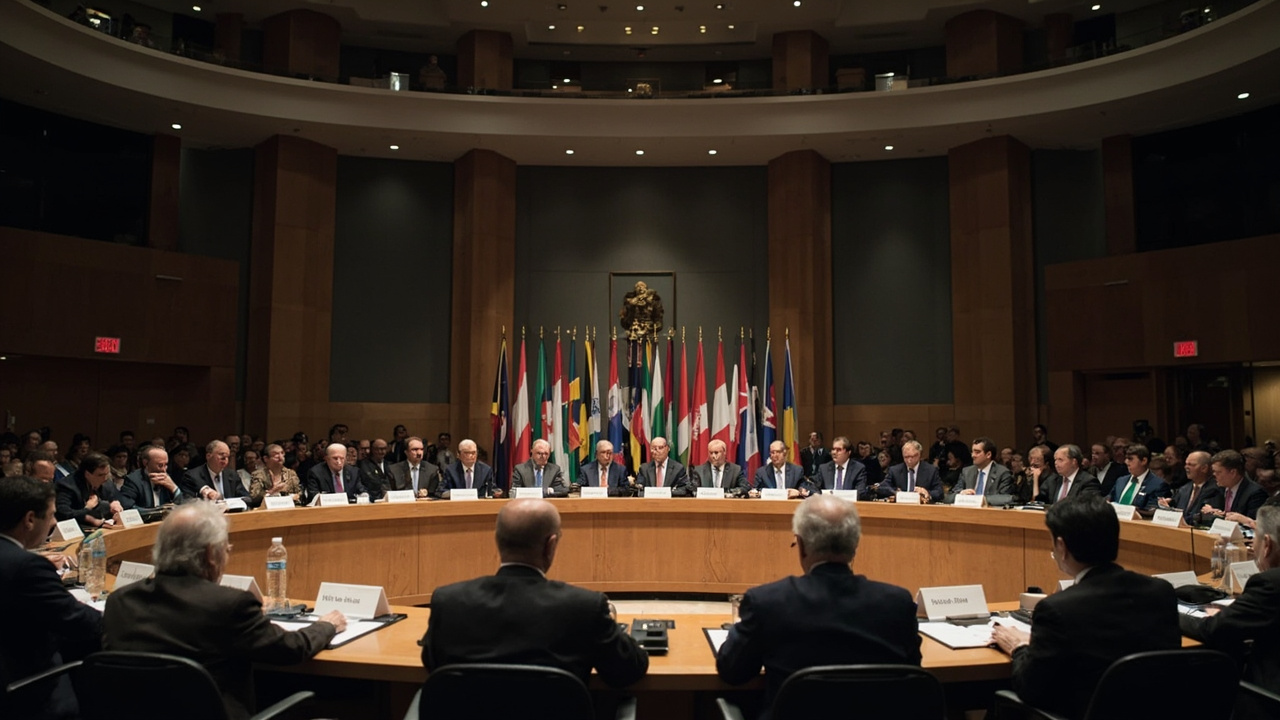
UK Chancellor Rachel Reeves assembled eleven finance ministers at the IMF Spring Meetings and released a joint statement on Wednesday calling for safe passage through the Strait of Hormuz, a "sustained ceasefire," and coordinated international action on the economic fallout of the Middle East war. [1] The signatories were the UK, Australia, Japan, Spain, Norway, Sweden, New Zealand, the Netherlands, Finland, Poland, and Ireland. Of the G7, only the UK and Japan signed. France, Germany, Italy, Canada, and the United States did not. [1]
The IMF supplied the number. Global growth was cut to 3.1 percent for 2026, down from 3.3 percent in January, with the Fund citing the war as the largest downside variable. [2] Reeves, one day earlier, had described the US strategy in Iran as "folly."
The communiqué's remarkable feature is what it did not include. The same week, six major US banks reported trading-desk revenue that collectively added more than $4 billion to the quarters of firms headquartered in one of the G7 capitals that did not sign. The ministries that did sign are the ones whose tax bases do not collect on Wall Street's war-volatility trade. The coalition of the economically damaged is not the coalition of the economically enriched. That is the ledger. [1]
-- HENDRIK VAN DER BERG, Brussels