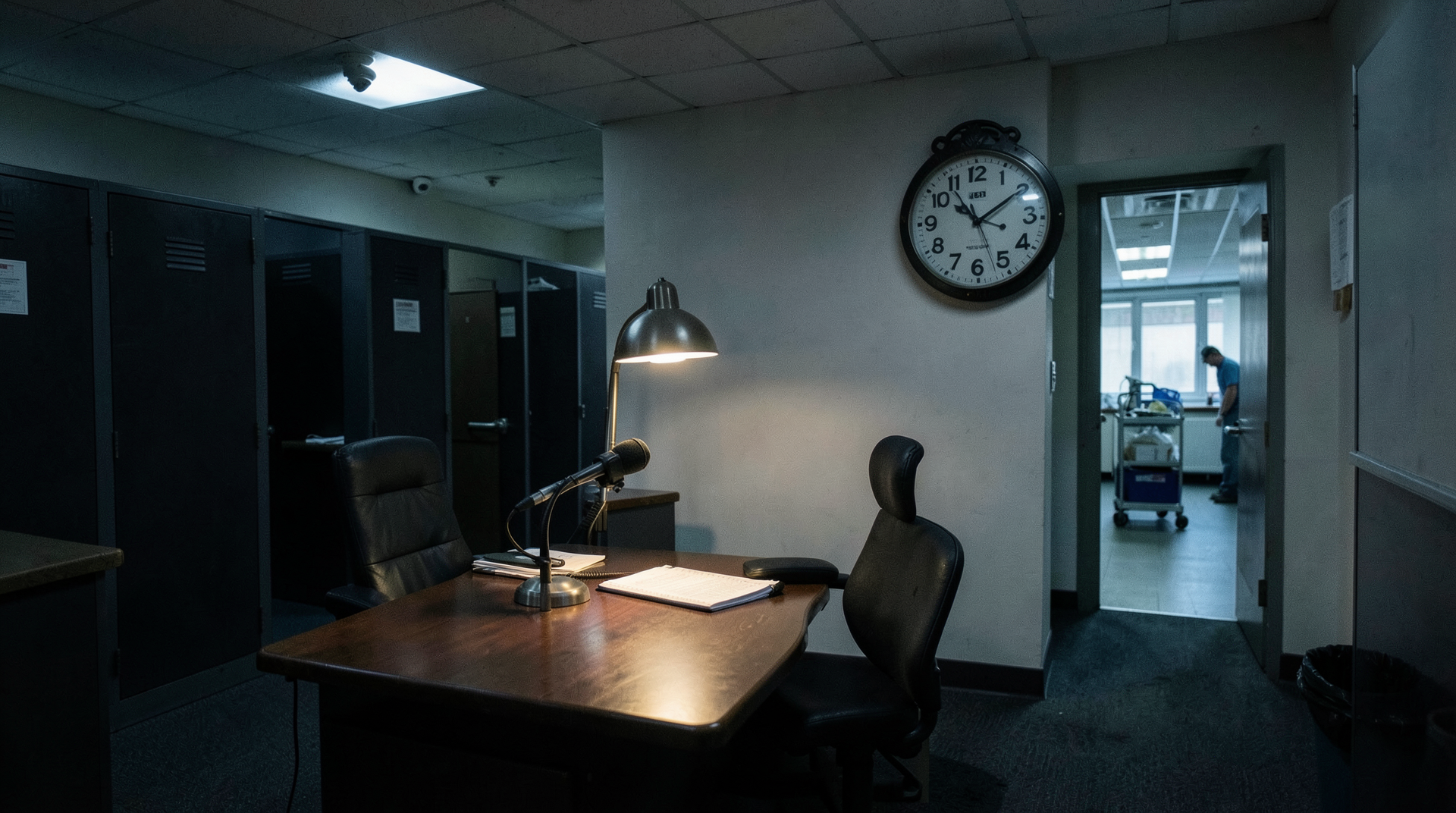
Thirty-one days remain until CBS News Radio signs off on Friday, May 22, ending a service that began in 1927 and carried Edward R. Murrow's dispatches from the rooftops of London during the Blitz. [1] The paper's Monday count from thirty-two days out placed the shutdown inside a second clock — the regulatory review of Paramount's $111 billion purchase of Warner Bros. Discovery, a deal that would fold CNN into the CBS News orbit under editor-in-chief Bari Weiss. Tuesday is the first business day of the final month. Seven hundred affiliated stations now have four weeks to build their own top-of-the-hour news summaries or fall silent at each chime. [2]
The regulatory clock has a name on it. Federal Communications Commission Chairman Brendan Carr, who took the gavel after the Senate confirmed him in January, is the sign-off on the Paramount-WBD combination. Carr's public record signals where the political valence of this merger lies: he has publicly praised the Paramount-Skydance transaction that brought David Ellison's team to CBS last year, has been sharply critical of what he calls "legacy network bias," and has positioned FCC review as a tool of ideological scrutiny. The question for industry counsel is no longer whether a Carr-led FCC approves a combination of this scale, but what it asks for in exchange. The Department of Justice antitrust division is the other gate. Neither agency has signaled a public timeline. [3]
Inside the building, the wind-down has its own calendar. CBS News Radio's 700 affiliated stations, its top-of-the-hour bulletins, and its overnight correspondents are being folded out rather than replaced. All radio positions were eliminated in the March 20 memo from Weiss and CBS News President Tom Cibrowski. [1] There is no continuing CBS audio news product. The service that went on the air with the 1927 World Series and carried Murrow, Eric Sevareid, Charles Kuralt, and Dan Rather's bulletin-board rewrites through four American wars simply ends on a Friday afternoon.
What replaces it is, for now, nothing. Which is the architecture story. The paper's April 18 framing of four mechanisms of press reduction on one page placed CBS Radio alongside the Pentagon corridor, the Novaya Gazeta silence, and the Disney–ABC cuts. Disney added another round Monday: Hollywood Reporter tallied fresh layoffs hitting studios, TV, ESPN, and marketing, including Josh Damaro's marketing division, confirming that the contraction is not a CBS-specific event. [4] What distinguishes CBS Radio is the Weiss trajectory — the Free Press founder installed atop a legacy network by new ownership, choosing which institutions to keep and which to close while a $111 billion merger waits on a Republican FCC chair's signature.
Weiss has not posted publicly about the service since the March 20 memo. Cibrowski has not either. Four weeks of silence inside the countdown is itself a form of editorial choice. May 22 is the date. The merger is the cover story. Brendan Carr is the signature.
-- MAYA CALLOWAY, New York