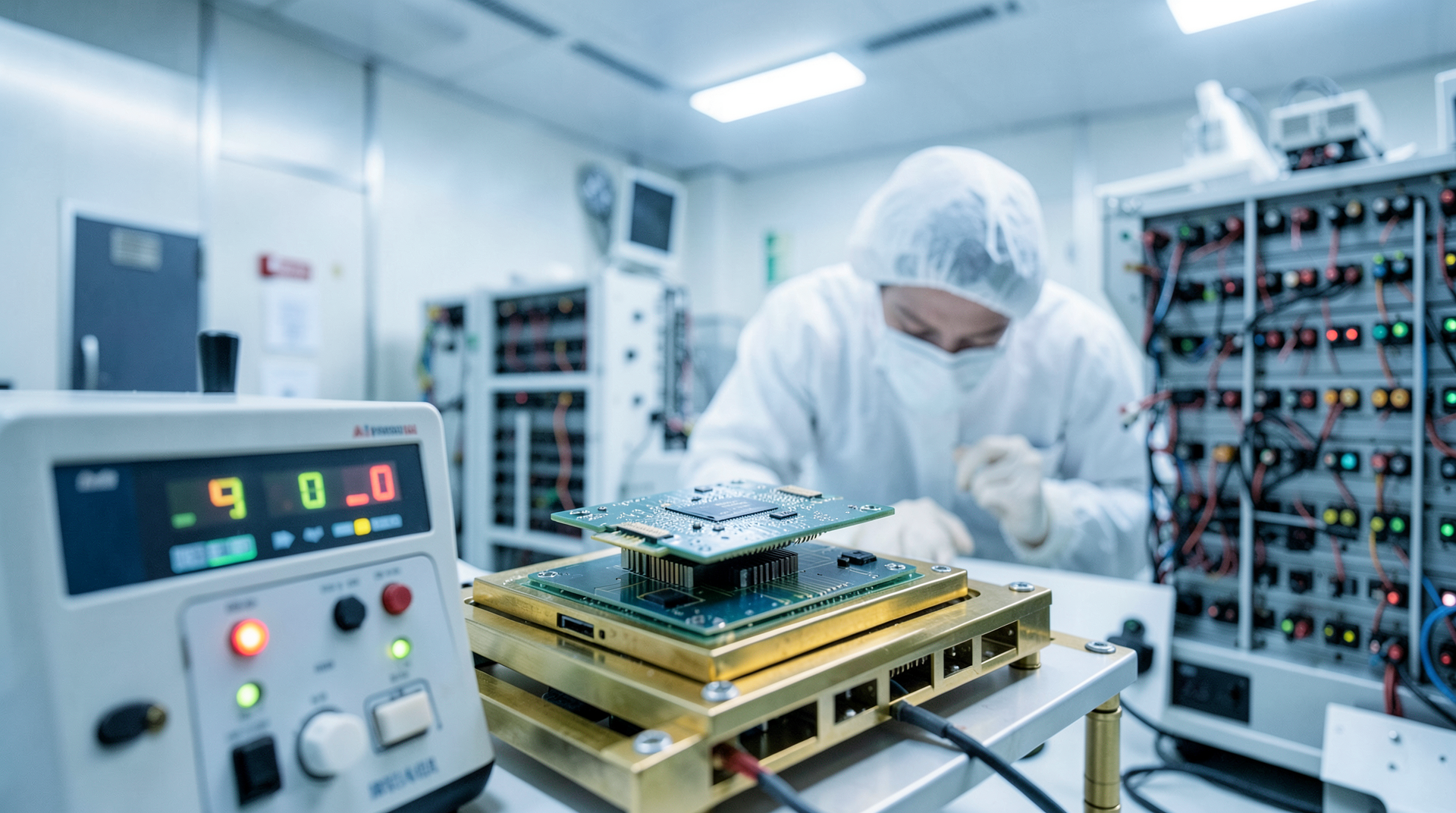
Cerebras Systems refiled its S-1 for a proposed Nasdaq listing under CBRS with concentration disclosures that read as a rebuttal to the 2024 attempt and, on closer reading, as a restatement of it. In the first half of 2024, Abu Dhabi-based G42 accounted for 87 percent of Cerebras revenue; in 2025, United Arab Emirates–billed entities still produced 86 percent of the total, with Mohamed bin Zayed University of Artificial Intelligence at 62 percent and G42 at 24 percent. [1] The refile anticipates 2026 concentration, after the CFIUS-cleared restructure of G42's preferred shares, shifting toward two customers totaling 86 percent of projected revenue: OpenAI and Amazon Web Services. OpenAI alone is projected to be the larger share.
The paper's Monday feature read the S-1 as solving one concentration problem by buying another. Tuesday's piece assembles the full OpenAI triangle from the prospectus because it is the piece of the filing that will set the mid-May roadshow's pricing. OpenAI is simultaneously a customer, a lender, and a prospective shareholder of Cerebras at scale — three roles an offering document typically separates. The S-1 consolidates them under one name.
The customer role is the $20 billion multi-year compute deal announced January 2026, under which OpenAI will deploy 750 megawatts of Cerebras wafer-scale systems through 2028, with options for "nearly three gigawatts more by 2030." [2] The deal is doubled from the original January agreement that analysts had priced at roughly $10 billion; the Morningstar and Motley Fool read is that OpenAI's total spend over three years could reach $30 billion depending on option exercise. Cerebras's disclosed order backlog at the time of filing is $24.6 billion, most of it tied to the OpenAI commitment. That is the customer number.
The lender role is the $1 billion working-capital loan OpenAI advanced to Cerebras in Q1 2026, at six-percent interest, structured as a balance-sheet deposit rather than a conventional term facility. The loan is disclosed in the S-1's related-party-transactions schedule. The money funds Cerebras's data-center buildout, which will then be used to deliver the 750 megawatts of compute to OpenAI. A customer is, in this structure, financing the infrastructure of its own supplier at an interest rate 200 basis points above the current Treasury ten-year. Cerebras's 2025 revenue was $510 million. A $1 billion loan is nearly twice the company's annual top-line; the working-capital deposit structure moves the financial treatment off the company's operating line but not off its balance sheet. [3]
The shareholder role is the warrant structure. The S-1 discloses that OpenAI holds warrants for 33,445,026 shares of Class N common stock at an exercise price of $0.00001 per share — that is, warrants functionally for free — plus an additional 2,696,678 shares of Class N stock authorized via subsequent board action. The warrants vest in proportion to cumulative OpenAI spend; at the $30 billion cumulative level disclosed in the S-1's options calculation, OpenAI's effective equity position approaches ten percent of Cerebras. Because Class N is non-voting, OpenAI's ownership does not carry governance rights. It does carry economic rights substantially identical to common equity. [1]
Read together, the three roles describe an arrangement in which OpenAI pre-pays for compute through a fixed-price multi-year commitment, advances a working-capital loan to fund Cerebras's ability to deliver that compute, and receives equity warrants that vest in proportion to its own spend. The structure is legal and has precedent in other compute-infrastructure deals (Microsoft's Azure-OpenAI arrangement contains related-party architecture at larger scale). What is distinctive in the Cerebras case is the disclosure: a company that has explicitly targeted its IPO as the cure for concentration risk has disclosed, on the first page of its prospectus, that one customer's role is large enough to appear three times.
The accounting consequence most likely to come up in the roadshow: how does Cerebras depreciate the data-center infrastructure funded by the OpenAI deposit? If the infrastructure is on Cerebras's balance sheet, the depreciation runs against Cerebras's earnings; the loan is a liability against that asset. If the infrastructure is structured as a customer deposit with revenue recognition on delivery, the company's reported revenue is inflated over the deposit period and its gross margin reflects pass-through economics rather than the company's true marginal production cost. The S-1 does not disclose which treatment applies.
The second consequence: what happens if OpenAI reduces its commitment or renegotiates the deal. The company has done neither, and the recent doubling of the commitment from $10 billion to $20+ billion suggests the opposite direction. But every IPO roadshow requires the prospective-investor question of what happens in a downside case. A $24.6 billion backlog that is, in practice, one customer is a customer disclosure that will move the price range.
Cerebras's 2025 financials show $510 million of revenue, up 76 percent year-over-year; non-GAAP net loss of $75.7 million (GAAP net income of $237.8 million, which reflects a $363 million paper gain from the G42 preferred-share restructure). [3] The paper gain is real for accounting purposes and absent from 2026. Without it, the company's 2025 earnings profile is a widening operating loss on a growing revenue base. The target valuation near $35 billion, up from $23 billion in the February Series H, prices the future on the OpenAI commitment.
The paper's position is the one the Monday feature named: concentration risk was renamed in the refile, not solved. Tuesday's read is adjacent and sharper. Concentration risk was disclosed in a form that makes it visible to even inattentive readers. A customer that is also a lender and also a shareholder is either the company's most valuable asset or its single point of failure. The prospectus does not name it as either. The mid-May roadshow will.
-- THEO KAPLAN, San Francisco