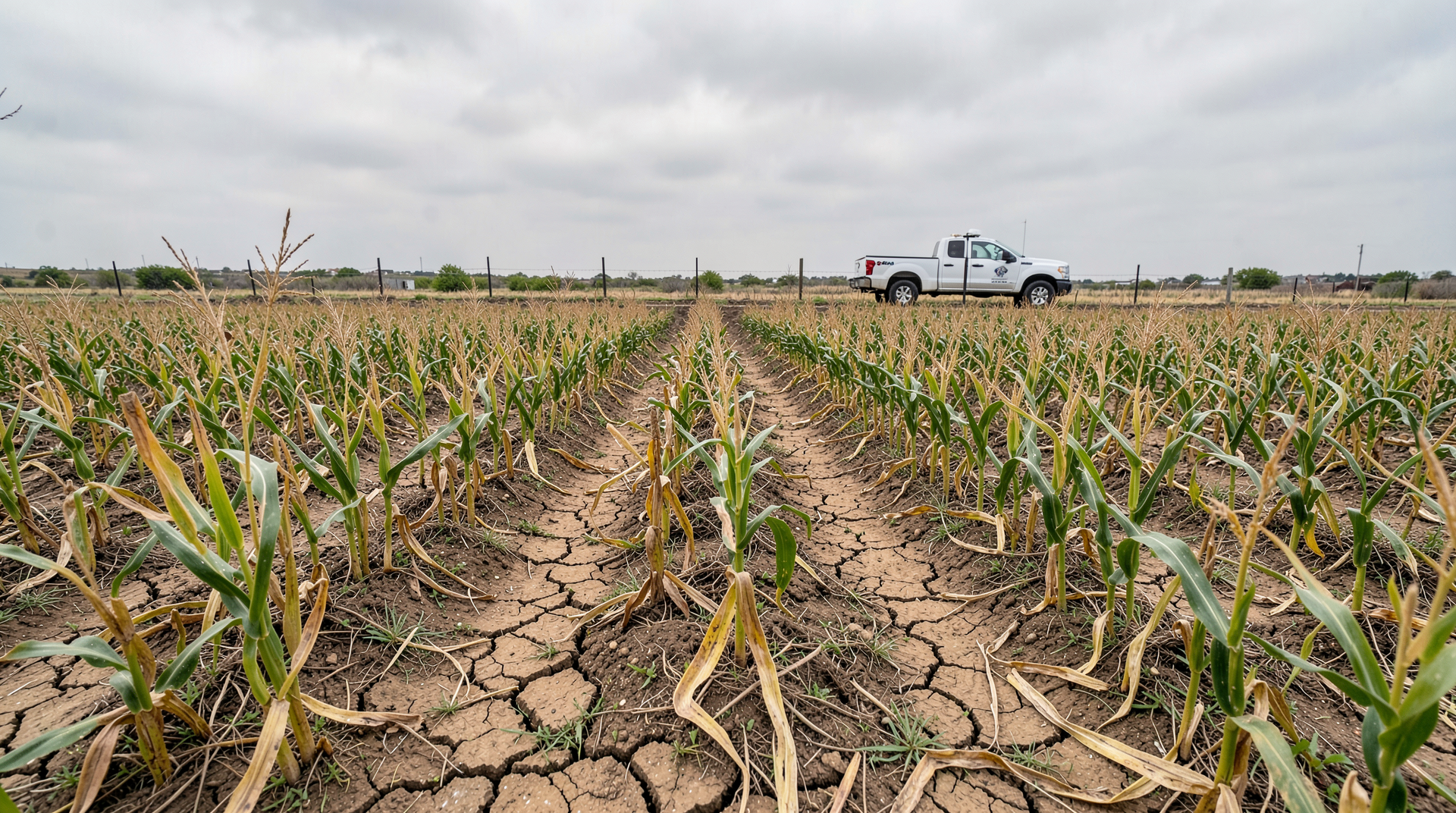
The US Drought Monitor reads 60.05% of the Lower 48 in moderate-to-exceptional drought, the highest figure since November 2022. [1] Inside that band sits 68% of the country's winter-wheat acreage; only 34% of the national crop is rated good-to-excellent. Texas, which produces hard red winter wheat, has 54% of its acres rated poor to very poor, with a grower near Plainview telling Pro Farmer last week that less than 10% of his crop will survive to harvest. [2]
The paper's Monday reading ran the sixty-one-percent figure as the Earth Day runway. Tuesday holds the number and adds the calendar. January through March was the driest Q1 on CONUS record, breaking the 1910 mark; March was the warmest March recorded. The Southern Plains Drought Early Warning System reported 81.9% of the region under drought at the start of April, with Lake Corpus Christi and Choke Canyon Reservoirs below 9% — the lowest combined storage ever logged. [3] Eric Snodgrass, a senior science fellow at Nutrien Ag Solutions, told The Scoop on Monday that the Drought Monitor has held at "roughly 80% abnormally dry or worse for over a month."
Wednesday is Earth Day. The administration has taken, by EARTHDAY.ORG's count, more than 400 environmental actions since January 2025. The Lower 48 did not get to 60% in drought because of any of them. It got there because March was warmer and drier than it has ever been, on the record that begins in 1895. The Earth Day Day 3 frame the paper is running is that number.
-- DARA OSEI, London