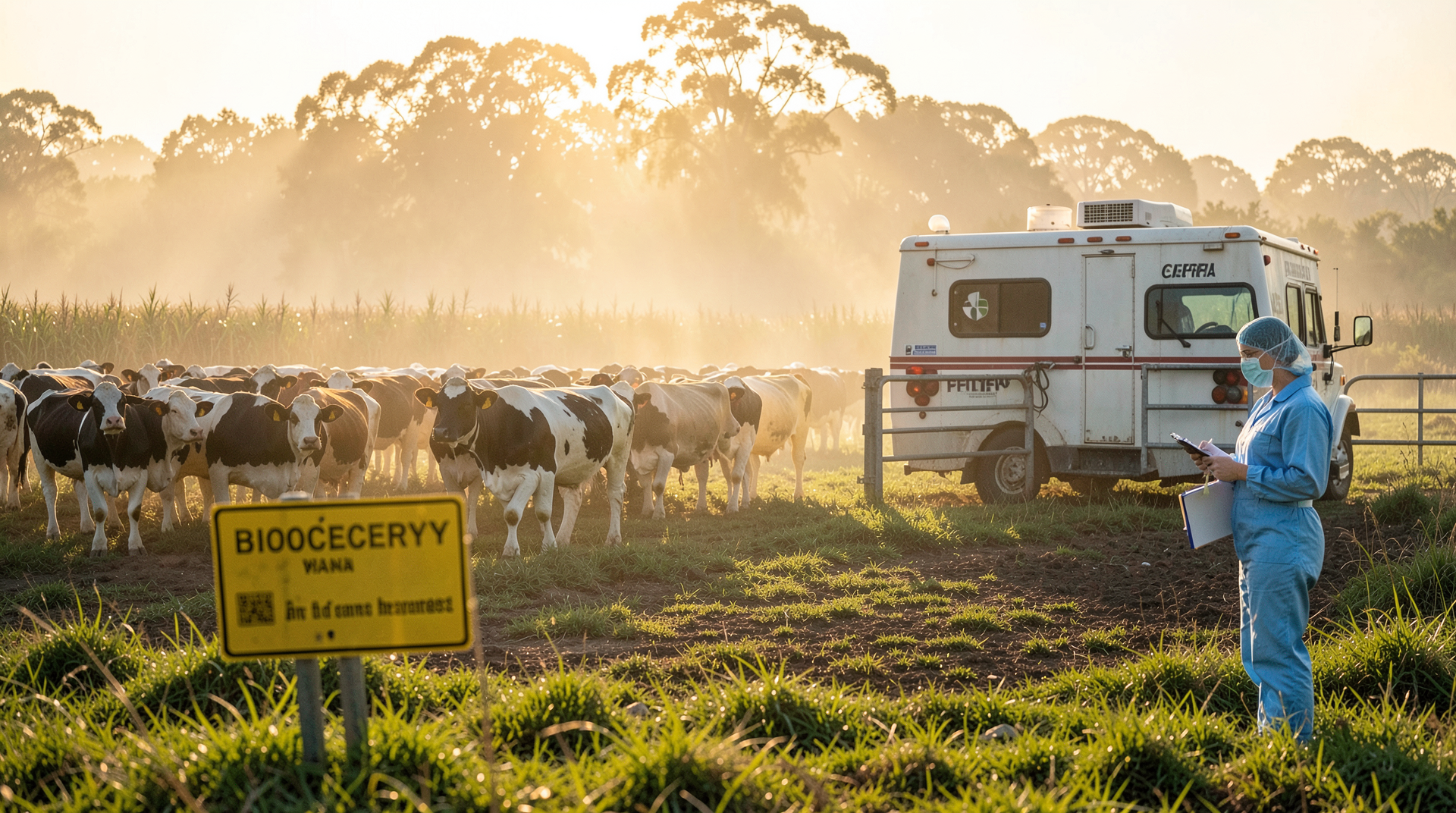
The Emerging Infectious Diseases journal carried a report dated April 21 documenting detections of H5N1 RNA in bovine semen from a California dairy operation in 2024. [1] It arrived in a week when Science News had already reported that researchers had characterised a mutation — affecting the way the virus binds to the cattle-sugar NeuGc receptor — that makes mammary infection in dairy cattle easier. [2] The two papers together specify a pathway, the biology and the behaviour, for a route of spread that the current US surveillance system does not monitor.
A dairy cow's udder is not supposed to be a reservoir for an influenza virus. H5N1's known receptors in birds are sialic-acid derivatives of a type that mammalian mammary tissue did not efficiently express until the virus acquired the cattle-sugar binding mutation. The Science News paper names how the mutation happened; the EID paper specifies where else, besides milk, the virus can then travel. Semen is a route. Breeding-stock transfers cross state and international lines. The FAO's March 26 cumulative dairy-herd count was 1,088 US herds affected since the outbreak began. [3]
The CDC situation summary remains on a USDA-owned data pipeline for animal surveillance, per the July 2025 transfer that moved bovine H5N1 reporting out of the public-health publication apparatus and into the agriculture apparatus. [4] The MMWR has not published a bovine H5N1 piece since that transfer. Reader who follows only public-health news sees the milk story and perhaps the Texas dairy outbreak. Reader who follows the veterinary-medicine press sees the semen paper. The compound finding — receptor plus route — has to be assembled, and Tuesday is one of the assembly days.
Two things are worth watching. First, whether any dairy-breeding association publishes a pause on interstate semen transfers or a screening protocol. The American Jersey Cattle Association and Holstein Association USA would be the two to watch. Second, whether the EID report triggers a CDC situation update before Thursday's MMWR, or whether the silence on both publications continues into a fourth week.
Nobody wants this story. The virus, which the bird in the mammary gland did not know existed as a receptor in 2023, now has receptors and routes the surveillance system was not built to watch.
-- KENJI NAKAMURA, Tokyo