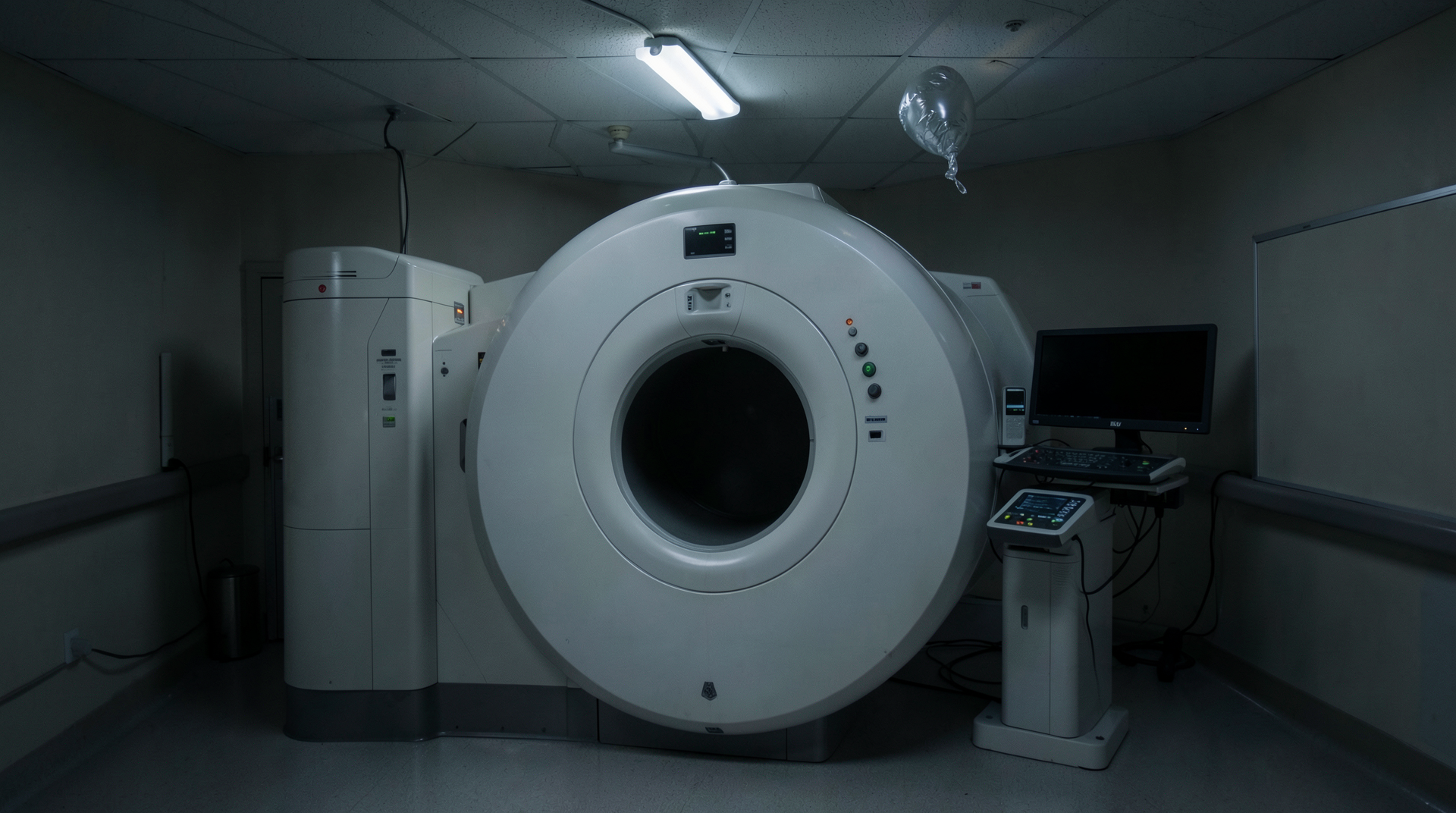
On April 13 the BMJ published a letter from Kornbluth Helium Consulting confirming that the Qatari helium deliveries the United Kingdom's National Health Service had been counting on "will not be arriving." [1] Nine days later the National Institutes of Health has said nothing on the parallel US crisis that the paper has been tracking since Day One of the war. Philips's BlueSeal helium-free MRI is installed in perhaps 300 hospitals worldwide against an installed base of around 50,000 conventional scanners that depend on the liquid helium now being triaged out of healthcare by an international market that prices semiconductor buyers above regulated hospital ones. [2]
The Monday report on Day Eight named the structural fact: Ras Laffan, Qatar's helium-extraction complex, will not return to pre-war output for approximately five years, according to industry consultants cited across Healthcare Digital, NPR, and Haeberle Lab reporting. [3] US helium suppliers have notified hospital customers of delivery cuts of up to 50 percent. The semiconductor industry, which pays market prices, is outbidding healthcare, which pays regulated prices, for every cubic foot that does clear into the Western supply chain.
The clinical picture is specific. Pediatric MRI — the use case that drove helium pricing in the 1990s, because the magnetic field requires the cryogen to stay cold enough to run at 1.5 to 3 Tesla — is what triage cuts first. A hospital with two conventional scanners and one pediatric oncologist on rotation can stretch to three weeks of reduced scans; a hospital with one scanner and a rural catchment area cannot. The BMJ letter names the UK variant of the problem. The NIH silence names the American. [4]
Two things are worth watching this week. First, whether any of the three major US hospital systems — HCA, Ascension, Kaiser Permanente — issues a public triage protocol before the NIH does. The professional societies (ACR, AAP) have not yet coordinated one. Second, whether Philips or Siemens announce accelerated BlueSeal rollouts or equivalents. Five years of Ras Laffan recovery is a long enough timeline that the installed base of conventional scanners will start to be a liability, not an asset, if the market holds.
The helium story does not close. It lengthens.
-- NORA WHITFIELD, Chicago