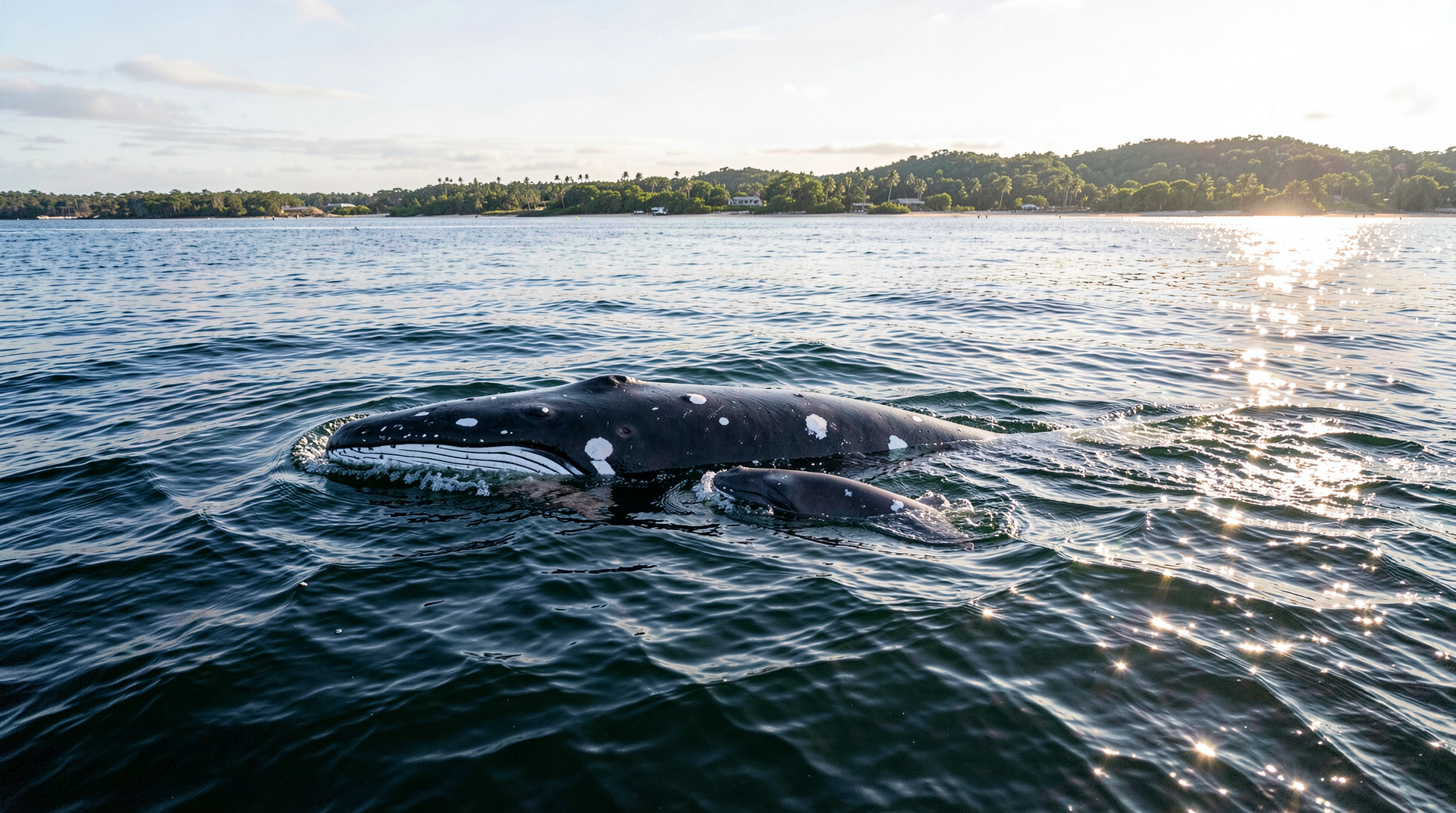
The NOAA Fisheries calving-season log closed Monday at 23 North Atlantic right whale calves born between mid-November 2025 and mid-April 2026 — the highest number in 17 years, since the 39 calves of 2009. [1] The final pair was sighted March 14 off Crescent Beach, Florida: calf number 23 and her first-time 10-year-old mother, Mirror, catalog #4617. Three first-time mothers entered the breeding cohort this season; both Juno and Skittle, who lost their 2024 calves, produced again. [2]
The math is harder than the headline. Approximately 380 right whales remain, 70 of them reproductively active females. The recovery standard, per NOAA's own framing, is roughly 50 calves per year for many consecutive years to stop the decline and begin population growth. Twenty-three is less than half. [3] Two juveniles died this season: Division, age four, from an accidental entanglement in fishing gear, and Porcia's 2023 calf, whose cause of death will not be determined because the stranding site was too remote for full necropsy. Monarch's 2025 calf was last seen entangled. The Trump administration announced on March 3 that it is considering replacing the seasonal vessel-speed rule with technology-based measures — a loosening that would cut against the math the calving headline is celebrating against.
Twenty-three is the best season in 17 years. It is also still too few. Both facts are the story.
-- KENJI NAKAMURA, Tokyo