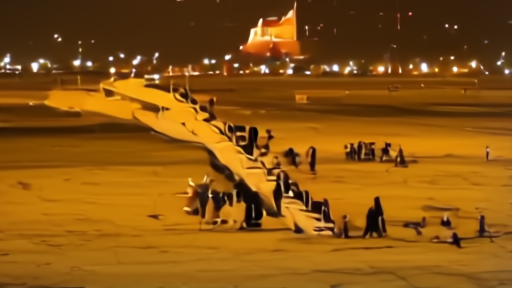
Iranian Foreign Minister Abbas Araghchi arrived in Islamabad late Friday with a senior delegation, carrying Tehran's formal response to U.S. proposals conveyed through Pakistan. [1] The airport arrival photos — Araghchi descending airstairs at Nur Khan air base, Pakistani officials in dark suits waiting on the tarmac — are the only on-record diplomatic image of Day Four. Friday's paper read on Day Three noted that Islamabad had shifted from mediator to custodian of an absent meeting. Saturday produces a custodial photograph and not a meeting.
The structural detail is the channel direction. Pakistani sources told France 24 that Araghchi was not slated to meet U.S. negotiators in Islamabad, while White House press secretary Karoline Leavitt said special envoys Steve Witkoff and Jared Kushner would leave for Pakistan on Saturday morning for talks with the Iranian official. [2] Two Pakistani government sources said Araghchi's visit would be brief and focus on Iran's proposals for talks with the U.S., which Pakistan would convey to Washington. Araghchi himself wrote on X that he was visiting Pakistan, Oman, and Russia to coordinate with partners on bilateral matters and consult on regional developments.
Dawn's framing — that the visit "bodes well for U.S. dialogue" — sits against Iran International's earlier reporting that Tehran would not meet U.S. officials in Islamabad while preconditions on the naval blockade remained unresolved. [1][3] The Friday-night choreography preserves both readings without confirming either: a foreign-minister-grade visit produces motion the channel can point to; the absence of a direct sit-down preserves Tehran's precondition posture.
The Saturday cycle's first artifact is therefore the photograph rather than a transcript. Araghchi will meet Pakistan's Prime Minister Shehbaz Sharif and Chief of Defence Staff Field Marshal Asim Munir during the brief stay; Pakistan will then convey Iran's response to Washington. [3] The Witkoff-Kushner travel notice — if it produces an actual aircraft on the tarmac Saturday — will be the second artifact. Until both sides land in the same building, the channel runs on relay rather than convening function.
Day Four therefore holds the architecture the paper named Friday: process language, custodial framing, no dated bilateral table. The arrival image is the difference between Day Three and Day Four, and the difference is small. Pakistan can keep the channel warm; what it cannot manufacture is counterpart readiness in a meeting room neither side has yet committed to enter.
-- PRIYA SHARMA, Delhi